

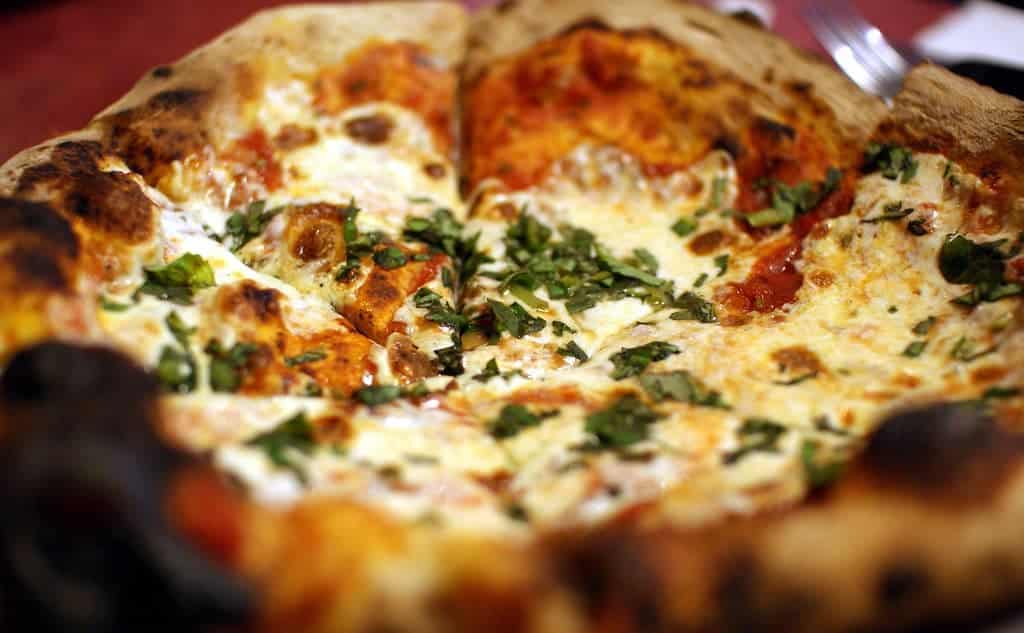
I love pizza – ordering pizza to go, eating it in restaurants, and making it at home. I even bought a portable pizza oven to make my own wood-fired pizza, since I’m so obsessed. If I could, I would definitely eat pizza every week! But pizza doesn’t always sit right with my stomach. So, in today’s article I want to share with you seven ways that I’ve found to make pizza more digestible. In a nutshell, this is how to do it.
To make pizza more digestible, you should use a slowly fermented dough that is naturally lower in protein and salt than conventional recipes. You should also make sure your dough is fully baked before you take the pizza out of the oven. All of these factors will contribute to a much more digestible pizza.
Photo above by uıɐɾ ʞ ʇɐɯɐs is licensed under CC BY-SA 2.0
The seven methods I’m going to share with you are all simple alterations that you can make to your homemade pizza dough. These are all methods that I’ve tried myself to improve digestibility. Even though these methods work great for me, I’ll also back up my methods with as many medical sources as I can, since digestion is both medical and personal.
So here they are – seven ways to make pizza more digestible.
1. Use Less Yeast for a Longer Rise
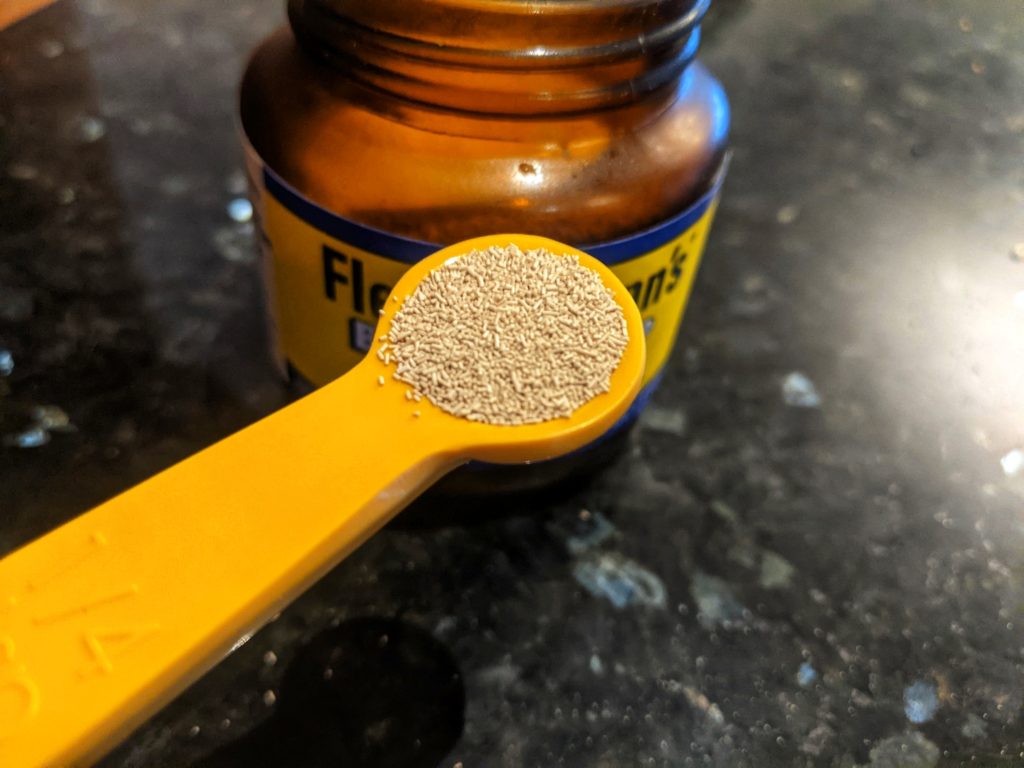
The longer your pizza dough ferments (rises), the more it will break down and become easier to digest in your stomach – and the less yeast you use, the longer your dough will take to rise. That is why traditional Neapolitan pizza requires long rise times of between 8 and 24 hours (source). It develops flavor and improves digestibility. So, take a leaf out of the Neapolitan pizza tradition and go for a longer rise when you’re making pizza at home.
What to do…
Try using a small amount of yeast (about a 1/4 tsp of dry yeast per 500 grams of flour) and let your dough rise all day long. You can also take a familiar pizza recipe and cut the amount of yeast in half. In the end, you’ll be rewarded with a pizza that is more flavorful and easier to digest than one that is made with a quick-rising dough.
2. Use Sourdough Starter Instead of Baker’s Yeast

Photo by Dave Kleinschmidt is licensed under CC BY-SA 2.0
As a general rule, sourdough pizza is easier to digest than pizza that is made with baker’s yeast. According to experts from WebMD, the prebiotics that are present in sourdough act as food for the good bacteria in your gut, and these bacteria help you maintain a healthy digestive system (source).
Researchers in Italy also back up this claim, showing in a study that digestibility is superior in sourdough breads compared to breads made with baker’s yeast (source).
Using sourdough starter instead of yeast will also allow your pizza to rise more slowly, improving the digestibility of the pizza. Much like with sourdough bread, it will also improve the flavor! So, if you’ve got an active sourdough starter at home, use it to make a highly digestible pizza.
What to do…
Make a sourdough pizza! For a great sourdough pizza recipe, check out my Easy Sourdough Pizza video on YouTube.
3. Let Pizza Dough Rise In The Fridge
Another way to extend the fermentation of your pizza dough, improving the digestibility, is to let your dough rise in the fridge.
If you’re making long-fermented pizza dough with yeast, or even with sourdough, you can let your dough do its first rise for 4-5 hours at room temperature, then ball it up, and pop the dough balls into the fridge. Refrigeration will extend the amount of time that your dough is able to ferment, but the cold will keep it from over proofing.
Using the fridge to your advantage is a good way to make long-fermented pizza fit into your schedule. For example, you could make your dough on Thursday afternoon and let it rise on the counter. Then, you could shape the dough into individual dough balls, and put them in the fridge that evening. The next day, you’d have pizza dough waiting for you in the fridge for Friday pizza night.
This allows you to increase the fermentation time of your dough without having to tend to the dough all day long.
What to do…
Try this cold-proofed pizza dough recipe from Ooni Pizza Ovens. This recipe was written with a long, slow, cold-proof in mind.
4. Use a Lower Protein Flour
One way that pizzerias have found for making pizza more digestible is to use a lower protein flour (source). Italy didn’t always have access to the high protein flour that many pizza places use today.
Since gluten, the main protein in pizza, can be hard to digest for some, lowering the protein in your pizza dough is one more way to improve its digestibility. If you usually use a high protein, strong bread flour, try switching to an all-purpose or lower protein flour.
As a general rule, any flour that is around 10-11% protein is on the lower end, and any flour around 12-14% protein is on the higher end. If your flour bag doesn’t have the protein percentage labeled, look at the nutrition label, or check online.
What to do…
Try making pizza with a all-purpose flour, like this one from King Arthur Baking Co. You might have heard that all-purpose flour isn’t strong enough to make pizza. But, I’ve done it, and it definitely works! Don’t be afraid to give it a try.
5. Add Spelt Flour To Your Dough
Spelt – that famous ancient grain, cousin of modern wheat. As a lover of whole grain spelt flour, I occasionally like to make sourdough bread from 100% spelt. It’s delicious, wholesome, and I just feel healthy when I eat it. It turns out that adding a small portion of spelt flour to your pizza dough can also make it easier to digest.
Apparently, the gluten present in spelt flour has a different chemical make up than standard wheat flour. Because of that, you might notice when working with it, that spelt doughs are more extensible than other doughs. The protein in spelt flour is also more water soluble and easier to digest than the protein found in modern wheat (source).
This means that adding a little spelt to your pizza dough can make for a more complex flavor, and also improve the pizza’s digestibility.
What to do…
Try adding a little spelt to your pizza dough. Start with a dough that has roughly 25 grams of spelt flour to 475 grams of white flour (5% spelt). Then, if you like how it turns out, you can always increase the amount of spelt flour that you include the next time. Find what works best for you. Here’s the brand of whole grain spelt flour that I use from Amazon.
6. Reduce the Amount of Salt In The Dough

Photo by stlbites.com is licensed under CC BY-ND 2.0
It is becoming increasingly well known that high levels of dietary salt can negatively affect the bacteria in our gut that are responsible for digestion (source). So, one of the ways to help your stomach easily digest pizza is to reduce the amount of salt in your pizza dough.
Pizza dough is notoriously high in salt, even when compared to other types of flour-based products. For example, a standard bread dough usually contains around 10 grams of salt per 500 grams of flour (2%), and Neapolitan pizza dough can contain up to 15 grams of salt per 500 grams of flour (3%). That extra salt can really add up. (Source: PizzaNapoletana.org)
What to do…
To improve the digestibility of your pizza dough, try reducing the salt in the recipe to 2% of the total flour weight. So, if the recipe calls for 500 grams of flour, use 10 grams of salt. If the recipe calls for 1000 grams of flour, use 20 grams of salt. Just multiply the number of grams of flour in the recipe by 0.02 and you’ll get the appropriate amount of salt.
7. Bake The Pizza Until It Is Fully Cooked
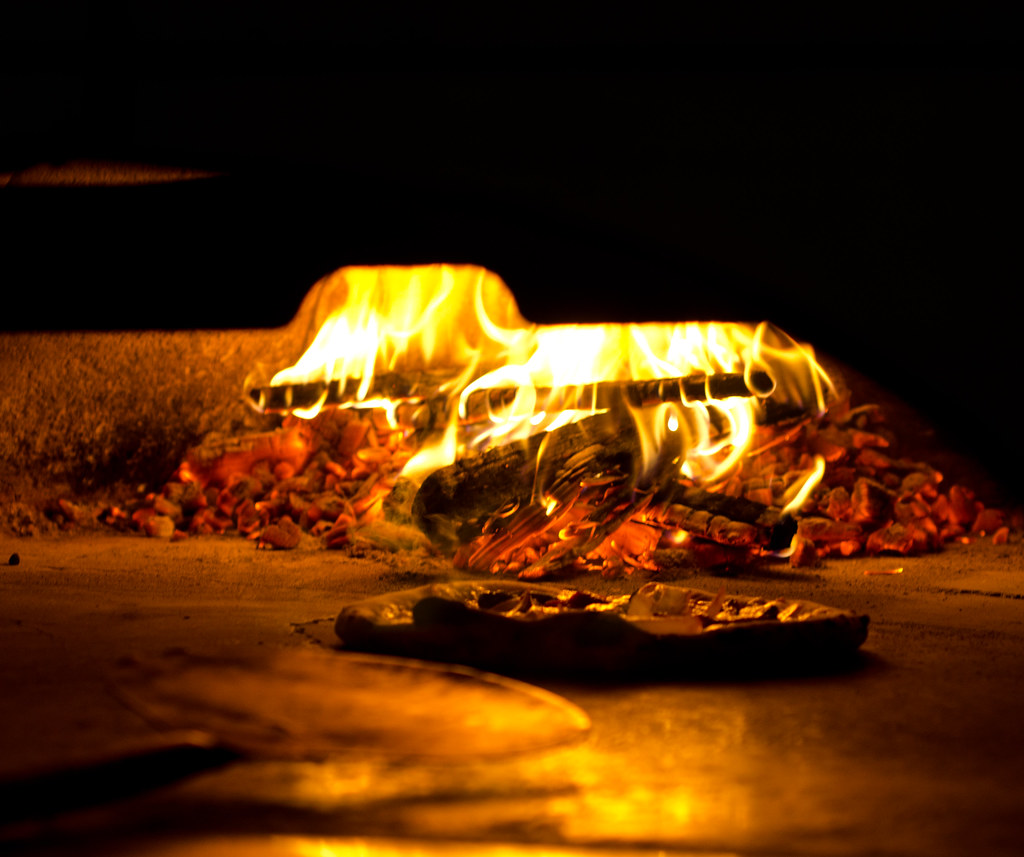
A commonly overlooked reason why pizza might be hard to digest is that your pizza isn’t cooked all the way through. Especially if you are baking your pizza in a home oven without a pizza stone, the top of the pizza might look done but the dough could still need a few more minutes in the oven.
Since eating undercooked pizza dough can lead to an upset stomach, you’ll want to make sure your pizza is fully cooked.
What to do…
To make sure your pizza is fully cooked, try baking your pizza on a pizza steel, which is a great method for making pizza in a home oven. Preheat the steel as hot as the oven will go for at least 30 minutes, then slide your pizza on top. This method of baking produces a nice, crispy crust on the bottom of the pizza, and the pizza is almost always cooked through perfectly after about seven or eight minutes. Just make sure you’re not overloading the pizza with too many toppings which can also slow down the cooking process.
Conclusion: How to Make Pizza More Digestible
Making a more digestible pizza doesn’t have to be difficult. Follow these seven suggestions and I’m sure you’ll be on your way to great pizza at home that is also easy on the stomach.
To see the tools I use at home to make great pizza, check out my Recommended Tools page here.