


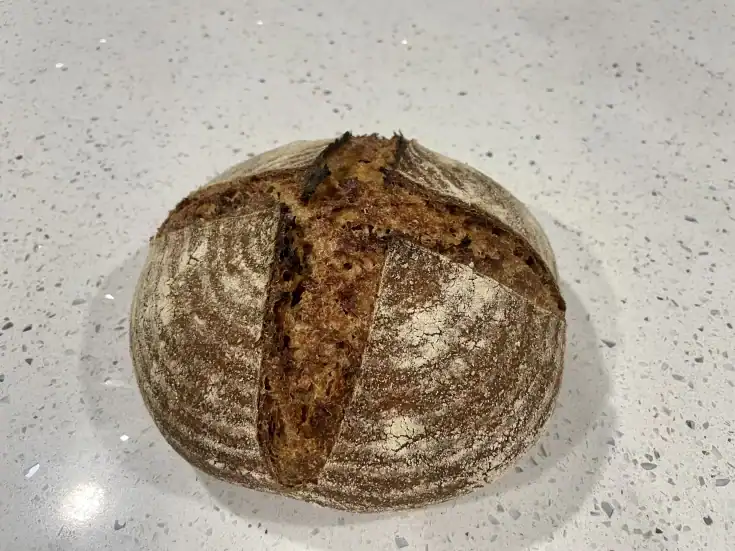
This spelt sourdough bread made with 100% whole grain spelt flour is nutty, malty, and delicious. With a crispy crust on the outside and a tender crumb on the inside, you’ll love this wholesome whole grain loaf of spelt bread.
Why This Recipe Works
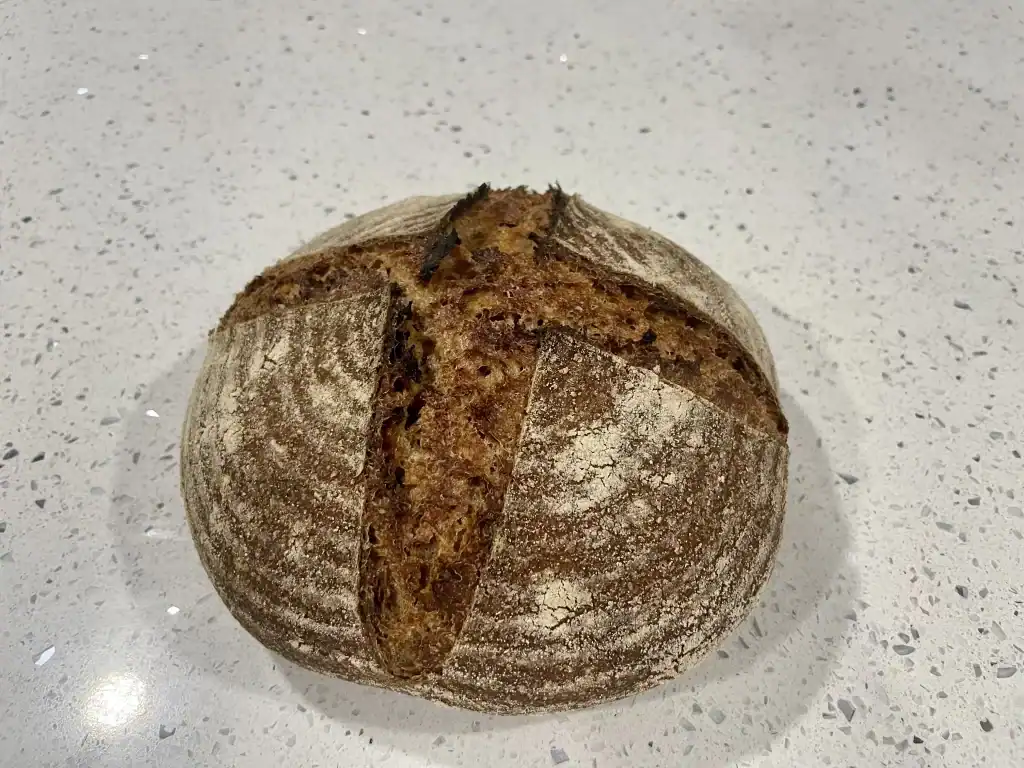
Flour made from whole grain spelt (an “ancient grain”) is touted as being a heart-healthy and nutritious alternative to modern wheat flour. This recipe for spelt sourdough bread maximizes the health benefits of spelt flour by making an entire loaf from 100% whole grain spelt flour, and fermenting the loaf naturally with sourdough starter. The result is a wholesome loaf that is just as easy to make as my standard white sourdough bread.
Ingredients You’ll Need
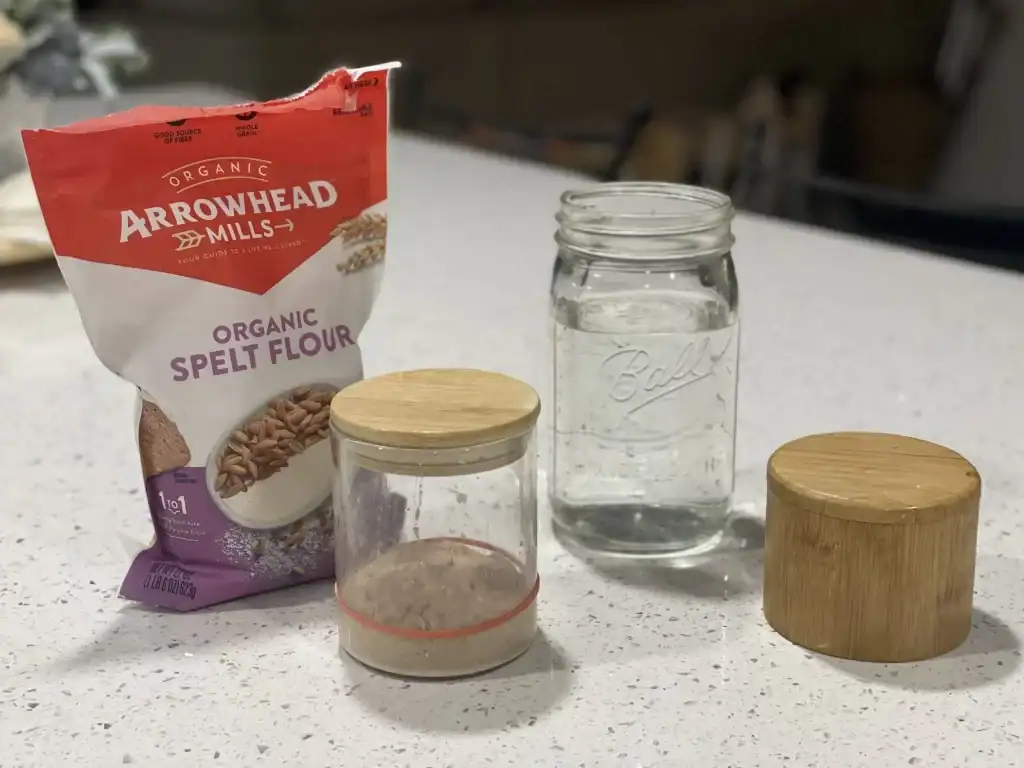
- Whole Grain Spelt Flour: Look for 100% whole grain spelt flour for this recipe. You can sometimes find refined, “white” spelt flour on the supermarket shelves, but this type of flour will produce a very different result, so stick with whole grain spelt flour.
- Water: Plain, unchlorinater tap water is best. Use filtered water or bottled spring water if your city’s tap water contains harsh ingredients or has a bad taste.
- Sourdough Starter: Use a standard 100% hydration sourdough starter for this recipe. It doesn’t need to be a specific spelt sourdough starter, any sourdough starter will work, but you’ll feed a small portion of your starter with spelt flour to make the starter or “levain” for this recipe.
- Salt: Kosher salt, sea salt, or plain table salt will work well for this spelt sourdough bread recipe. Any salt that isn’t too coarse and can dissolve easily into water will work great.
Note: See recipe card below for full ingredient amounts and quantities.
Tools I Recommend for Making This Recipe
- Dutch Oven or Challenger Bread Pan (affiliate link)
- 9″ or 10″ Round Banneton Basket (affiliate link)
- Razor Blade or Bread Lame (affiliate link)
- Glass Bowl with Lid for Bulk Fermentation, Optional (affiliate link)
- Parchment Paper
Note: As an affiliate of Amazon and Challenger Breadware, I earn from qualifying purchases that you make after clicking on my affiliate links. This does not affect the cost of my recommended products on your end.
Ingredient Amounts
Starter Feeding
- Sourdough Starter, leftover – 25 grams
- Water – 50 grams
- Whole Grain Spelt Flour – 50 grams
Main Dough
- Whole Grain Spelt Flour – 450g
- Water – 275g
- Sourdough Starter – 100 grams
- Salt – 10g
Suggested Timeline
Option 1: Room Temperature Final Proof
| Time | Step |
|---|---|
| 9:00 PM (Day 1) | Feeding Your Sourdough Starter |
| 6:00 AM (Day 2) | Mixing The Dough |
| 6:30 AM | Stretch and Folds |
| 7:30 AM | The First Rise (Bulk Fermentation) |
| 1:30 PM | Shaping |
| 2:00 PM | The Second Rise (Final Proof) – Room Temperature |
| 4:30 PM | Baking |
Option 2: Cold Proof in Fridge (Recommended)
| Time | Step |
|---|---|
| 9:00 PM (Day 1) | Feeding Your Sourdough Starter |
| 6:00 AM (Day 2) | Mixing The Dough |
| 6:30 AM | Stretch and Folds |
| 7:30 AM | The First Rise (Bulk Fermentation) |
| 1:30 PM | Shaping |
| 2:00 PM | The Second Rise (Final Proof) – Cold Proof in Fridge |
| 8:00 AM (Day 3) | Baking |
How to Make Spelt Sourdough Bread
Step-by-Step Instructions
Feeding Your Sourdough Starter
- Take 25 grams of sourdough starter out of the fridge. Add 50 grams of water and 50 grams of whole grain spelt flour to the starter. Stir thoroughly to combine.
- Mark the top of the starter with a rubber band and loosely close the lid of the sourdough starter jar. Let the starter rise at room temperature overnight, or for 6-8 hours. In the morning, the starter should be doubled in size and ready to use.
Mixing The Dough
- On a kitchen scale, weigh out the water, salt, and active sourdough starter. Mix thoroughly to combine. Then, add all of the whole grain spelt flour to the liquid ingredients. Mix the flour into the other ingredients until all of the dry bits of flour have disappeared.
- Cover the mixing bowl with a kitchen towel and let the dough rest for 30 minutes on your kitchen counter.
Stretch and Folds
- A half hour later, perform the first set of stretch and folds. Stretch an edge of the dough up into the air and fold it over the top of the dough. Give the bowl a quarter turn and stretch and fold the next edge of the dough. Give the dough four folds in total and then cover up the mixing bowl with a kitchen towel and let the dough rest for another 30 minutes.
- 30 minutes later, give the dough another set of stretch and folds just like the first. Cover the dough and let it rest for another 30 minutes.
- A half hour later, give the dough a third and final set of stretch and folds exactly like last time.
The First Rise (Bulk Fermentation)
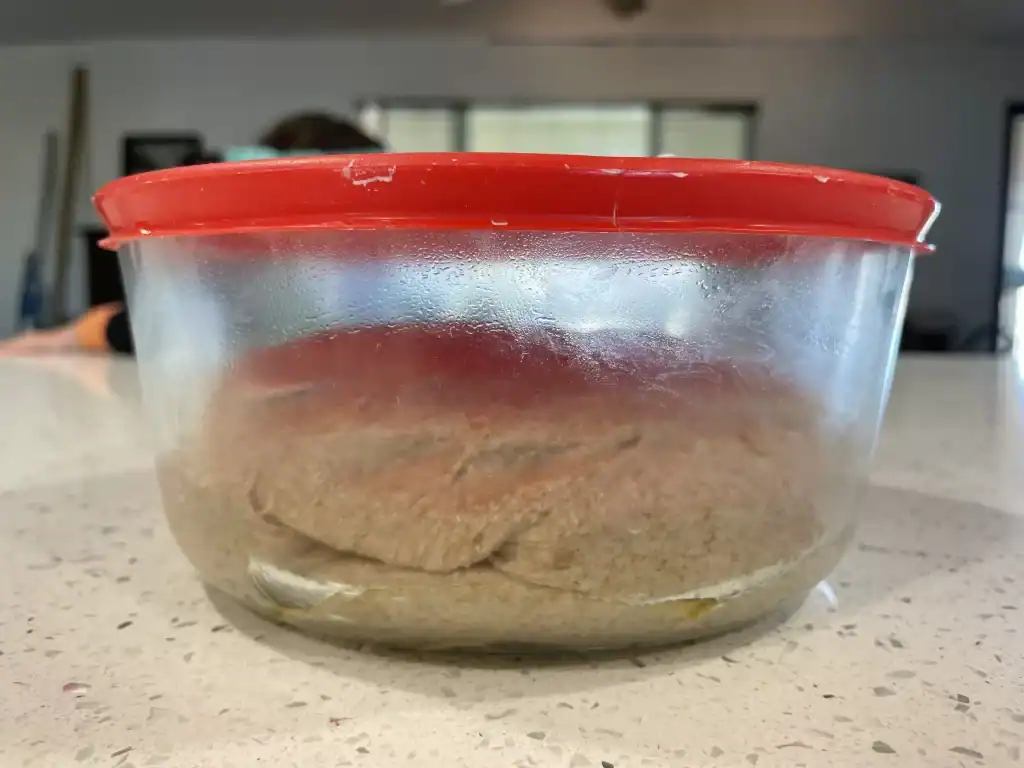
- Once the dough has been stretched and folded, take the dough out of the mixing bowl and place it into another container for the first rise/bulk fermentation. I placed my dough into a glass bowl with an airtight lid that I greased with a little bit of olive oil. Place the dough smooth side up and seam side down into your glass bowl and cover it tightly with a lid or a sheet of plastic wrap.
- Let the dough rise on the counter at room temperature for 6-8 hours, or until it is roughly doubled in size. Then, move on to the shaping step.
Shaping
- Remove the dough from the glass bowl and place it onto the kitchen counter with the seam side facing down and the smooth side facing up.
- Pre-shape the dough into a ball by cupping and pulling the dough with your hands to create tension across the top of the loaf. (See the recipe video for a visual demonstration of the shaping technique). There is no need to put any flour on the counter during the pre-shaping step, since the dough should hold together nicely.
- Let the dough rest on the counter uncovered for 15-30 minutes.
- 30 minutes later, give the dough its final shape. I prefer a round “boule” shape for this recipe. To give the dough a round final shape, dust the top of the dough with a little bit of spelt flour, and then cup and pull the dough 3-4 times with your hands exactly like you did for the pre-shape step. You should end up with a round, tight ball of dough.
Final Proof
- Prepare a 9″ or 10″ round banneton basket by dusting it with whole grain spelt flour.
- Flip the shaped ball of dough over and place it seam side up and floured side down into the banneton basket. Then, let your dough rise either at room temperature or overnight in the fridge.
- Room Temperature Final Proof Option – Cover the banneton basket with a kitchen towel and let the dough rise at room temperature for 2-3 hours, or until roughly doubled in size.
- Cold Proof in The Fridge Option – Cover the banneton basket with a kitchen towel and move it into the refrigerator. Let the dough proof in the cold environment of the fridge for 8-24 hours. This is my preferred way to allow this spelt sourdough bread dough to proof as there is less risk that the dough will overproof, and the flavor is improved with the longer fermentation time.
Baking
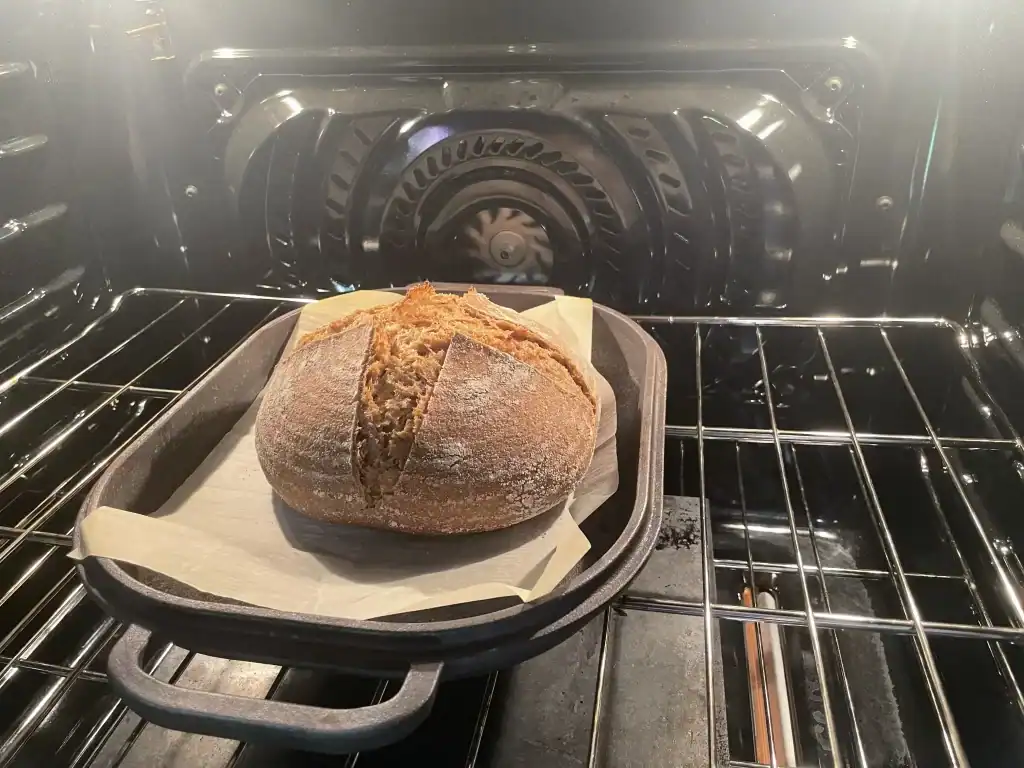
- Pre-heat your oven to 500°F (262°C) for 30 minutes. Place a Dutch oven inside the oven to preheat as well.
- When your oven is preheated, remove the dough from the refrigerator and flip it out of the banneton basket and onto a piece of parchment paper.
- Dust off the excess flour from the top of the dough and score the top of the loaf in an “X” pattern with a razor blade or bread lame.
- Transfer the dough, with the parchment paper and all, inside of the hot Dutch oven. Close the Dutch oven lid and bake the bread for 20 minutes with the lid on.
- 20 minutes later, remove the Dutch oven lid to release the steam. Continue baking for an additional 15-20 minutes until the bread has a dark brown color that you are happy with.
- Transfer the loaf of bread onto a cooling rack and allow it to cool for at least one hour before slicing.
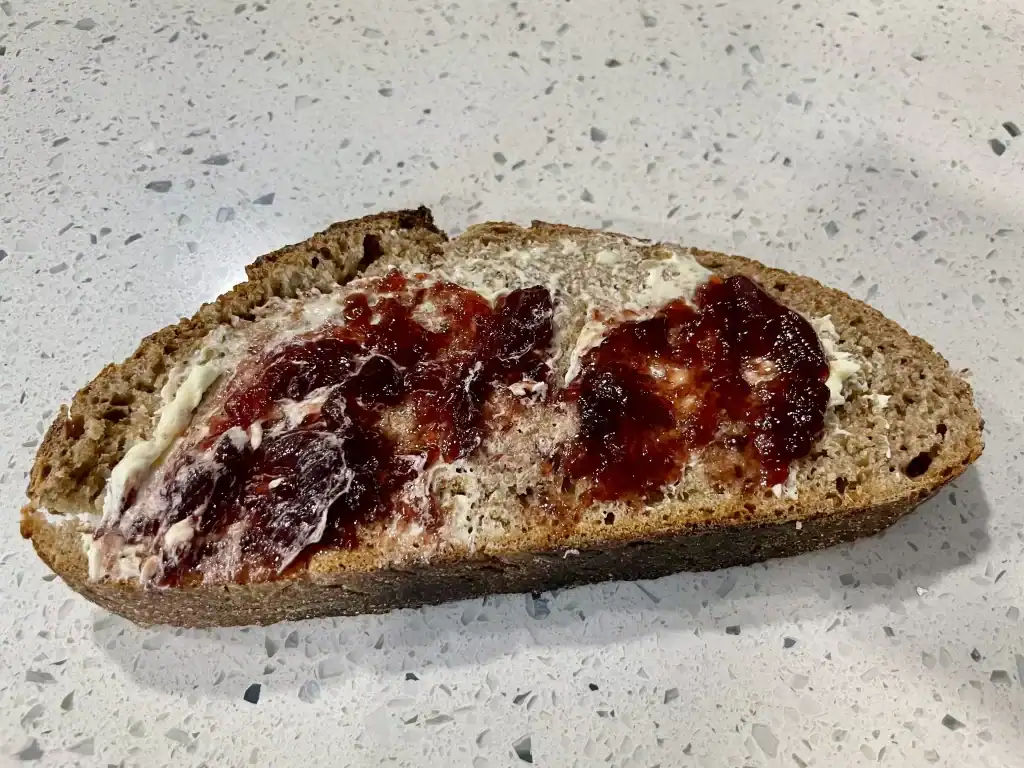
- Enjoy slices of this wholesome spelt sourdough bread toasted with some butter and jam. I find the flavor to be nutty, malty, and very delicious.
Spelt Sourdough Bread (100% Whole Grain)
This spelt sourdough bread made with 100% whole grain spelt flour is nutty, malty, and delicious. With a crispy crust on the outside and a tender crumb on the inside, you'll love this wholesome whole grain loaf of spelt bread.
Ingredients
Starter Feeding
- Sourdough Starter, leftover - 25 grams
- Water - 50 grams
- Whole Grain Spelt Flour - 50 grams
Main Dough
- Whole Grain Spelt Flour - 450 grams
- Water - 275 grams
- Sourdough Starter - 100 grams
- Salt - 10 grams
Instructions
Feeding Your Sourdough Starter
- Take 25 grams of sourdough starter out of the fridge. Add 50 grams of water and 50 grams of whole grain spelt flour to the starter. Stir thoroughly to combine.
- Mark the top of the starter with a rubber band and loosely close the lid of the sourdough starter jar. Let the starter rise at room temperature overnight, or for 6-8 hours. In the morning, the starter should be doubled in size and ready to use.
Mixing The Dough
- On a kitchen scale, weigh out the water, salt, and active sourdough starter. Mix thoroughly to combine. Then, add all of the whole grain spelt flour to the liquid ingredients. Mix the flour into the other ingredients until all of the dry bits of flour have disappeared.
- Cover the mixing bowl with a kitchen towel and let the dough rest for 30 minutes on your kitchen counter.
Stretch and Folds
- A half hour later, perform the first set of stretch and folds. Stretch an edge of the dough up into the air and fold it over the top of the dough. Give the bowl a quarter turn and stretch and fold the next edge of the dough. Give the dough four folds in total and then cover up the mixing bowl with a kitchen towel and let the dough rest for another 30 minutes.
- 30 minutes later, give the dough another set of stretch and folds just like the first. Cover the dough and let it rest for another 30 minutes.
- A half hour later, give the dough a third and final set of stretch and folds exactly like last time.
The First Rise (Bulk Fermentation)
- Once the dough has been stretched and folded, take the dough out of the mixing bowl and place it into another container for the first rise/bulk fermentation. I placed my dough into a glass bowl with an airtight lid that I greased with a little bit of olive oil. Place the dough smooth side up and seam side down into your glass bowl and cover it tightly with a lid or a sheet of plastic wrap.
- Let the dough rise on the counter at room temperature for 6-8 hours, or until it is roughly doubled in size. Then, move on to the shaping step.
Shaping
- Remove the dough from the glass bowl and place it onto the kitchen counter with the seam side facing down and the smooth side facing up.
- Pre-shape the dough into a ball by cupping and pulling the dough with your hands to create tension across the top of the loaf. (See the recipe video for a visual demonstration of the shaping technique). There is no need to put any flour on the counter during the pre-shaping step, since the dough should hold together nicely.
- Let the dough rest on the counter uncovered for 15-30 minutes.
- 30 minutes later, give the dough its final shape. I prefer a round “boule” shape for this recipe. To give the dough a round final shape, dust the top of the dough with a little bit of spelt flour, and then cup and pull the dough 3-4 times with your hands exactly like you did for the pre-shape step. You should end up with a round, tight ball of dough.
Final Proof
- Prepare a 9″ or 10″ round banneton basket by dusting it with whole grain spelt flour.
- Flip the shaped ball of dough over and place it seam side up and floured side down into the banneton basket. Then, let your dough rise either at room temperature or overnight in the fridge.
- Room Temperature Final Proof Option – Cover the banneton basket with a kitchen towel and let the dough rise at room temperature for 2-3 hours, or until roughly doubled in size.
- Cold Proof in The Fridge Option – Cover the banneton basket with a kitchen towel and move it into the refrigerator. Let the dough proof in the cold environment of the fridge for 8-24 hours. This is my preferred way to allow this recipe to proof as there is less risk that the dough will overproof, and the flavor is improved with the longer fermentation time.
Baking
- Pre-heat your oven to 500°F (262°C) for 30 minutes. Place a Dutch oven inside the oven to preheat as well.
- When your oven is preheated, remove the dough from the refrigerator and flip it out of the banneton basket and onto a piece of parchment paper.
- Dust off the excess flour from the top of the dough and score the top of the loaf in an “X” pattern with a razor blade or bread lame.
- Transfer the dough, with the parchment paper and all, inside of the hot Dutch oven. Close the Dutch oven lid and bake the bread for 20 minutes with the lid on.
- 20 minutes later, remove the Dutch oven lid to release the steam. Continue baking for an additional 15-20 minutes until the bread has a dark brown color that you are happy with.
- Transfer the loaf of bread onto a cooling rack and allow it to cool for at least one hour before slicing.
- Enjoy slices of this wholesome spelt sourdough bread toasted with some butter and jam. I find the flavor to be nutty, malty, and very delicious.