

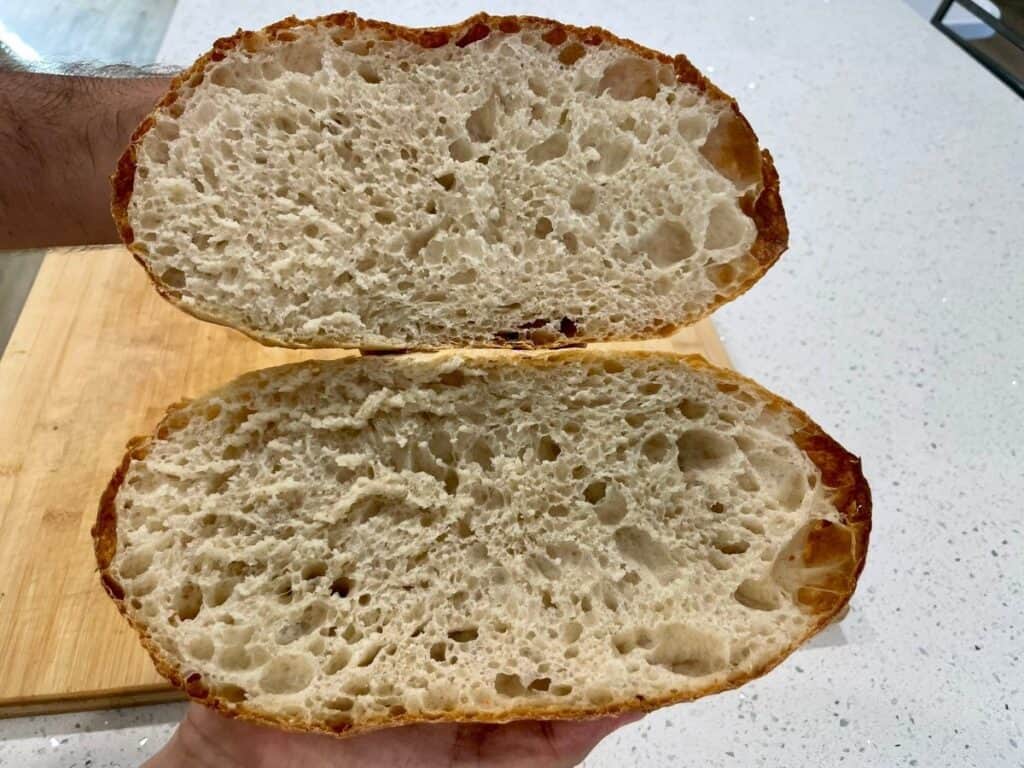
This easy sourdough ciabatta recipe produces two beautiful, open crumb ciabatta loaves. It doesn’t require an autolyse or any complicated steps. Plus, you can bake these on a baking stone if you have one, or on a metal sheet pan if you don’t. It’s a super flexible recipe and perfect for home bakers.
Why You’ll Love This Sourdough Ciabatta
As the story goes, ciabatta was originally invented by a baker in Italy to combat the popularity of the French baguette. Traditionally, ciabatta uses a relatively wet dough, and it’s leavened with baker’s yeast or a stiff Italian preferment called “biga.”
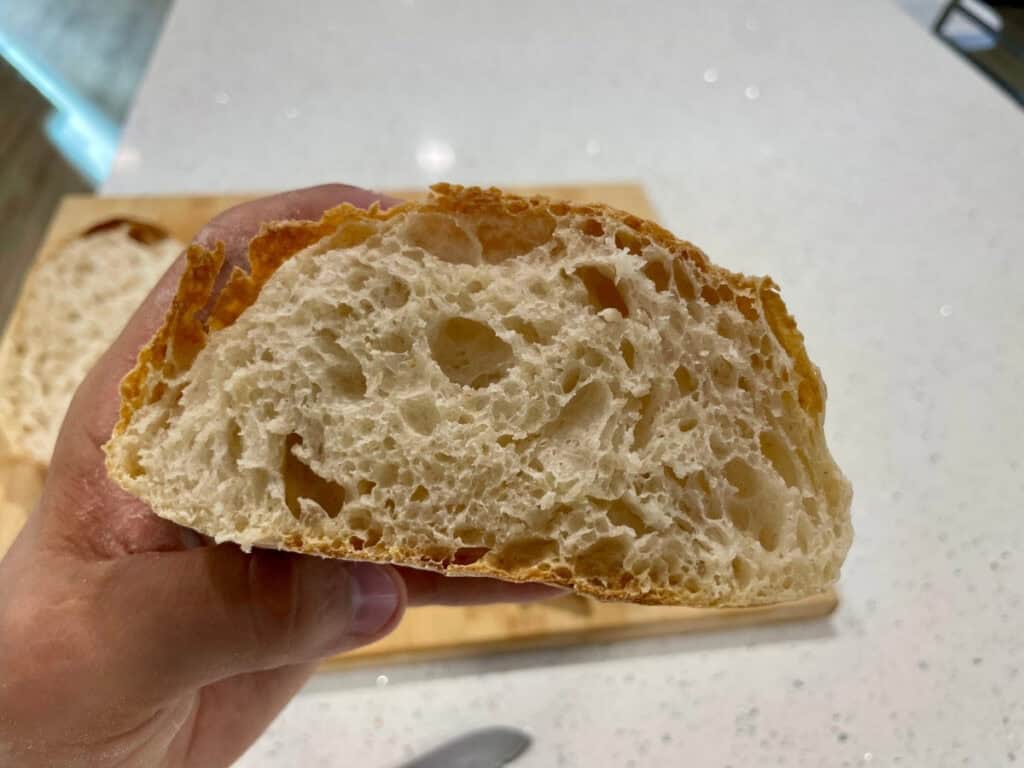
Due to the high water content, delicate shaping, and long-fermentation, ciabatta usually has a beautiful, bubbly, open crumb. This is often missing from commercial ciabatta buns that you find in the supermarket. It takes time and patience to produce good-looking ciabatta, which aren’t things that commercial bakeries are necessarily known for.
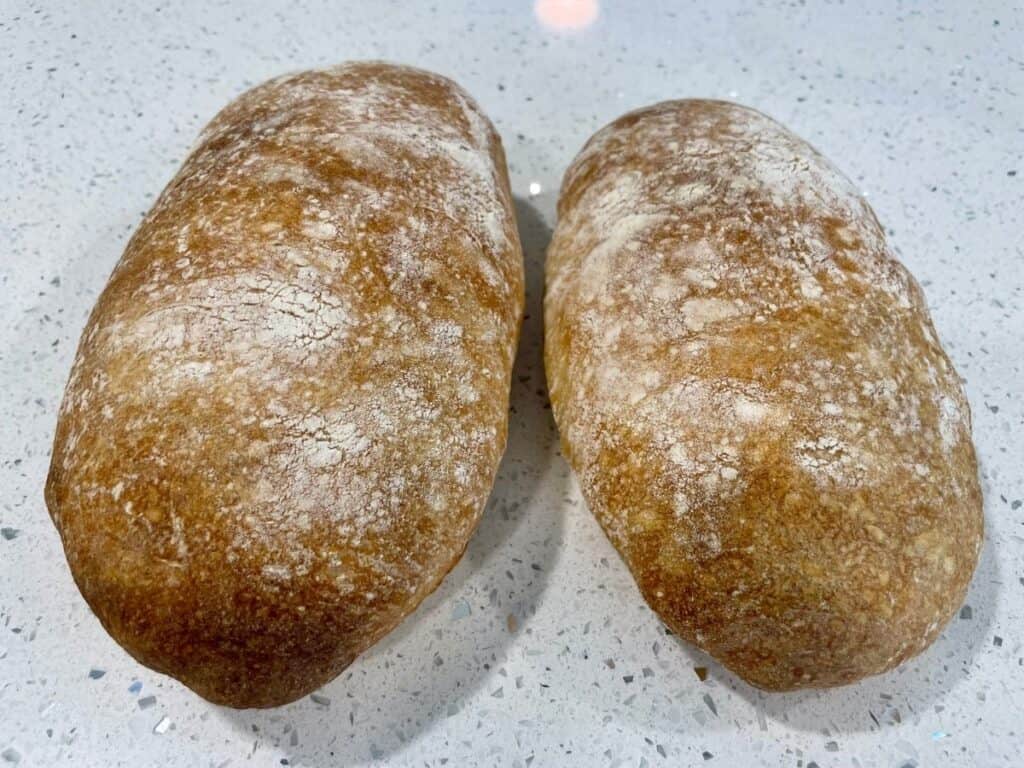
If you’re looking for a no-fuss sourdough ciabatta recipe, this is the recipe for you!
Ingredient Amounts
Sourdough Starter Feeding
- Sourdough Starter – 25 grams
- Bread Flour – 50 grams
- Water – 50 grams
Main Dough
- Bread Flour – 400 grams
- Whole Wheat Flour – 50 grams
- Water – 350 grams
- Sourdough Starter – 100 grams
- Salt – 10 grams
Note: You can replace the 50 grams of whole wheat flour with 50 grams of bread flour for an “all bread flour” version of this sourdough ciabatta.
How to Make Sourdough Ciabatta
Step-by-Step Instructions
Feeding your sourdough starter
Take 25 grams of leftover sourdough starter and feed it 50 grams of bread flour and 50 grams of water. Let it rise overnight, or about 6-8 hours, until it doubles in size.
Mixing the Ingredients
Mix the water, sourdough starter, and salt together in a mixing bowl. Stir to dissolve the starter and salt into the water. Then, add the bread flour. (If desired, you can replace 50 grams of the bread flour with whole wheat flour to add some whole grain to this recipe). Stir all of the ingredients together until the flour absorbs the water and you’re left with a very wet dough. Cover up the dough with a kitchen towel and let it rest for 30 minutes.
Stretch and Folds
After the 30 minute rest, it’s time to perform stretch and folds to strengthen the gluten within the dough. Perform three sets of stretch and folds with a 30 minute rest in between each.
Each time you perform the next set of stretch and folds, the dough will feel smoother and it will hold together better. Watch the video to see an in-depth explanation of the stretch and fold process.
The First Rise (Bulk Fermentation)
Grease a square glass container with olive oil and transfer the dough, smooth side up, into the glass container. Cover up the dough with the lid and let it bulk ferment for 3-5 hours, or until it doubles in size.
Then, move the dough to the fridge for 8-12 hours for an extended cold fermentation. This will increase the complex flavor of the sourdough ciabatta.
Dividing and Shaping
Dust the countertop with a generous amount of bread flour and turn the dough upside down onto the floured surface. Let the dough release from the container slowly.
Once the large square of dough is on the floured surface, sprinkle another generous amount of flour onto the top of the dough.
Cut the large square of dough down the center with a bench scraper or a chef’s knife, creating two equally sized rectangular-shaped ciabatta loaves. Tuck the edges of each piece of dough underneath to smooth out the edges and round out the corners. This is all the shaping you will need to do.
Transfer the loaves onto a piece of parchment paper that will fit onto your baking stone, then, cut the parchment paper down the middle to separate the two loaves. (If you don’t have a baking stone/pizza stone, just place the ciabatta loaves on a metal sheet pan lined with parchment paper.)
Proofing
Cover up the dough with a kitchen towel, and let the dough proof for 45-60 minutes at room temperature.
Then, 30 minutes before baking, preheat your oven to 450°F (232°C) with a baking stone in the middle rack of the oven and a metal pan on the lower rack. (If you will be using a sheet pan, just keep the middle rack open). Lastly, place a metal cake pan or pie pan on the lower rack of the oven to function as a steam tray. Let the oven preheat for 30 minutes.
Baking
When the oven is preheated, transfer each of the sourdough ciabatta loaves onto the baking stone with the parchment paper and all. (If you are using a sheet pan, slide it into the middle rack of the oven.)
Then, pour about a cup of boiling water into the metal pan underneath. This hot water will fill the oven with steam and give the bread a crispy, well-developed crust.
Bake the ciabatta loaves for 20 minutes with steam and then carefully remove the steam tray from the oven. You can rotate the loaves now if you see that they are browning unevenly. Continue baking for another 5-10 minutes without steam until the loaves develop a golden brown crust.
Serving
Transfer the sourdough ciabatta loaves onto a wire rack to cool for at least one hour before you slice them. Then, slice your ciabatta loaves length-wise to make an amazing panini-style sandwich, or slice them in sections to make crostini or for something to serve alongside almost any dinner.
FAQs: Sourdough Ciabatta
You can make ciabatta with sourdough starter instead of yeast. Since sourdough starter is just a naturally form of yeast, you can leaven almost any kind of bread, including ciabatta, with a sourdough starter.
Sourdough Ciabatta Recipe (Easy, No Autolyse)
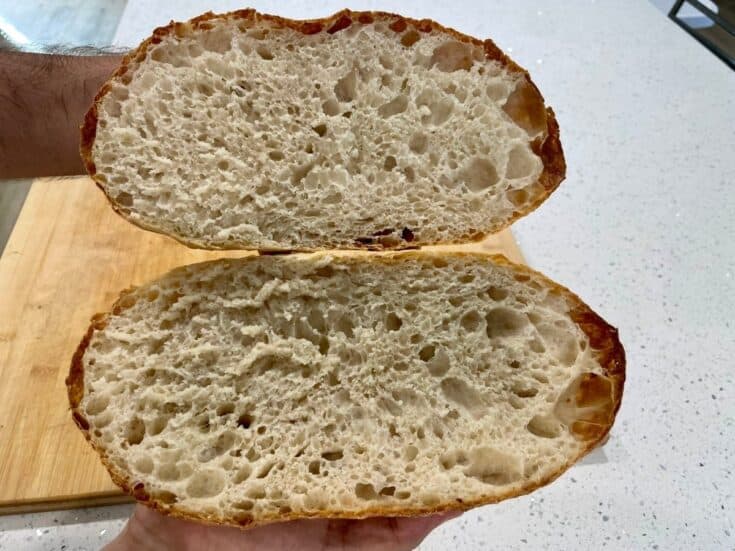
This easy sourdough ciabatta recipe produces two beautiful. open crumb ciabatta loaves. It doesn't require an autolyse or any complicated steps, plus you can bake it on a baking stone or a metal sheet pan. It's very flexible.
Ingredients
- Bread Flour - 400 grams
- Whole Wheat Flour - 50 grams
- Water - 350 grams
- Sourdough Starter - 100 grams
- Salt - 10 grams
Instructions
Feeding Your Sourdough Starter
Take 25 grams of leftover sourdough starter and feed it 50 grams of bread flour and 50 grams of water. Let it rise overnight, or about 6-8 hours, until it doubles in size.Mixing the ingredients - Mix the bread flour, whole wheat flour, salt, sourdough starter, and water in a mixing bowl. Stir all of the ingredients together until the starter is fully incorporated into the dough and the flour absorbs the water. Then, cover up the dough with a kitchen towel and let it rest for 30 minutes.
Mixing the Ingredients
Mix the water, sourdough starter, and salt together in a mixing bowl. Stir to dissolve the starter and salt into the water. Then, add the bread flour. (If desired, you can replace 50 grams of the bread flour with whole wheat flour to add some whole grain to this recipe). Stir all of the ingredients together until the flour absorbs the water and you’re left with a very wet dough. Cover up the dough with a kitchen towel and let it rest for 30 minutes.
Stretch and Folds
After the 30 minute rest, it’s time to perform stretch and folds to strengthen the gluten within the dough. Perform three sets of stretch and folds with a 30 minute rest in between each.
Each time you perform the next set of stretch and folds, the dough will feel smoother and it will hold together better. Watch the video to see an in-depth explanation of the stretch and fold process.
The First Rise (Bulk Fermentation)
Grease a square glass container with olive oil and transfer the dough, smooth side up, into the glass container. Cover up the dough with the lid and let it bulk ferment for 3-5 hours, or until it doubles in size.
Then, move the dough to the fridge for 8-12 hours for an extended cold fermentation. This will increase the complex flavor of the sourdough ciabatta.
Dividing and Shaping
Dust the countertop with a generous amount of bread flour and turn the dough upside down onto the floured surface. Let the dough release from the container slowly.
Once the large square of dough is on the floured surface, sprinkle another generous amount of flour onto the top of the dough.
Cut the large square of dough down the center with a bench scraper or a chef’s knife, creating two equally sized rectangular-shaped ciabatta loaves. Tuck the edges of each piece of dough underneath to smooth out the edges and round out the corners. This is all the shaping you will need to do.
Transfer the loaves onto a piece of parchment paper that will fit onto your baking stone, then, cut the parchment paper down the middle to separate the two loaves. (If you don’t have a baking stone/pizza stone, just place the ciabatta loaves on a metal sheet pan lined with parchment paper.)
Proofing
Cover up the dough with a kitchen towel, and let the dough proof for 45-60 minutes at room temperature.
Then, 30 minutes before baking, preheat your oven to 450°F (232°C) with a baking stone in the middle rack of the oven and a metal pan on the lower rack. (If you will be using a sheet pan, just keep the middle rack open). Lastly, place a metal cake pan or pie pan on the lower rack of the oven to function as a steam tray. Let the oven preheat for 30 minutes.
Baking
When the oven is preheated, transfer each of the sourdough ciabatta loaves onto the baking stone with the parchment paper and all. (If you are using a sheet pan, slide it into the middle rack of the oven.)
Then, pour about a cup of boiling water into the metal pan underneath. This hot water will fill the oven with steam and give the bread a crispy, well-developed crust.
Bake the ciabatta loaves for 20 minutes with steam and then carefully remove the steam tray from the oven. You can rotate the loaves now if you see that they are browning unevenly. Continue baking for another 5-10 minutes without steam until the loaves develop a golden brown crust.
Serving
Transfer the sourdough ciabatta loaves onto a wire rack to cool for at least one hour before you slice them. Then, slice your ciabatta loaves length-wise to make an amazing panini-style sandwich, or slice them in sections to make crostini or for something to serve alongside almost any dinner.