

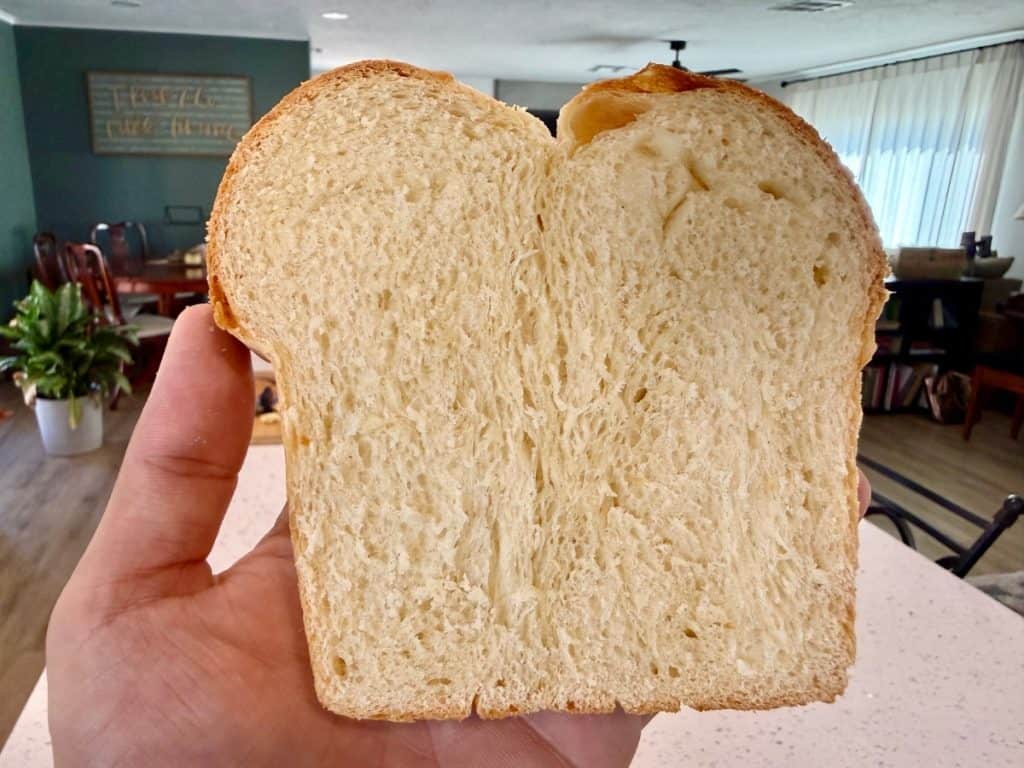
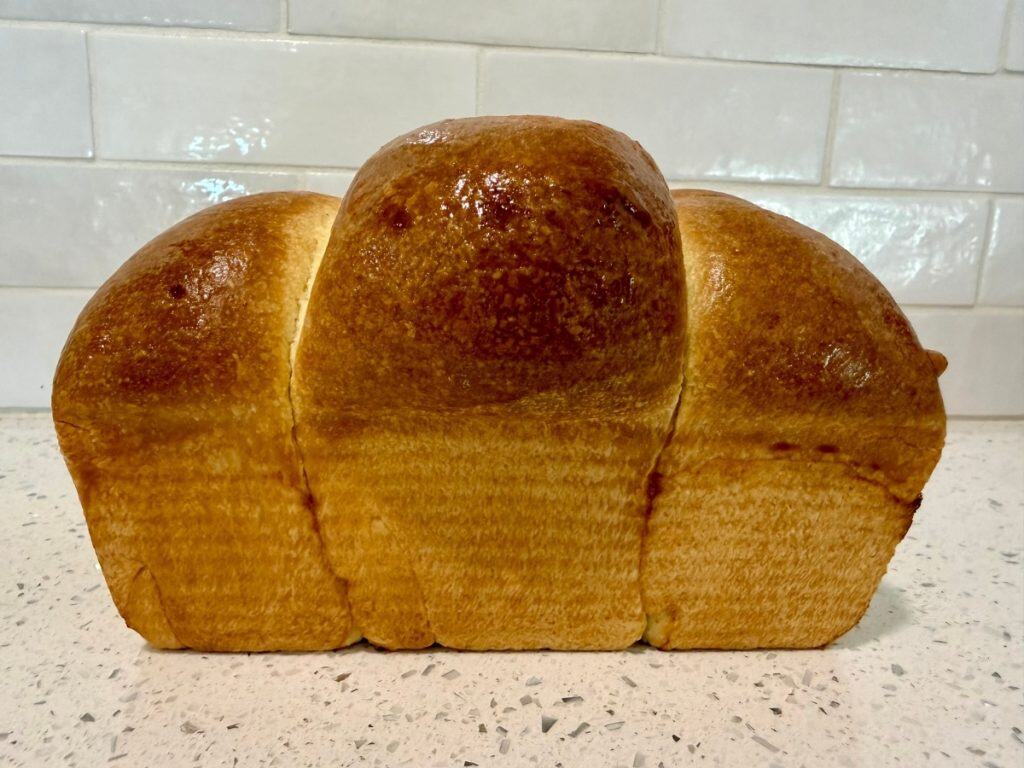
This sourdough brioche is buttery, soft, lightly sweet, and tender (somewhere in between bread and cake). The dough is enriched with eggs, butter, milk, and sugar, and the dough is naturally leavened with sourdough starter instead of yeast.
Why This Recipe Works
Brioche is known as a relatively challenging dough to work with – since it’s made with eggs, sugar, and plenty of softened butter, the dough can be very sticky. For this recipe, we keep things manageable by just using one stick of butter (nothing excessive), and we use a stand mixer to knead the dough to keep the counter clean. At the end of the day, if you follow my process and use a stand mixer to knead the dough, sourdough brioche is actually pretty easy to make!
Ingredients You’ll Need for Sourdough Brioche
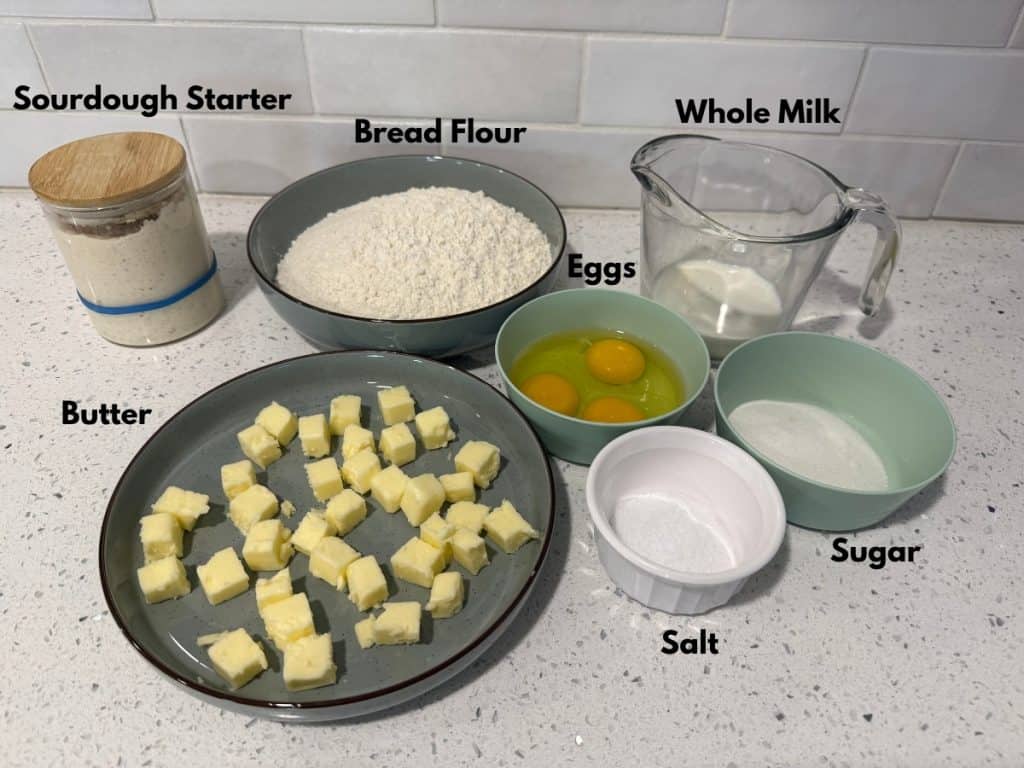
Main Dough Ingredients
- Bread Flour: I used the Bob’s Red Mill brand of artisan bread flour for this recipe. You can use any plain white bread flour that contains around 11-13% protein.
- Eggs: You’ll need three medium eggs for this dough. (Technically you’ll need about 150 grams of eggs once the three eggs are cracked into the bowl.) Eggs serve as the main liquid ingredient in brioche dough, providing tenderness and a unique texture to the bread.
- Whole Milk: For richness and flavor, I prefer to use whole milk for this recipe. For the best result I would stick with whole milk and wouldn’t try any lower-fat alternatives.
- Sourdough Starter: You’ll need a 100% hydration sourdough starter for this recipe (fed with equal parts water and bread flour).
- Butter, Softened: You’ll need an entire stick (113 grams or 1/4 lb.) of softened butter for this dough. This is actually less butter than some other brioche recipes call for. It’s enough to make a very rich dough, but not so much that the dough becomes too difficult to work with.
- White Sugar: This recipe calls for white sugar to bring sweetness and softness to the dough.
- Salt: I used Kosher salt for this recipe, but sea salt or plain table salt will also work well.
Egg Wash Ingredients
- Egg: You will need one egg to make an egg wash for the top of the dough. This will give the dough a shiny top as it bakes in the oven. See substitutions below if you don’t want to use an egg.
- Whole Milk: Adding a small amount of milk to the egg wash gives the rolls a shiny finish.
Note: See recipe card below for full ingredient amounts and quantities.
Ingredient Amounts
Starter Feeding
- Sourdough Starter, leftover – 25 grams
- Water – 75 grams
- Bread Flour – 75 grams
Main Dough
- Bread Flour – 450 grams
- Whole Milk – 100 grams
- Eggs – 150 grams (3 eggs)
- Sourdough Starter, active – 150 grams
- White Sugar – 40 grams
- Salt – 10 grams
- Butter, Softened – 113 grams (1/2 cup)
Egg Wash Ingredients
- Egg – 1 egg (50 grams)
- Whole Milk – 1 Tbsp (15 grams)
Suggested Timeline
| Time | Step |
|---|---|
| 3:00 PM (Day 1) | Feeding the Sourdough Starter |
| 6:00 AM (Day 2) | Mixing the Dough and Adding the Butter |
| 6:30 AM | The First Rise (Bulk Fermentation) |
| 1:30 PM | Cold Fermentation in Fridge |
| 6:00 AM (Day 3) | Dividing and Shaping |
| 6:15 AM | The Second Rise (Final Proof) |
| 11:15 AM | Baking |
How to Make Sourdough Brioche
Step-by-Step Instructions
Feeding the Sourdough Starter
Take 25 grams of leftover sourdough starter out of the fridge. Feed your starter 75 grams of water and 75 grams of bread flour. Mix the flour, water, and starter around in the jar until it has a pancake batter-like consistency. Mark the top of the starter with a rubber band and cover the top of the jar loosely with a lid. Let the starter rise at room temperature overnight, for around 6-8 hours, or until it doubles in size.
Mixing the Dough and Adding the Butter
Prepare your butter ahead of time by cutting a stick of butter into small cubes. Let the butter sit out at room temperature to soften for a few hours, or overnight, before you mix your dough.
To make the dough, add the whole milk, eggs, sourdough starter, white sugar, and salt to the bowl of a stand mixer. Stir thoroughly to break up the starter and the eggs. Then, add all of the bread flour.
Prepare the Dough for Butter: Using your stand mixer, mix the dough for 2-3 minutes on low speed until a rough dough forms and the dough stops sticking to the sides of the bowl. Once the dough pulls apart from the sides of the bowl, the dough is ready to accept the butter.
Add the Butter in Thirds: Add 1/3 of the softened butter to the dough and mix for 3-5 minutes on medium-low speed until all of the butter is incorporated and the butter is fully absorbed into the dough. Repeat this process two more times, adding 1/3 of the butter at a time, until the entire stick of softened butter is added to the dough. You’ll need to allow the dough to mix in the stand mixer for about five minutes each time that more butter is added. Don’t rush this process.
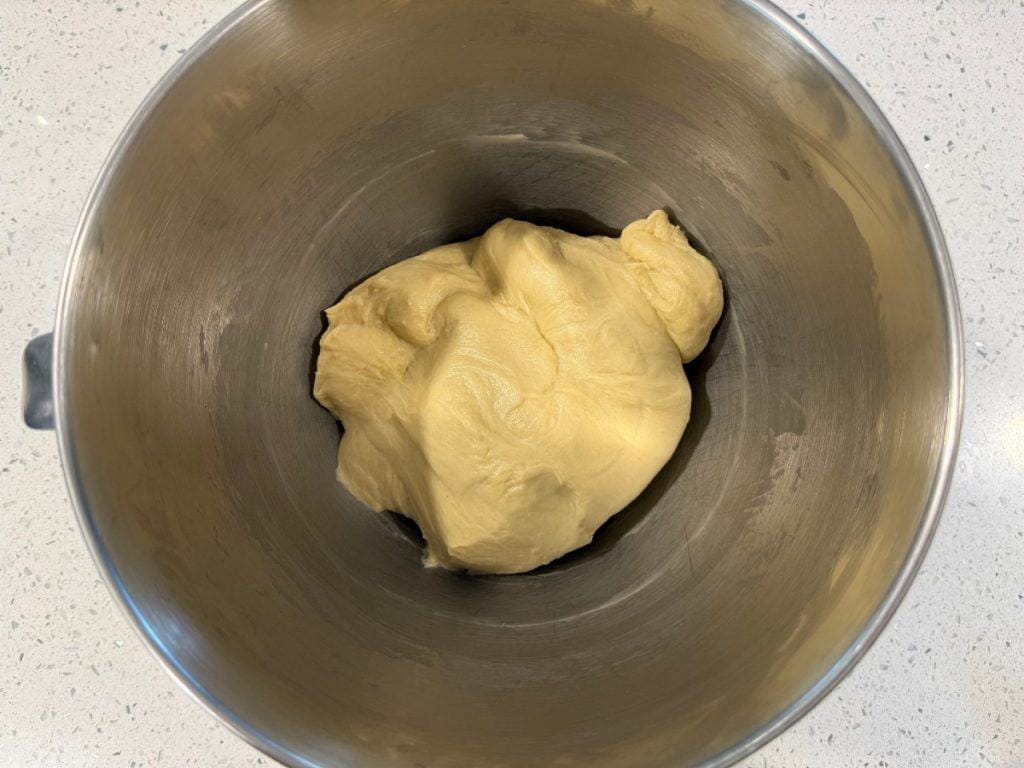
Develop the Gluten: Once all of the butter is absorbed into the dough, knead the dough on medium speed for 8 minutes. At the end of eight minutes, the dough should be fully developed and you should be able to perform an optional window-pane-test to ensure that the gluten is strong.
The First Rise (Bulk Fermentation)
Take the dough out of the mixing bowl and shape it into a tight ball on the counter. Transfer the dough into a glass bowl that has been greased with some butter. Cover the bowl with a lid or a sheet of plastic wrap and allow the dough to rise at room temperature for 6-8 hours, or until doubled in size.
Cold Fermentation in the Fridge
After the dough has fully risen to double in size, move the bowl to the fridge so that the dough can develop some additional flavor during a long cold fermentation. Leave the dough to cold ferment for up to 24 hours in the fridge. The cold fermentation step is technically options; you can move on to dividing and shaping your dough directly after it has gone through the first rise.
Dividing and Shaping
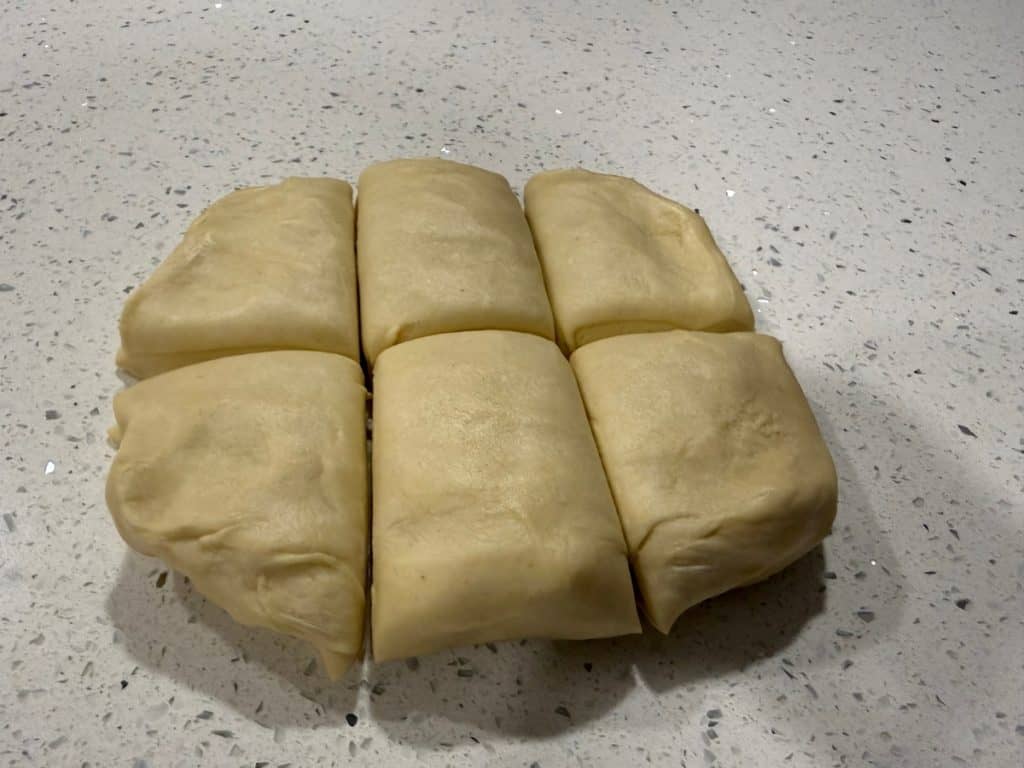
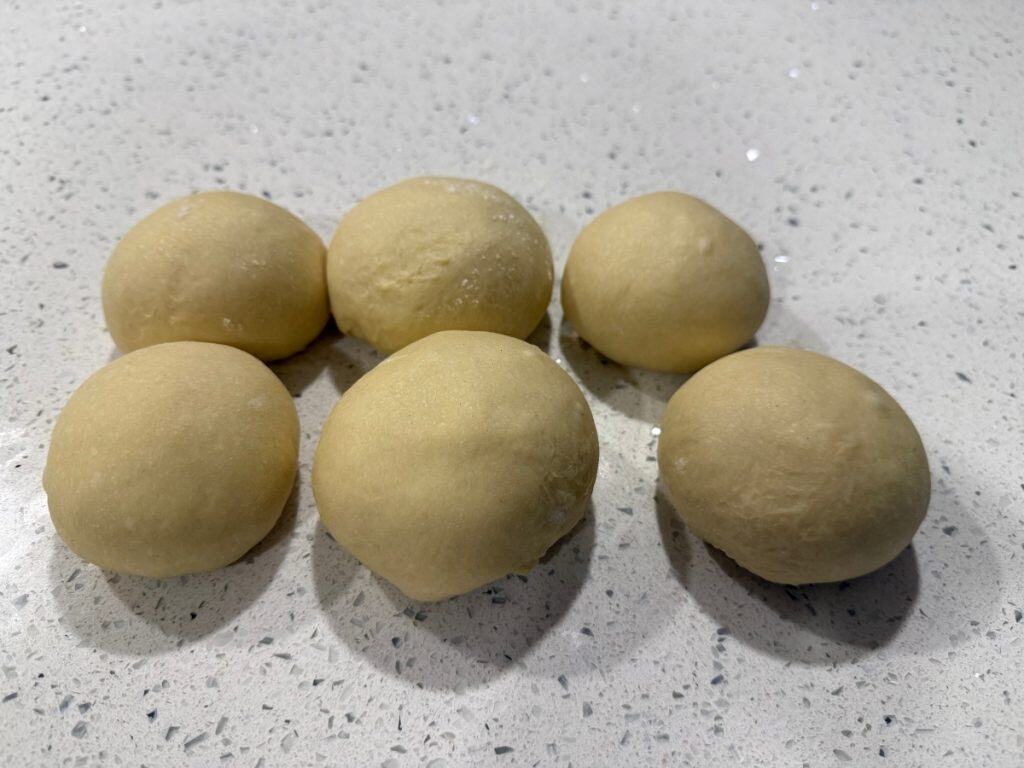
The next day, take the dough out of the fridge and divide the dough into six individual pieces. Shape each piece of dough into a ball and arrange the dough balls into a greased non-stick bread pan. I always use this non-stick sandwich bread pan from Amazon. It’s my favorite one.
The Second Rise (Final Proof)
Cover the pan of dough with a damp kitchen towel, or a sheet of greased plastic wrap, and allow the dough to rise for 4-6 hours at room temperature, or until the dough is roughly doubled in size. Don’t be afraid to let the dough proof until it’s completely doubled in size. Be patient. Enriched doughs like this one take a long time to rise and if you bake them too early, they can rip and burst at the seams while they bake in the oven.
Baking the Sourdough Brioche
30 minutes before you are ready to bake, preheat your oven to 350°F (180°C).
When your sourdough brioche dough is fully risen, Brush the top of the dough lightly with an eggwash using a pastry brush (egg wash = one egg + one tablespoon of whole milk). This egg wash will give the top of the brioche a shiny appearance.
Bake the sourdough brioche on the middle rack of your oven for 45-50 minutes at 350°F (180°C). There’s no need to add steam to the oven when baking brioche since the butter in the dough will allow the crust to rise properly without extra steam.
Remove the bread from the oven when the internal temperature of the bread reads 190°F with a probe thermometer. Allow bread to cool on a wire rack for one hour before slicing and enjoy with butter and jam. This sourdough brioche is also great toasted, and you can make leftover slices of brioche into amazing sourdough french toast.
Sourdough Brioche
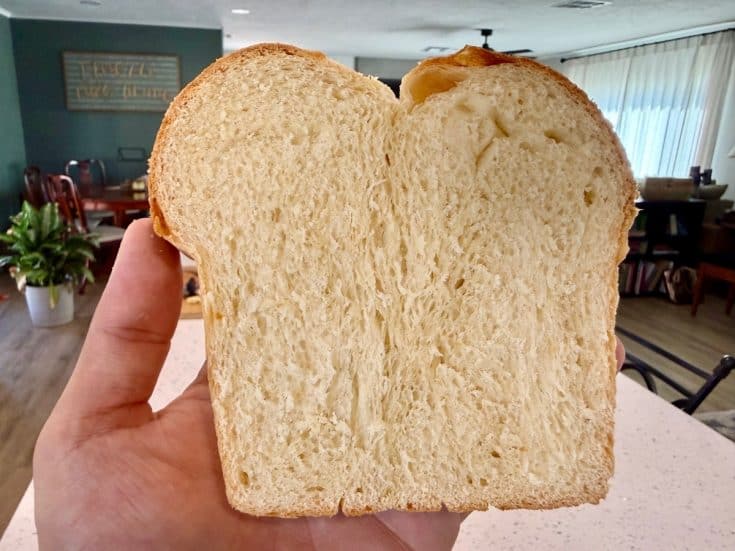
This sourdough brioche is buttery, soft, lightly sweet, and tender (somewhere in between bread and cake). The dough is enriched with eggs, butter, milk, and sugar, and the dough is naturally leavened with sourdough starter instead of yeast.
Ingredients
Starter Feeding
- Sourdough Starter, leftover – 25 grams
- Water – 75 grams
- Bread Flour – 75 grams
Main Dough
- Bread Flour – 450 grams
- Whole Milk – 100 grams
- Eggs – 150 grams (3 eggs)
- Sourdough Starter, active – 150 grams
- White Sugar – 40 grams
- Salt – 10 grams
- Butter, Softened – 113 grams (1/2 cup)
Egg Wash Ingredients
- Egg – 1 egg (50 grams)
- Whole Milk – 1 Tbsp (15 grams)
Instructions
Feeding the Sourdough Starter
Take 25 grams of leftover sourdough starter out of the fridge. Feed your starter 75 grams of water and 75 grams of bread flour. Mix the flour, water, and starter around in the jar until it has a pancake batter-like consistency. Mark the top of the starter with a rubber band and cover the top of the jar loosely with a lid. Let the starter rise at room temperature overnight, for around 6-8 hours, or until it doubles in size.
Mixing the Dough and Adding the Butter
Prepare your butter ahead of time by cutting a stick of butter into small cubes. Let the butter sit out at room temperature to soften for a few hours, or overnight, before you mix your dough.
To make the dough, add the whole milk, eggs, sourdough starter, white sugar, and salt to the bowl of a stand mixer. Stir thoroughly to break up the starter and the eggs. Then, add all of the bread flour.
Prepare the Dough for Butter: Using your stand mixer, mix the dough for 2-3 minutes on low speed until a rough dough forms and the dough stops sticking to the sides of the bowl. Once the dough pulls apart from the sides of the bowl, the dough is ready to accept the butter.
Add the Butter in Thirds: Add 1/3 of the softened butter to the dough and mix for 3-5 minutes on medium-low speed until all of the butter is incorporated and the butter is fully absorbed into the dough. Repeat this process two more times, adding 1/3 of the butter at a time, until the entire stick of softened butter is added to the dough. You’ll need to allow the dough to mix in the stand mixer for about five minutes each time that more butter is added. Don’t rush this process.
Develop the Gluten: Once all of the butter is absorbed into the dough, knead the dough on medium speed for 8 minutes. At the end of eight minutes, the dough should be fully developed and you should be able to perform an optional window-pane-test to ensure that the gluten is strong.
The First Rise (Bulk Fermentation)
Take the dough out of the mixing bowl and shape it into a tight ball on the counter. Transfer the dough into a glass bowl that has been greased with some butter. Cover the bowl with a lid or a sheet of plastic wrap and allow the dough to rise at room temperature for 6-8 hours, or until doubled in size.
Cold Fermentation in the Fridge
After the dough has fully risen to double in size, move the bowl to the fridge so that the dough can develop some additional flavor during a long cold fermentation. Leave the dough to cold ferment for up to 24 hours in the fridge. The cold fermentation step is technically options; you can move on to dividing and shaping your dough directly after it has gone through the first rise.
Dividing and Shaping
The next day, take the dough out of the fridge and divide the dough into six individual pieces. Shape each piece of dough into a ball and arrange the dough balls into a greased non-stick bread pan. I always use this non-stick sandwich bread pan from Amazon. It’s my favorite one.
The Second Rise (Final Proof)
Cover the pan of dough with a damp kitchen towel, or a sheet of greased plastic wrap, and allow the dough to rise for 4-6 hours at room temperature, or until the dough is roughly doubled in size. Don’t be afraid to let the dough proof until it’s completely doubled in size. Be patient. Enriched doughs like this one take a long time to rise and if you bake them too early, they can rip and burst at the seams while they bake in the oven.
Baking the Sourdough Brioche
30 minutes before you are ready to bake, preheat your oven to 350°F (180°C).
When your sourdough brioche dough is fully risen, Brush the top of the dough lightly with an eggwash using a pastry brush (egg wash = one egg + one tablespoon of whole milk). This egg wash will give the top of the brioche a shiny appearance.
Bake the sourdough brioche on the middle rack of your oven for 45-50 minutes at 350°F (180°C). There’s no need to add steam to the oven when baking brioche since the butter in the dough will allow the crust to rise properly without extra steam.
Remove the bread from the oven when the internal temperature of the bread reads 190°F with a probe thermometer. Allow bread to cool on a wire rack for one hour before slicing and enjoy with butter and jam. This sourdough brioche is also great toasted, and you can make leftover slices of brioche into amazing sourdough french toast.