

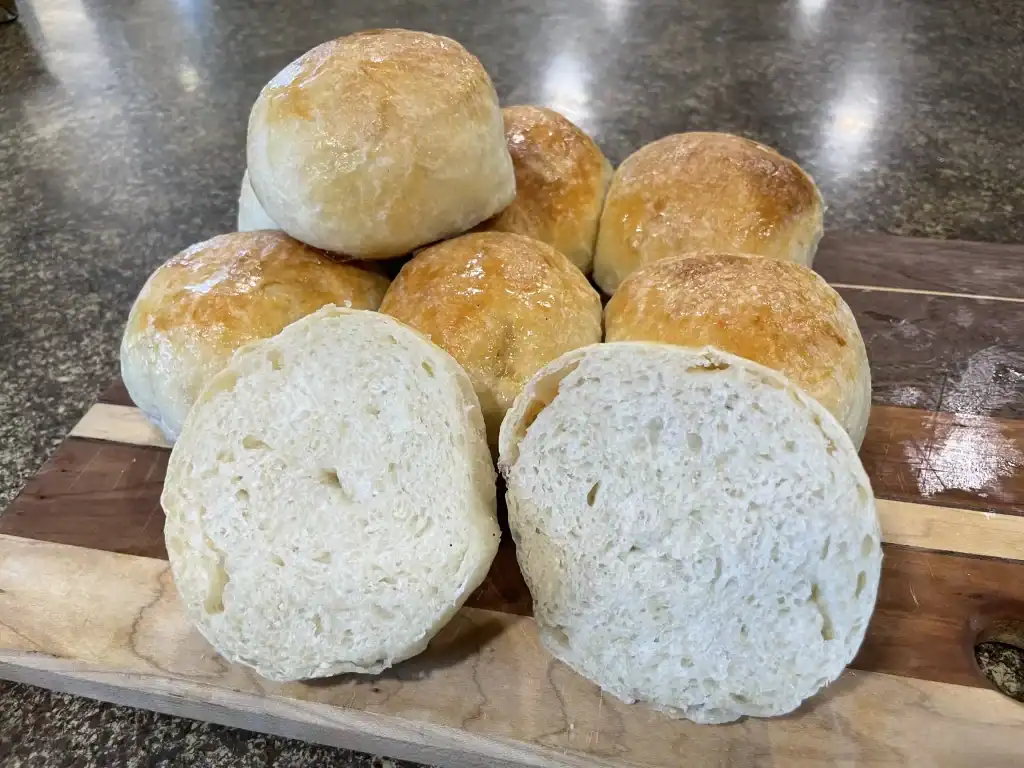
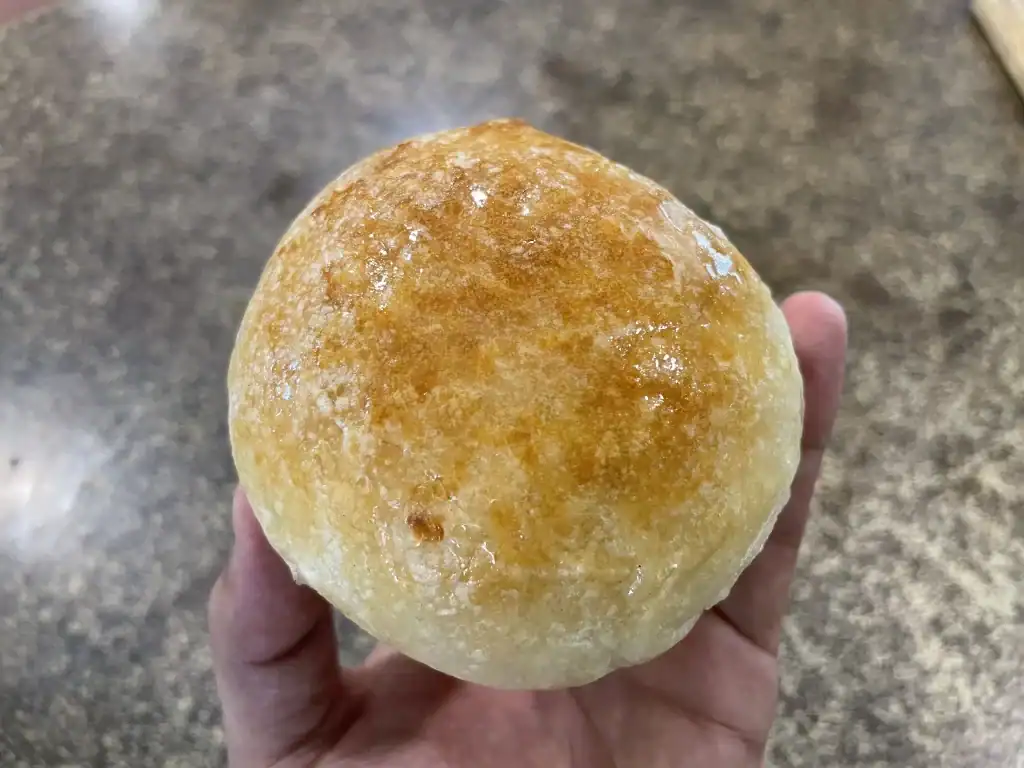
These easy sourdough hamburger buns are light and fluffy, simple to make, and they’re perfect to make the day before you want to use them. They are the ideal hamburger bun for a cookout or summer barbecue. The best part is that these buns actually taste like great bread instead of the soft and squishy, tasteless buns that they sell at the supermarket.
Why This Recipe Works
Using the base dough from my popular soft sourdough sandwich bread recipe, you can shape the dough into individual rolls and bake them together in a pan. You end up with the softest and fluffiest, pull-apart sourdough hamburger buns that are sure to be a hit at your summer party.
Seriously, who brings homemade sourdough hamburger buns to their cookout? With this recipe, it can be you.
Ingredients You’ll Need
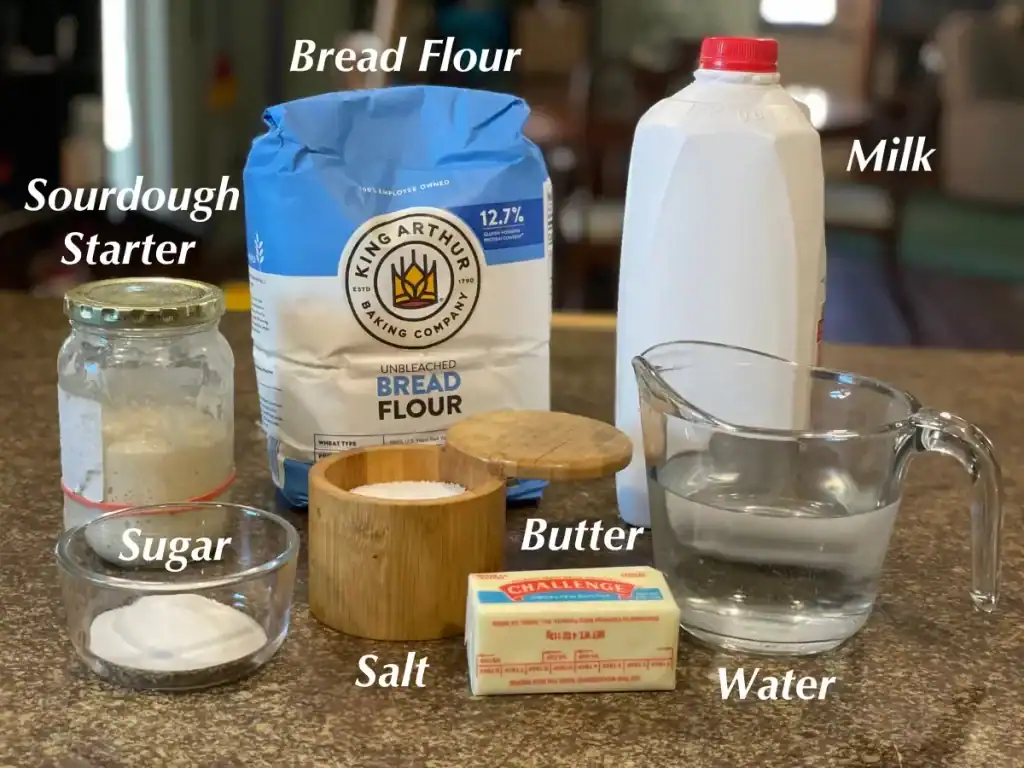
- Bread Flour: I prefer to use King Arthur brand bread flour for this recipe (the one in the blue bag). Any white bread flour that has around a 12-13% protein content will work perfectly. This type of flour will make the burger buns light and fluffy with the perfect amount of chewiness.
- Water: Un-chlorinated tap water or bottled spring water are ideal for this recipe. You may need to use less water or more water depending on how much water your particular flour requires. See the substitutions and additions section below for recommendations on adjusting water content.
- Whole Milk: The richness of whole milk adds a velvety softness to these easy sourdough hamburger buns. Milk will make up a little less than half of the total liquid in this sourdough hamburger bun recipe so use good whole milk if you can.
- Sugar: A touch of white sugar will add some sweetness to these light and fluffy hamburger buns, but the sugar will also retain moisture in the bread keeping these buns softer for longer.
- Salt: Kosher salt, sea salt, or plain table salt are ideal for this recipe. This will help the bread rise appropriately as well as balance out the flavors.
- Sourdough Starter: It’s best to use a 100% hydration white sourdough starter for this recipe. That means that the starter should be made of mostly white bread flour or all purpose flour, and equal parts flour and water by weight. However, if you normally keep a sourdough starter fed with a different type of flour, that will be fine to use in this recipe too, since you will be feeding the starter white flour for the first step of this recipe.
- Softened Butter: This recipe calls for 54 grams of softened butter. It’s best to take half of a US stick of butter and chop it into pieces. Let the pieces of butter sit out at room temperature in a bowl to soften. When you make the dough, you’ll squeeze the softened butter into the dough to incorporate it. Unsalted butter is best, because it won’t add additional salt to the recipe, but salted butter is fine too since the amount of salt it will add is fairly minimal.
Note: Check recipe card below for full ingredient amounts and quantities.
Substitutions and Additions
- Using an Alternative Milk: If you’re in a pinch and don’t have whole milk, skim milk or 2% milk will work fine in this recipe. Whole milk will make the buns slightly softer, but in reality, the only one who will notice the difference is probably going to be you. You can also use a dairy-free milk, like almond milk or soy milk, if dietary restrictions require it. The flavor will not be drastically changed.
- Using Oil instead of Butter: If you want to use a vegan alternative to butter, a neutral tasting oil is a good option. If you choose to use oil instead of butter, add it to the dough along with the rest of the liquid ingredients (instead of later, as you would do with the butter).
How to Make Easy Sourdough Hamburger Buns
Ingredients
Sourdough Starter Feeding
- Sourdough Starter, leftover – 25 grams
- Bread Flour – 50 grams
- Water – 50 grams
Final Dough
- Bread Flour – 450 grams
- Water – 150 grams
- Milk – 100 grams
- Sugar – 25 grams
- Salt – 10 grams
- Butter, softened – 54 grams of butter cut into cubes.
- Sourdough Starter, active – 100 grams
Easy Sourdough Hamburger Buns (Step-by-Step Instructions)
Feeding Your Sourdough Starter
- Take 25 grams of leftover sourdough starter out of the fridge and feed it 50 grams bread flour and 50 grams of water. Stir the ingredients thoroughly to combine and mark the top of the starter with a rubber band. Cover the starter loosely with a lid and let it rise at room temperature for 6-8 hours, or until it doubles in size. It’s best to feed your starter in the morning or the middle of the day, so that your starter is ready to use in the evening.
Mixing the Dough
- When your starter has doubled in size and it’s ready to use, add the following ingredients to a large mixing bowl: the water, milk, sugar, salt, and sourdough starter. Stir the liquid ingredients together with a spoon to break of up starter and to dissolve the salt and sugar.
- Next, add all of the bread flour to the mixing bowl and stir the ingredients together until a rough dough forms. At this point, cover up the bowl with a kitchen towel and let the dough rest for 30 minutes.
- To prepare the butter to be added to the dough, cut the butter into cubes and let it rest at room temperature.
- After the 30 minute rest, uncover the dough and add all of the softened butter cubes right on top of the dough. Squeeze the butter into the dough with your hands until it is thoroughly combined with the dough and the dough starts to hold together again. Cover the dough and let it rest for 30 minutes.
Stretch and Folds
- Next, give the dough it’s first set of stretch and folds. Uncover the dough and grab an edge of the dough and stretch it upwards, then when the dough begins to resist, fold it over the top of the dough. Continue stretching and folding the edges of the dough about 20 times total, or until the dough starts to resist stretching and firm up. After that, cover the dough up again and let it rest for 30 minutes.
- Give the dough a second set of stretch and folds. The dough should be smoother and hold together better than it did during the first set of stretch and folds. Cover the dough and let it rest for another 30 minutes.
- Finally, give the dough one last set of stretch and folds and then flip the dough over so the smooth side is facing up and the seam side is facing down.
The First Rise (Bulk Fermentation)
- Cover the dough with a layer of plastic wrap (or close the bowl with an airtight lid) and then let the dough rise at room temperature overnight, or for at least 8-12 hours. You want the dough to completely double in size overnight, which can take more time than usual since this is a heavy, enriched dough.
- The next morning, your dough should be doubled in size and ready to shape.
Dividing and Shaping
Note: There is no need to pre-shape these sourdough hamburger buns. You will just shape them directly into individual balls.
- Divide the dough into eight equal-sized pieces. If you want to use a scale to weigh the dough balls precisely, scale them to eight dough balls at roughly 110 grams each.
- Stretch and fold each piece of dough into a ball, and then roll the dough into a tight ball on the surface of the kitchen counter with your hand. (See my video for a demonstration of this technique.)
- Arrange the dough balls in a metal 9×13″ cake pan lined with parchment paper. When evenly spaced out, the dough balls should be close but not touching each other. As the sourdough hamburger buns rise, they will touch and press into each other. This will make them similar to pull-apart rolls.
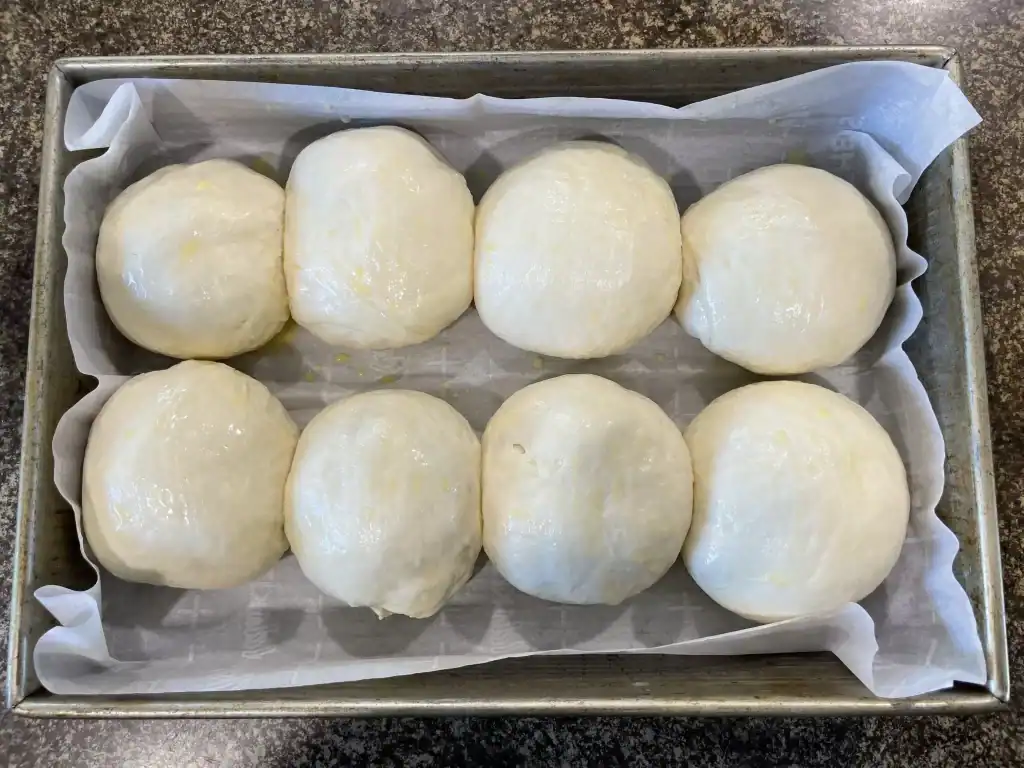
Note: If you don’t want to make pull-apart hamburger buns, you can arrange them further apart on two sheet pans. This will prevent the buns from rising into each other and they will each be round and uniform after baking.
- Using a pastry brush, brush the buns with a tablespoon of melted butter or neutral oil. This will help keep the buns from drying out while they rise and it will stop them from sticking to the plastic wrap.
Final Proof

- Cover the metal pan with plastic wrap and let the sourdough hamburger buns rise for 3-6 hours at room temperature, or until they are almost completely doubled in size.
Note: You want the buns to almost completely double in size during the final proof, so this might require an extra long proofing time. Hamburger buns that are proofed for less time tend to tear open on the sides/top during baking. Proofing them until they are very puffy, soft, and delicate will fix this issue. Properly proofed hamburger buns will also be softer and more airy on the inside, which is exactly what you want in this type of bread.
- 30 minutes before your hamburger buns are fully proofed, preheat your oven to 400°F (204°C) for a half hour. You do not need a baking stone or Dutch oven for this recipe, since the enriched dough will bake directly in the metal pan and it won’t require steam.
Baking
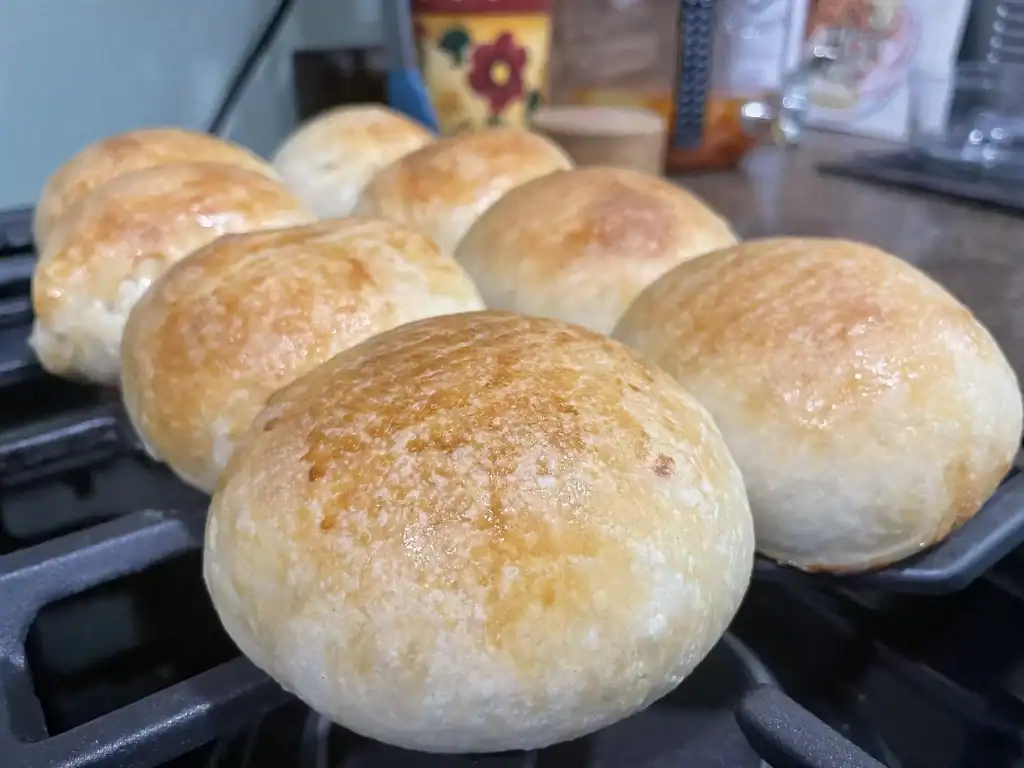
- When the buns are fully proofed (about doubled in size) and they look light and delicate, brush the tops of the buns with an egg wash made from one egg beaten with a tablespoon of whole milk. This will give the sourdough hamburger buns a golden-brown sheen once they are baked.
- To bake, slide the metal pan onto the middle rack of the oven and bake the buns for 25 minutes at 400°F (204°C). Continue baking for an additional 5-10 minutes if you want the buns to have a darker brown color.
- Remove the baked buns and brush the tops with another tablespoon of melted butter.
- Lift the buns out of the metal pan and transfer to a cooling rack to cool for 20-30 minutes, or until ready to use.
- Slice the buns in half lengthwise with a serrated knife shortly before assembling your hamburgers.
Easy Sourdough Hamburger Buns
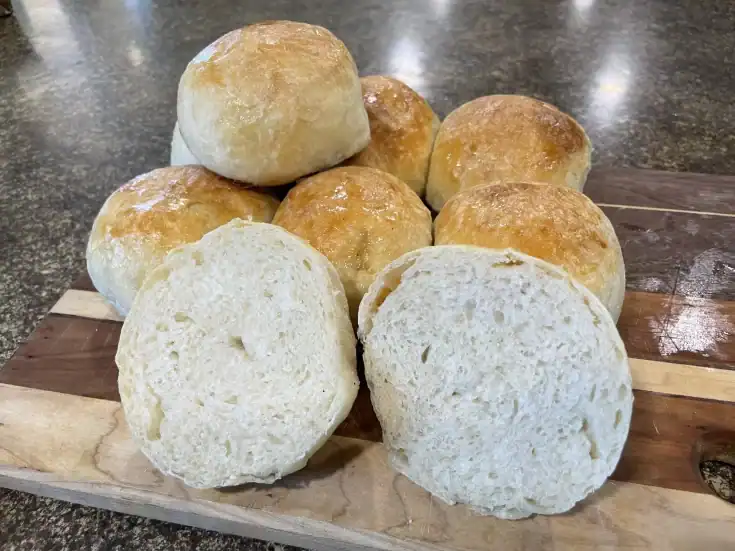
These easy sourdough hamburger buns are light and fluffy, simple to make, and they're perfect to make the day before you want to use them. They are the ideal hamburger bun for a cookout or summer barbecue. The best part is that these buns actually taste like great bread instead of the soft and squishy, tasteless buns that they sell at the supermarket.
Ingredients
Sourdough Starter Feeding
- Leftover Sourdough Starter - 25 grams
- Water - 50 grams
- Bread Flour - 50 grams
Final Dough
- Bread Flour - 450 grams
- Water - 150 grams
- Whole Milk - 100 grams
- Sourdough Starter, Active - 100 grams
- Unsalted Butter, Softened - 54 grams
- Sugar - 25 grams
- Salt - 10 grams
Egg Wash and Topping
- Egg - 50 grams (1 whole egg)
- Unsalted Butter, Melted - 42 grams (3 Tbsp)
Instructions
Feeding Your Sourdough Starter
- Take 25 grams of leftover sourdough starter out of the fridge and feed it 50 grams bread flour and 50 grams of water. Stir the ingredients thoroughly to combine and mark the top of the starter with a rubber band. Cover the starter loosely with a lid and let it rise at room temperature for 6-8 hours, or until it doubles in size. It’s best to feed your starter in the morning or the middle of the day, so that your starter is ready to use in the evening.
Mixing the Dough
- When your starter has doubled in size and it’s ready to use, add the following ingredients to a large mixing bowl: the water, milk, sugar, salt, and sourdough starter. Stir the liquid ingredients together with a spoon to break of up starter and to dissolve the salt and sugar.
- Next, add all of the bread flour to the mixing bowl and stir the ingredients together until a rough dough forms. At this point, cover up the bowl with a kitchen towel and let the dough rest for 30 minutes.
- To prepare the butter to be added to the dough, cut the butter into cubes and let it rest at room temperature.
- After the 30 minute rest, uncover the dough and add all of the softened butter cubes right on top of the dough. Squeeze the butter into the dough with your hands until it is thoroughly combined with the dough and the dough starts to hold together again. Cover the dough and let it rest for 30 minutes.
Stretch and Folds
- Next, give the dough it’s first set of stretch and folds. Uncover the dough and grab an edge of the dough and stretch it upwards, then when the dough begins to resist, fold it over the top of the dough. Continue stretching and folding the edges of the dough about 20 times total, or until the dough starts to resist stretching and firm up. After that, cover the dough up again and let it rest for 30 minutes.
- Give the dough a second set of stretch and folds. The dough should be smoother and hold together better than it did during the first set of stretch and folds. Cover the dough and let it rest for another 30 minutes.
- Finally, give the dough one last set of stretch and folds and then flip the dough over so the smooth side is facing up and the seam side is facing down.
The First Rise (Bulk Fermentation)
- Cover the dough with a layer of plastic wrap (or close the bowl with an airtight lid) and then let the dough rise at room temperature overnight, or for at least 8-12 hours. You want the dough to completely double in size overnight, which can take more time than usual since this is a heavy, enriched dough.
- The next morning, your dough should be doubled in size and ready to shape.
Dividing and Shaping
Note: There is no need to pre-shape these sourdough hamburger buns. You will just shape them directly into individual balls.
- Divide the dough into eight equal-sized pieces. If you want to use a scale to weigh the dough balls precisely, scale them to eight dough balls at roughly 110 grams each.
- Stretch and fold each piece of dough into a ball, and then roll the dough into a tight ball on the surface of the kitchen counter with your hand. (See my video for a demonstration of this technique.)
- Arrange the dough balls in a metal 9×13″ cake pan lined with parchment paper. When evenly spaced out, the dough balls should be close but not touching each other. As the sourdough hamburger buns rise, they will touch and press into each other. This will make them similar to pull-apart rolls.
Note: If you want to make individual rounded buns that aren't "pull-apart", you can arrange the buns further apart on two sheet pans. This will prevent the buns from rising into each other and they will each be round and uniform after baking.
- Using a pastry brush, brush the buns with a tablespoon of melted butter or neutral oil. This will help keep the buns from drying out while they rise and it will stop them from sticking to the plastic wrap.
Final Proof
- Cover the metal pan with plastic wrap and let the sourdough hamburger buns rise for 3-6 hours at room temperature, or until they are almost completely doubled in size.
Note: You want the buns to almost completely double in size during the final proof, so this might require an extra long proofing time. Hamburger buns that are proofed for less time tend to tear open on the sides/top during baking. Proofing them until they are very puffy, soft, and delicate will fix this issue. Properly proofed hamburger buns will also be softer and more airy on the inside, which is exactly what you want in this type of bread.
- 30 minutes before your hamburger buns are fully proofed, preheat your oven to 400°F (204°C) for a half hour. You do not need a baking stone or Dutch oven for this recipe, since the enriched dough will bake directly in the metal pan and it won’t require steam.
Baking
- When the buns are fully proofed (about doubled in size) and they look light and delicate, brush the tops of the buns with an egg wash made from one egg beaten with a tablespoon of whole milk. This will give the sourdough hamburger buns a golden-brown sheen once they are baked.
- To bake, slide the metal pan onto the middle rack of the oven and bake the buns for 25 minutes at 400°F (204°C). Continue baking for an additional 5-10 minutes if you want the buns to have a darker brown color.
- Remove the baked buns and brush the tops with another tablespoon of melted butter.
- Lift the buns out of the metal pan and transfer to a cooling rack to cool for 20-30 minutes, or until ready to use.
- Slice the buns in half lengthwise with a serrated knife shortly before assembling your hamburgers.
Notes
- There is no need to pre-shape these sourdough hamburger buns. You will just shape them directly into individual balls.
- If you want to make individual rounded buns that aren't "pull-apart", you can arrange the buns further apart on two sheet pans. This will prevent the buns from rising into each other and they will each be round and uniform after baking.
- You want the buns to almost completely double in size during the final proof, so this might require an extra long proofing time. Hamburger buns that are proofed for less time tend to tear open on the sides/top during baking. Proofing them until they are very puffy, soft, and delicate will fix this issue. Properly proofed hamburger buns will also be softer and more airy on the inside, which is exactly what you want in this type of bread.