

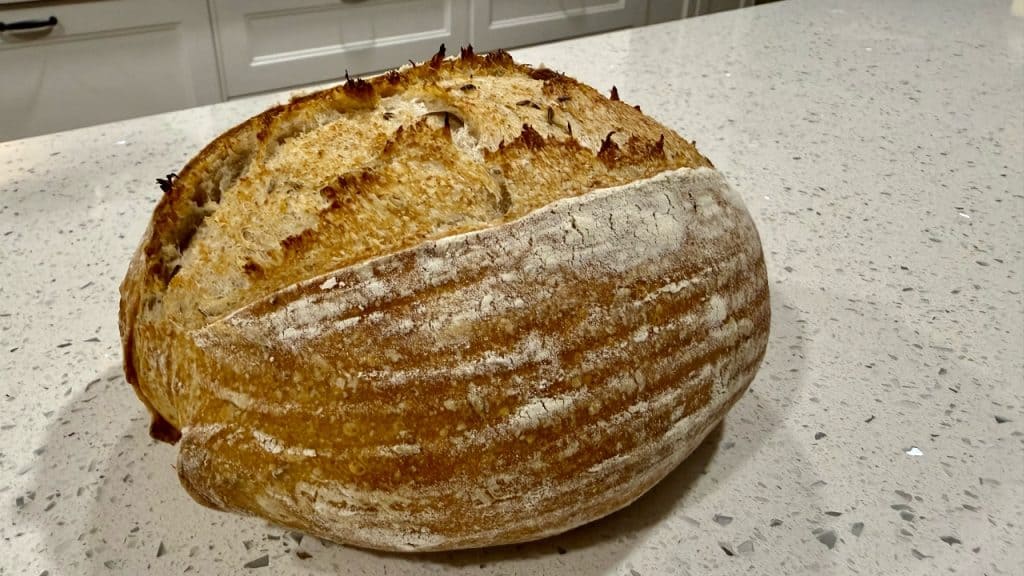
This sourdough deli rye bread is perfect for making a homemade pastrami or reuben sandwich. You can also enjoy this bread toasted with a slather of butter or other savory toppings. Caraway seeds and a touch of whole grain rye flour give this bread its distinctive aromatic flavor.
Why This Recipe Works
The nuttiness of whole grain rye flour pairs wonderfully with the aromatic flavor of caraway seeds. This strong flavor of this bread holds up well to savory, meaty sandwiches, but could also be enjoyed with sweet or acidic toppings like orange marmalade.
Different than other rye breads, this sourdough deli rye bread is made from mostly wheat flour (bread flour). A touch of whole grain rye flour is then included for its nutty flavor and wholesomeness, and then caraway seeds are folded into the dough, which bring the distinctive aromatic flavor that makes this bread unique.
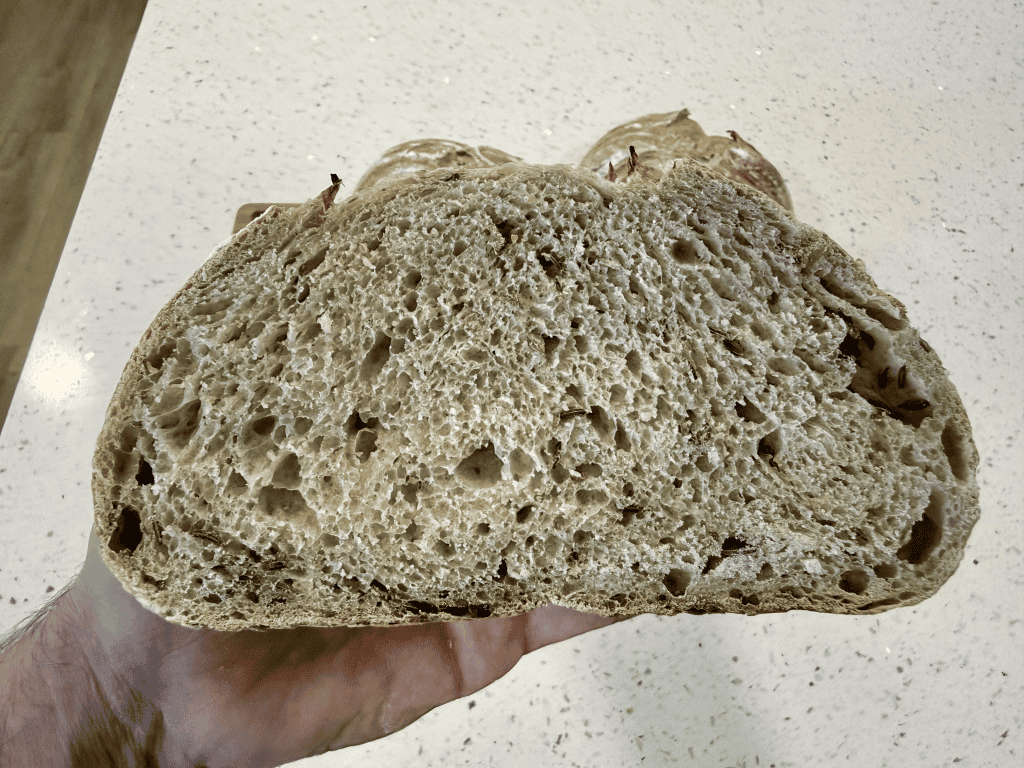
Ingredients You’ll Need for Sourdough Deli Rye Bread
Main Dough Ingredients
- Bread Flour: I used the blue bag of King Arthur bread flour for this recipe. You can use any plain white bread flour that contains around 11-13% protein.
- Whole Grain Rye Flour: I used the Bob’s Red Mill brand of whole grain rye flour. Ideally, choose a whole grain rye flour instead of a “light” or refined rye flour.
- Water: Use filtered tap water or un-chlorinated bottled water.
- Sourdough Starter: You’ll need a 100% hydration sourdough starter for this recipe (fed with equal parts water and bread flour).
- Caraway Seeds: Raw caraway seeds are used a lot in eastern European cooking and they give this bread its unique flavor. These seeds can usually be found in the herbs and spices section of the grocery store.
- Salt: I used Kosher salt for this recipe, but sea salt or plain table salt will also work well.
Note: See recipe card below for full ingredient amounts and quantities.
Substitutions and Additions
- You can use more or fewer caraway seeds depending on how much you like the flavor. Use 1 1/2 Tbsp of caraway seeds for a strong flavor, or 1/2 Tbsp of caraway seeds for a light flavor.
- You can add 1 Tbsp of dark molasses to the dough during the “Mixing the Dough” step to give the dough a darker brown color and to add a touch of extra sweetness.
Ingredient Amounts
Starter Feeding
- Sourdough Starter, leftover – 25 grams
- Water – 50 grams
- Bread Flour – 50 grams
Main Dough
- Bread Flour – 375 grams
- Whole Grain Rye Flour – 75 grams
- Water – 300 grams
- Sourdough Starter, active – 100 grams
- Salt – 10 grams
- Caraway Seeds – 9 grams (1 1/2 Tbsp)
Suggested Timeline
| Time | Step |
|---|---|
| 9:00 PM (Day 1) | Feeding the Sourdough Starter |
| 6:00 AM (Day 2) | Mixing the Dough |
| 6:30 AM | Stretch and Folds |
| 7:30 AM | The First Rise (Bulk Fermentation) |
| 1:30 PM | Shaping |
| 2:10 PM | The Second Rise (Final Proof) |
| 3:10 PM | Cold Proofing in the Fridge |
| 8:00 AM (Day 3) | Baking the Sourdough Deli Rye Bread |
How to Make Sourdough Deli Rye Bread
Step-by-Step Instructions
Feeding the Sourdough Starter
Take 25 grams of leftover sourdough starter out of the fridge. Feed your starter 50 grams of water and 50 grams of bread flour. Mix the flour, water, and starter around in the jar until it has a pancake batter-like consistency. Mark the top of the starter with a rubber band and cover the top of the jar loosely with a lid. Let the starter rise at room temperature overnight, for around 6-8 hours, or until it doubles in size.
Mixing the Dough
To a mixing bowl, add the water, the 100 grams of sourdough starter, and the salt. Mix together to dissolve the starter and salt into the water. Then, add the bread flour and the whole grain rye flour. Mix together with a spoon to form a shaggy dough. Cover the dough with a kitchen towel and let it rest for 30 minutes at room temperature.
Stretch and Folds
30 minutes later perform a set of stretch and folds to develop gluten in the dough. Stretch and edge of dough in the air, and then when it begins to resist fold the dough down on top of the dough. Give the dough a quarter turn and stretch and fold the next edge of the dough the same way. Do this two more times, stretching and folding all four corners of the dough. Then, cover the dough again and let it rest for 30 minutes.
After the 30 minute rest, sprinkle 1 tablespoon of caraway seeds on top of the dough. With wet fingertips, dimple the caraway seeds into the dough so that they stick. Now perform a set of stretch and folds just like the first time to incorporate the seeds into the dough. Cover the dough again and let it rest for another 30 minutes.
Uncover the dough and add the remaining 1/2 tablespoon of caraway seeds. Dimple the seeds into the dough with wet fingertips and then stretch and fold the four corners of the dough one last time. The seeds should all be distributed throughout the dough in layers, and the gluten in the dough should be well developed.
The First Rise (Bulk Fermentation)
Transfer the dough into an oiled glass bowl with a lid. Place the bowl of dough on the side of your kitchen counter and let the dough rise at room temperature for 4-6 hours, or as long as it takes for your dough to double in size.
Shaping
When the dough has doubled in size, remove it from the glass bowl and preshape the dough into a ball on your unfloured countertop. This will create tension across the top of the dough and make it easier to shape into an oval shape later. Let the ball of dough rest on the counter uncovered for 30 minutes.
After the 30 minute rest, sprinkle the top of the dough with bread flour and flip the dough over so that it is sticky side up. Fold the dough in half like you are closing a book, then give the dough a quarter turn and fold the dough in half again (see video for demonstration). This will give the dough an oval shape and create tension across the top of the loaf.
Transfer the dough seam side up into a 10″ oval banneton basket that you’ve dusted with bread flour. Pinch the seam of the dough closed, if needed, and then cover the dough with a kitchen towel.
The Second Rise (Final Proof)
Let the dough rise in the banneton basket at room temperature for one hour, just to get a head start on the fermentation. After the one hour rise, the dough should be slightly puffy and risen, but not too much.
Cold Proofing in the Fridge
Move the covered dough to the refrigerator and let it rise in the cold environment for 8-24 hours. Take it out the next day whenever you are ready to bake.
Baking the Sourdough Deli Rye Bread
30 minutes before you’re ready to bake your bread, preheat your oven to 450°F (232°C) with a Dutch oven or baking vessel inside your oven to preheat as well.
When the oven is preheated, take your dough out of the fridge and flip it out of the banneton basket and onto a sheet of parchment paper. Dust off the excess flour from the top of the dough and score the dough by creating one long slash with a razor blade or bread lame.
Transfer the dough, parchment paper and all, to the hot Dutch oven and then closer the Dutch oven lid to trap the steam. Bake the bread for 20 minutes with the lid on, then remove the lid and continue baking for 15-20 minutes with the lid off.
Allow the bread to cool on a cooling rack for at least one hour before slicing and serving.
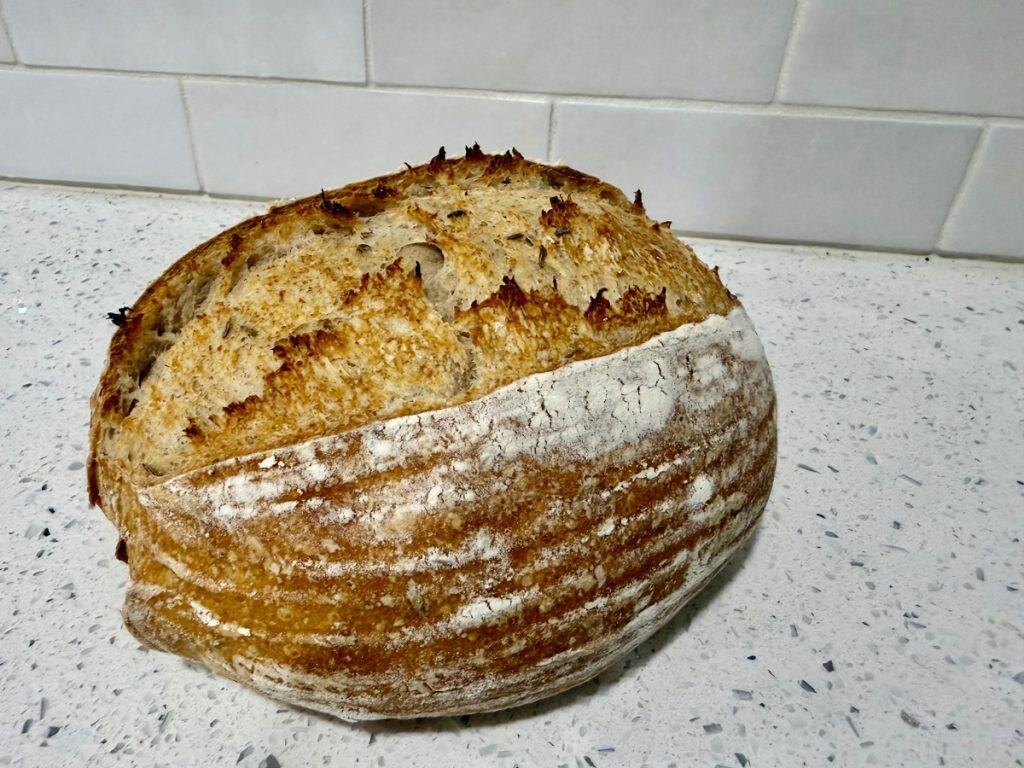
The caraway seeds provide an aromatic smell and taste to this bread that make it delicious and very unique. This is the smell that I most associate with “rye bread,” even though technically it has nothing to do with rye flour. But the nuttiness from the whole grain rye flour pairs so well with the toasted aromatic flavor of the caraway seeds that it’s no wonder caraway is so often paired with rye. The flavor is exceptional. This sourdough deli rye bread is perfect toasted with some simple savory toppings, or used as the base for a pastrami or reuben sandwich.
Sourdough Deli Rye Bread
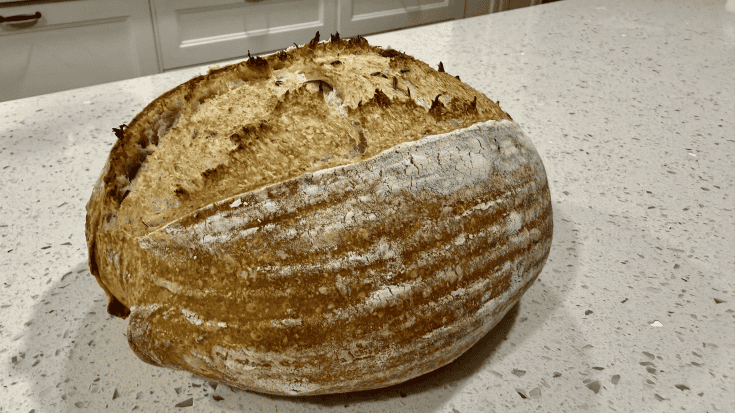
This sourdough deli rye bread is perfect for making a homemade pastrami or reuben sandwich. You can also enjoy this bread toasted with a slather of butter or other savory toppings. Caraway seeds and a touch of whole grain rye flour give this bread its distinctive aromatic flavor.
Ingredients
Starter Feeding
- Sourdough Starter, leftover – 25 grams
- Water – 50 grams
- Bread Flour – 50 grams
Main Dough
- Bread Flour – 375 grams
- Whole Grain Rye Flour – 75 grams
- Water – 300 grams
- Sourdough Starter, active – 100 grams
- Salt – 10 grams
- Caraway Seeds – 9 grams (1 1/2 Tbsp)
Instructions
Feeding the Sourdough Starter
Take 25 grams of leftover sourdough starter out of the fridge. Feed your starter 50 grams of water and 50 grams of bread flour. Mix the flour, water, and starter around in the jar until it has a pancake batter-like consistency. Mark the top of the starter with a rubber band and cover the top of the jar loosely with a lid. Let the starter rise at room temperature overnight, for around 6-8 hours, or until it doubles in size.
Mixing the Dough
To a mixing bowl, add the water, the 100 grams of sourdough starter, and the salt. Mix together to dissolve the starter and salt into the water. Then, add the bread flour and the whole grain rye flour. Mix together with a spoon to form a shaggy dough. Cover the dough with a kitchen towel and let it rest for 30 minutes at room temperature.
Stretch and Folds
30 minutes later perform a set of stretch and folds to develop gluten in the dough. Stretch and edge of dough in the air, and then when it begins to resist fold the dough down on top of the dough. Give the dough a quarter turn and stretch and fold the next edge of the dough the same way. Do this two more times, stretching and folding all four corners of the dough. Then, cover the dough again and let it rest for 30 minutes.
After the 30 minute rest, sprinkle 1 tablespoon of caraway seeds on top of the dough. With wet fingertips, dimple the caraway seeds into the dough so that they stick. Now perform a set of stretch and folds just like the first time to incorporate the seeds into the dough. Cover the dough again and let it rest for another 30 minutes.
Uncover the dough and add the remaining 1/2 tablespoon of caraway seeds. Dimple the seeds into the dough with wet fingertips and then stretch and fold the four corners of the dough one last time. The seeds should all be distributed throughout the dough in layers, and the gluten in the dough should be well developed.
The First Rise (Bulk Fermentation)
Transfer the dough into an oiled glass bowl with a lid. Place the bowl of dough on the side of your kitchen counter and let the dough rise at room temperature for 4-6 hours, or as long as it takes for your dough to double in size.
Shaping
When the dough has doubled in size, remove it from the glass bowl and preshape the dough into a ball on your unfloured countertop. This will create tension across the top of the dough and make it easier to shape into an oval shape later. Let the ball of dough rest on the counter uncovered for 30 minutes.
After the 30 minute rest, sprinkle the top of the dough with bread flour and flip the dough over so that it is sticky side up. Fold the dough in half like you are closing a book, then give the dough a quarter turn and fold the dough in half again (see video for demonstration). This will give the dough an oval shape and create tension across the top of the loaf.
Transfer the dough seam side up into a 10″ oval banneton basket that you’ve dusted with bread flour. Pinch the seam of the dough closed, if needed, and then cover the dough with a kitchen towel.
The Second Rise (Final Proof)
Let the dough rise in the banneton basket at room temperature for one hour, just to get a head start on the fermentation. After the one hour rise, the dough should be slightly puffy and risen, but not too much.
Cold Proofing in the Fridge
Move the covered dough to the refrigerator and let it rise in the cold environment for 8-24 hours. Take it out the next day whenever you are ready to bake.
Baking the Sourdough Deli Rye Bread
30 minutes before you’re ready to bake your bread, preheat your oven to 450°F (232°C) with a Dutch oven or baking vessel inside your oven to preheat as well.
When the oven is preheated, take your dough out of the fridge and flip it out of the banneton basket and onto a sheet of parchment paper. Dust off the excess flour from the top of the dough and score the dough by creating one long slash with a razor blade or bread lame.
Transfer the dough, parchment paper and all, to the hot Dutch oven and then closer the Dutch oven lid to trap the steam. Bake the bread for 20 minutes with the lid on, then remove the lid and continue baking for 15-20 minutes with the lid off.
Allow the bread to cool on a cooling rack for at least one hour before slicing and serving.
The caraway seeds provide an aromatic smell and taste to this bread that make it delicious and very unique. This is the smell that I most associate with “rye bread,” even though technically it has nothing to do with rye flour. But the nuttiness from the whole grain rye flour pairs so well with the toasted aromatic flavor of the caraway seeds that it’s no wonder caraway is so often paired with rye. The flavor is exceptional. This sourdough deli rye bread is perfect toasted with some simple savory toppings, or used as the base for a pastrami or reuben sandwich.