

This sourdough country bread with rye flour is nutty, warm, wholesome, and delicious. Very similar to a standard sourdough bread, this recipe incorporates a portion of whole grain rye flour into the dough for complex flavor, nutty aroma, and extra nutrition.

Ingredients You’ll Need
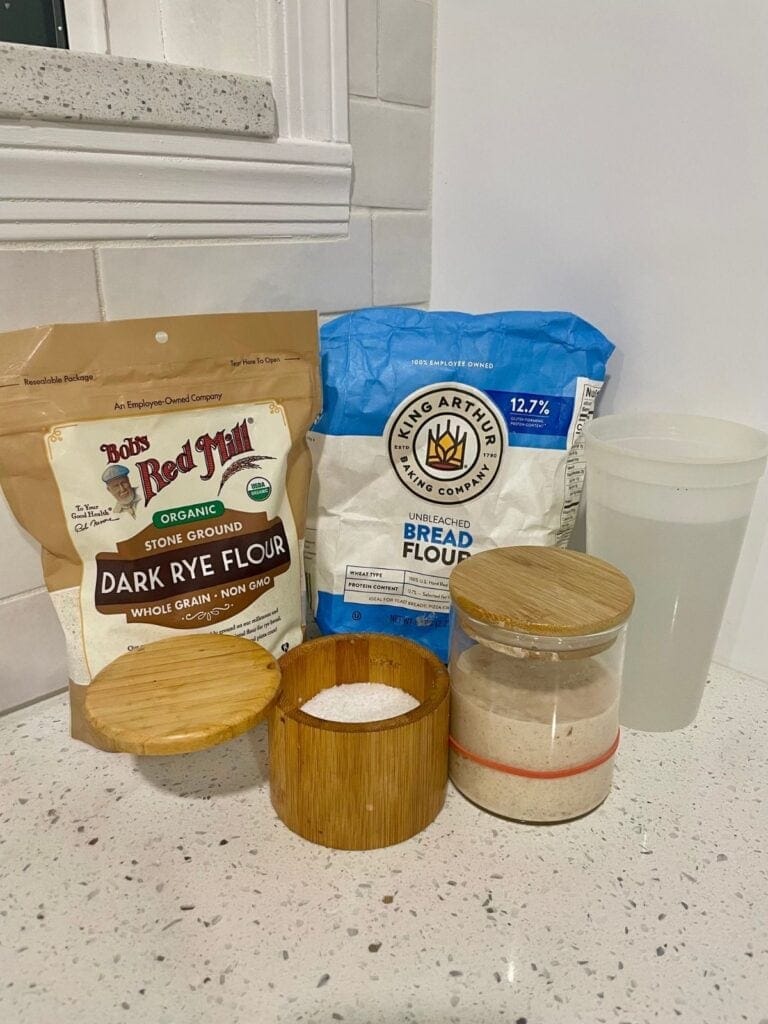
- Bread Flour: Any brand of bread flour that is close to 12-13 percent protein content will work fine.
- Whole Grain Rye Flour: Look for 100% whole grain rye flour.
- Water: It’s best to use filtered tap water or bottled spring water for this bread dough.
- Sourdough Starter: You’ll need a 100% hydration sourdough starter for this recipe (fed with equal parts water and flour by weight). Your starter can be fed with white flour or almost an other type of flour.
- Salt: I use Kosher salt for this recipe, but sea salt or plain table salt will work just as well.
Note: Check recipe card below for full ingredient amounts and quantities.
How to Make Sourdough Country Bread with Rye Flour
Ingredient Amounts
Sourdough Starter Feeding
- Sourdough Starter, leftover – 25 grams
- Bread Flour – 50 grams
- Water – 50 grams
Main Dough
- Bread Flour – 375 grams
- Whole Grain Rye Flour – 75 grams
- Water – 300 grams
- Sourdough Starter – 100 grams
- Salt – 10 grams
Suggested Timelines
Option 1: Cold Proof (Recommended, 3 Days)
| Time | Step |
|---|---|
| 10:00 PM (Day 1) | Feeding the Sourdough Starter |
| 6:00 AM (Day 2) | Mixing the Dough |
| 6:30 AM | Stretch and Folds |
| 7:30 AM | The First Rise (Bulk Fermentation) |
| 3:30 PM | Shaping |
| 4:00 PM | Final Proof |
| 8:00 AM (Day 3) | Baking |
Option 2: Room Temperature Proof (2 Days)
| Time | Step |
|---|---|
| 10:00 PM (Day 1) | Feeding the Sourdough Starter |
| 6:00 AM (Day 2) | Mixing the Dough |
| 6:30 AM | Stretch and Folds |
| 7:30 AM | The First Rise (Bulk Fermentation) |
| 3:30 PM | Shaping |
| 4:00 PM | Final Proof |
| 6:00 PM | Baking |
Step-by-Step Instructions
Feeding the Sourdough Starter
- Take 25 grams of leftover sourdough starter out of the fridge and feed it 50 grams of water and 50 grams of bread flour. Stir thoroughly to combine and mark the top of the starter with a rubber band.
- Cover the starter jar with a lid and let the starter rise overnight for 6-10 hours, or until doubled in size.
Mixing the Dough
- To a mixing bowl, add the water and sourdough starter. Stir to combine and then add the whole grain rye flour, bread flour, and salt. Stir all of the ingredients together for about a minute until a shaggy dough is formed without any dry bits of flour left.
- Cover the dough up with a kitchen towel and let it rest for 30 minutes at room temperature.
Stretch and Folds
- Perform the first of three sets of stretch and folds: Grab an edge of the dough and stretch it up into the air until the dough gives some resistance. Then, fold the edge of dough over the top of the dough and press it into the dough mass. Continue stretching and folding like this 8-10 more times until the dough starts to tighten up and resist stretching.
- Cover the dough with a kitchen towel and let it rest for 30 minutes.
- Perform a second set of stretch and folds: this time, give the dough four folds instead of 8-10. Cover the dough and let it rest for 30 more minutes.
- Perform a third and final set of stretch and folds: give the dough four stretch and folds and then it’s time for the first rise.
The First Rise (Bulk Fermentation)
- Transfer the dough into an oiled glass bowl with the smooth side of the dough facing up and the seam side of the dough facing down.
- Cover the dough with an airtight lid or a sheet of plastic wrap and let it rise at room temperature for 6-8 hours, or until doubled in size.

Shaping
- After the dough has sufficiently doubled in size, it’s time to begin shaping the dough into its final oval shape: start by transfering the dough onto an un-floured countertop and gently shaping the dough into a tight ball with your hands. Let this pre-shaped dough ball rest on the counter for 30 minutes.
- When the dough has rested, dust the top of the dough with flour and flip the dough over so that the smooth side is against the counter and the sticky side is facing up.
- Gently pull the dough out into a rectangular shape. Fold the left third of the dough over the middle third, and then fold the right third over the middle third as well. Press down on the middle seam to close it.
- Now roll the dough from the far end to the near end into a tight cylinder.
- Smooth the ends of the dough with your hands and then flip the dough over and transfer it upside down into a floured 10″ banneton proofing basket.
Final Proof
- Cover the dough with a kitchen towel and let it begin the final proof.
- Room Temperature Proof (Option 1): Let the dough rise for 2-3 hours at room temperatjre before baking..
- Cold Proof Option (Option): Let the dough rise for 1 hour at room temperature in the banneton basket. Then, transfer the banneton basket into the refrigerator to cold proof overnight, or for 8-24 hours depending on your schedule the next day.
Baking
- Preheat your oven to 450°F (232°C) 30 minutes before you are ready to bake. Keep a Dutch oven on the middle rack inside the oven to preheat along with it.
- Once the oven is preheated, take the dough out of the fridge. Flip the dough out of the banneton basket and onto a sheet of parchment paper. Score the top of the dough in one long slash with a razor blade or a bread lame.
- Transfer the scored dough into the hot Dutch oven and close the lid to trap the steam. Bake for 20 minutes.
- After 20 minutes of baking, take the Dutch Oven lid off to release the steam and admire your oven spring. The bread should have burst open along the score mark you created.
- Continue baking for 15-20 minutes with the lid off. Take the bread out of the oven when it is as dark as you want it to be.
- Transfer the dough to a wire rack to cool for at least an hour before slicing in.
- Enjoy slices of this nutty and delicious loaf of bread toasted with a slather of butter.
Yield: 1 Loaf
Sourdough Country Bread with Rye Flour

5.0 Stars (3 Reviews)
This sourdough country bread with rye flour is nutty, warm, wholesome, and delicious. Very similar to a standard sourdough bread, this recipe incorporates a portion of whole grain rye flour into the dough for complex flavor, nutty aroma, and extra nutrition.
Prep Time
10 minutes
Cook Time
40 minutes
Additional Time
1 day
Total Time
1 day 50 minutes
Ingredients
Sourdough Starter Feeding
- Sourdough Starter, leftover - 25 grams
- Water - 50 grams
- Bread Flour - 50 grams
Main Dough
- Bread Flour - 375 grams
- Whole Grain Rye Flour - 75 grams
- Water - 300 grams
- Sourdough Starter, active - 100 grams
- Salt - 10 grams
Instructions
Feeding the Sourdough Starter
- Take 25 grams of leftover sourdough starter out of the fridge and feed it 50 grams of water and 50 grams of bread flour. Stir thoroughly to combine and mark the top of the starter with a rubber band.
- Cover the starter jar with a lid and let the starter rise overnight for 6-10 hours, or until doubled in size.
Mixing the Dough
- To a mixing bowl, add the water and sourdough starter. Stir to combine and then add the whole grain rye flour, bread flour, and salt. Stir all of the ingredients together for about a minute until a shaggy dough is formed without any dry bits of flour left.
- Cover the dough up with a kitchen towel and let it rest for 30 minutes at room temperature.
Stretch and Folds
- Perform the first of three sets of stretch and folds: Grab an edge of the dough and stretch it up into the air until the dough gives some resistance. Then, fold the edge of dough over the top of the dough and press it into the dough mass. Continue stretching and folding like this 8-10 more times until the dough starts to tighten up and resist stretching.
- Cover the dough with a kitchen towel and let it rest for 30 minutes.
- Perform a second set of stretch and folds: this time, give the dough four folds instead of 8-10. Cover the dough and let it rest for 30 more minutes.
- Perform a third and final set of stretch and folds: give the dough four stretch and folds and then it's time for the first rise.
The First Rise (Bulk Fermentation)
- Transfer the dough into an oiled glass bowl with the smooth side of the dough facing up and the seam side of the dough facing down.
- Cover the dough with an airtight lid or a sheet of plastic wrap and let it rise at room temperature for 6-8 hours, or until doubled in size.
Shaping
- After the dough has sufficiently doubled in size, it's time to begin shaping the dough into its final oval shape: start by transfering the dough onto an un-floured countertop and gently shaping the dough into a tight ball with your hands. Let this pre-shaped dough ball rest on the counter for 30 minutes.
- When the dough has rested, dust the top of the dough with flour and flip the dough over so that the smooth side is against the counter and the sticky side is facing up.
- Gently pull the dough out into a rectangular shape. Fold the left third of the dough over the middle third, and then fold the right third over the middle third as well. Press down on the middle seam to close it.
- Now roll the dough from the far end to the near end into a tight cylinder.
- Smooth the ends of the dough with your hands and then flip the dough over and transfer it upside down into a floured 10" banneton proofing basket.
Final Proof
- Cover the dough with a kitchen towel and let it begin the final proof.
- Room Temperature Proof (Option 1): Let the dough rise for 2-3 hours at room temperatjre before baking..
- Cold Proof Option (Option): Let the dough rise for 1 hour at room temperature in the banneton basket. Then, transfer the banneton basket into the refrigerator to cold proof overnight, or for 8-24 hours depending on your schedule the next day.
Baking
- Preheat your oven to 450°F (232°C) 30 minutes before you are ready to bake. Keep a Dutch oven on the middle rack inside the oven to preheat along with it.
- Once the oven is preheated, take the dough out of the fridge. Flip the dough out of the banneton basket and onto a sheet of parchment paper. Score the top of the dough in one long slash with a razor blade or a bread lame.
- Transfer the scored dough into the hot Dutch oven and close the lid to trap the steam. Bake for 20 minutes.
- After 20 minutes of baking, take the Dutch Oven lid off to release the steam and admire your oven spring. The bread should have burst open along the score mark you created.
- Continue baking for 15-20 minutes with the lid off. Take the bread out of the oven when it is as dark as you want it to be.
- Transfer the dough to a wire rack to cool for at least an hour before slicing in.
- Enjoy slices of this nutty and delicious loaf of bread toasted with a slather of butter.