

I lived in Chicago for seven years, and during that time I enjoyed classic deep-dish pizza countless times at Pizzeria UNO, Pizzeria DUE, and at Lou Malnati’s Pizzeria. This recipe is my take on a classic Chicago-style deep-dish pizza (Lou Malnati’s-inspired), but with a sourdough crust. The pizza is so good and so easy to make that you might want to open up your own pizza shop after you make it.
This recipe makes one 9-inch, 10-inch, or 12-inch deep-dish pizza, which serves 3–6 people.
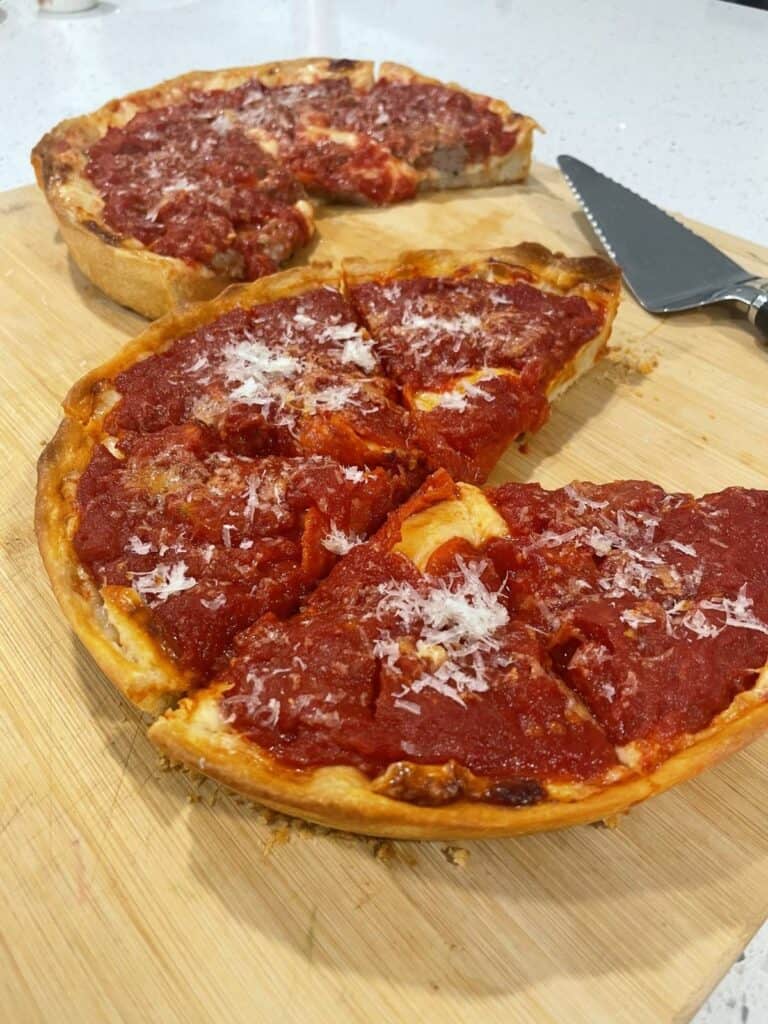
Why This Sourdough Chicago-Style Deep-Dish Pizza Works
Chicago-style deep-dish pizza is the iconic, loaded, sauce-on-top, cheese-on-the-bottom pizza. The tender and flaky crust is traditionally made from a yeasted dough with a relatively high quantity of vegetable or corn oil. The yeast can easily be replaced with sourdough starter for a sourdough deep-dish pizza.
What Type of Pan to Use
You can use any of the following pans to make a Chicago-style deep-dish pizza:
- Round, Metal Cake Pan (9 inch)
- Cast-Iron Skillet (10″ or 12″)
- Specialty Chicago-Style Deep-Dish Pan (10″ or 12″)
You can find specialty deep-dish pizza pans on Amazon here (10″) and here (12″).
As an Amazon Associate I earn from qualifying purchases.
Ingredients You’ll Need
For the Dough
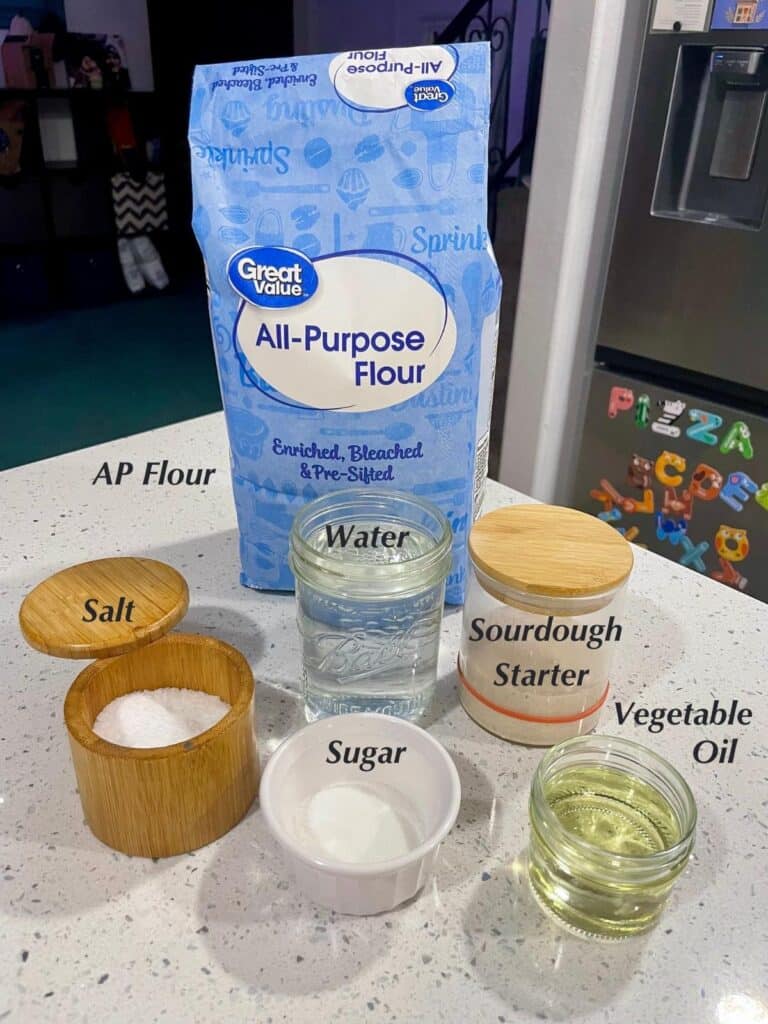
- All-Purpose Flour: Any brand of all-purpose flour will work fine.
- Sourdough Starter: You’ll need a 100% hydration sourdough starter for this recipe (fed with equal parts water and flour by weight).
- Water: It’s best to use filtered tap water or bottled spring water for this bread dough.
- Vegetable Oil: I used a neutral-tasting vegetable oil for this recipe. Traditionally, Chicago-style deep-dish pizza is made with corn oil. I have used corn oil, vegetable oil, and extra virgin olive oil all with great results, so use whichever oil you prefer.
- Sugar: A pinch of plain white sugar brings a touch of sweetness to the dough.
- Salt: I use Kosher salt for this recipe, but sea salt or plain table salt will work just as well.
For the Sauce and Toppings
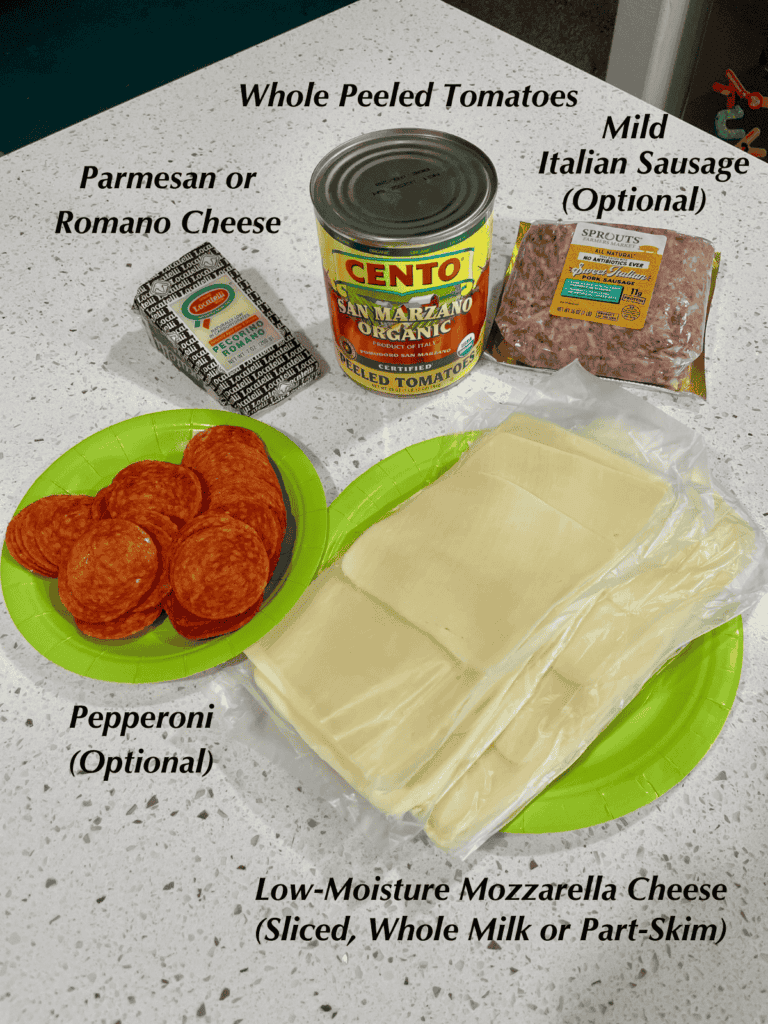
- Whole Peeled Tomatoes: Use a can of the best-tasting whole peeled tomatoes that you can find. I prefer the Cento brand of “San Marzano” whole peeled tomatoes – the organic and conventional varieties both taste great. Bianco di Napoli whole peeled tomatoes are a good choice too. Just choose a brand of tomatoes that tastes good to you raw. If it tastes good raw, it will make a good crushed tomato sauce. If you don’t like the taste, you probably won’t like the final sauce that much either.
- Mozzarella Cheese, sliced: This pizza famously uses slices of mozzarella cheese (not shredded mozzarella). It’s best to get fresh slices from behind the deli counter. Look for low-moisture whole milk mozzarella if you can find it, but low-moisture part skim mozzarella will work too.
- Mild Italian Sausage, ground (optional): To make a classic sausage deep-dish, look for ground Italian sausage labeled as “mild” or “sweet.” In Chicago, they use a mild sausage without any added fennel. However, it’s difficult to find Italian sausage without fennel in the grocery store, so you’ll either have to make your own homemade pork sausage with no fennel, or just use store-bought sausage with fennel. I usually just buy it and deal with the very slight break from tradition. I like fennel anyway.
- Pepperoni (optional): For a pepperoni deep-dish pizza, use any brand of pepperoni that you would normally choose for pizza, but don’t waste money on “cup and char” styles of pepperoni for this pizza. Since the pepperoni with be going underneath the tomato sauce, they won’t have a chance to cup and char anyway, so that would be a waste. Just regular pepperoni will work great.
- Hard Grating Cheese: Parmigiano Reggiano or Pecorino Romano cheeses work great for this. For the best texture, grate the cheese yourself with a microplane or with the smallest holes of a cheese grater.
Note: Check recipe card below for full ingredient amounts and quantities.
How to Make Sourdough Chicago-Style Deep-Dish Pizza
Ingredient Amounts
Sourdough Starter Feeding
- Sourdough Starter, leftover – 25 grams
- All-Purpose Flour – 50 grams
- Water – 50 grams
Main Dough
For 9″ Pizza Pan
- All-Purpose Flour – 156 grams
- Water – 70 grams
- Sourdough Starter – 40 grams
- Vegetable Oil – 30 grams
- Salt – 1 gram
- Sugar – 1 gram
For 10″ Pizza Pan
- All-Purpose Flour – 192 grams
- Water – 86 grams
- Sourdough Starter – 50 grams
- Vegetable Oil – 37 grams
- Salt – 1 gram
- Sugar 1 gram
For 12″ Pizza Pan
- All-Purpose Flour – 279 grams
- Water – 126 grams
- Sourdough Starter – 66 grams
- Vegetable Oil – 54 grams
- Salt – 2 grams
- Sugar – 1 gram
Tomato Sauce
- Whole Peeled Tomatoes – 28 oz can (794 grams)
- Salt – 1 tsp (5 grams)
Toppings (or “Fillings”)
For a 9″ Pizza
- Mozzarella Cheese, sliced – 9 ounces (255 grams)
- Mild Italian sausage, ground (optional) – 9 ounces (255 grams)
- Pepperoni (optional) – 21-24 pieces
- Prepared Tomato Sauce – 9 ounces (255 grams)
- Parmesan or Romano Cheese, grated – 1 1/2 Tbsp
For a 10″ Pizza
- Mozzarella Cheese, sliced – 11 ounces (312 grams)
- Mild Italian sausage, ground (optional) – 11 ounces (312 grams)
- Pepperoni (optional) – 26-29 pieces
- Prepared Tomato Sauce – 11 ounces (312 grams)
- Parmesan or Romano Cheese, grated – 2 Tbsp
For a 12″ Pizza
- Mozzarella Cheese, sliced – 16 ounces (453 grams)
- Mild Italian sausage, ground (optional) – 16 ounces (453 grams)
- Pepperoni (optional) – 37-39 pieces
- Prepared Tomato Sauce – 16 ounces (453 grams)
- Parmesan or Romano Cheese, grated – 3 Tbsp
Suggested Timeline
| Time | Step |
|---|---|
| 12:00 PM (Day 1) | Feeding the Sourdough Starter |
| 9:00 PM | Mixing the Dough |
| 9:10 PM | The Overnight Rise |
| 7:00 AM (Day 2) | Storing the Dough in the Fridge |
| 5:00 PM | Preparing the Pizza Pans |
| 5:10 PM | Making the Tomato Sauce |
| 5:20 PM | Assembling the Pizzas |
| 5:30 PM | Baking |
| 6:05 PM | Serving Sourdough Chicago-Style Deep-Dish Pizza |
Step-by-Step Instructions for Sourdough Deep-Dish Pizza
Feeding the Sourdough Starter
- In the morning, or around noon, take 25 grams of sourdough starter out of the fridge, add to the jar 50 grams of water and 50 grams of all-purpose flour. Stir the starter, water, and flour together until thoroughly combined and the mixture resembles something close to a thick pancake batter.
- Cover the sourdough starter jar loosely with a lid and mark the top of the starter with a rubber band so you can see how much the starter rises.
- Let the starter rise at room temperature for 6-12 hours or until roughly doubled in size. If the starter goes past double-in-size and begins to fall back down again, stick the starter in the refrigerator and let it rest there until you’re ready to mix your dough in the evening.
Mixing the Dough
- In the evening, when your sourdough starter has doubled in size, begin mixing your deep-dish pizza dough. To a mixing bowl, add the water and sourdough starter (check the recipe card below for the correct ingredient amounts for the size of pan you’ll be using). Stir the starter and water thoroughly to combine. You want to dissolve the starter into the water as much as possible during this step because you will not be kneading this dough for very long.
- After the starter is dissolved into the water, add the oil, salt, and sugar. Stir briefly to combine.
- Next, add the all-purpose flour to the wet ingredients and stir with a wooden spoon until the dough just barely comes together. Then, keeping the dough in the mixing bowl, knead it with one hand for about 30-60 seconds. When the dry bits of flour disappear and the dough becomes slightly smooth, stop kneading!
Note on Short Kneading Time: Unlike most other types of pizza dough, Chicago-style deep-dish pizza dough is not kneaded for very long. It also has a relatively high oil content. These two factors make the final pizza crust tender, flaky, and even buttery (although true Chicago-style deep-dish pizza crust contains no butter in the dough).
The Overnight Rise
- Transfer the kneaded dough into an oiled glass bowl and cover it with a lid or sheet of plastic wrap. Let the dough rise at room temperature overnight, roughly 6-10 hours, or until it is doubled in size.
Storing the Dough in the Fridge
- The next morning, your dough should be doubled in size and ready to use. Transfer the bowl of dough into the fridge to rest until you’re ready to make your pizza.
Preparing the Pizza Pans
- Pre-heat your oven to 450°F (232°C) for 30 minutes. This will be just enough time to make the tomato sauce and other toppings for the pizza.
- While the oven is preheating, take out the pizza pan that you will be using and grease the bottom of the pan with either a half tablespoon of oil or a half tablespoon of butter. I usually rub a half tablespoon of butter on the bottom of the pan to try to closely approximate the “Buttercrust” flavor of Lou Malnati’s pizza in Chicago.
Note on Greasing the Pan: While you need to lightly grease the bottom of the pan with oil/butter, be careful not to grease the sides of the pan. The pizza dough needs to grip the sides of the pan as it rises and bakes, and leaving the sides of the pan un-greased will help the dough to stick.
- Take the bowl of chilled pizza dough out of the fridge. Remove the dough from the glass bowl and place it directly onto the surface of the greased deep-dish pizza pan. Cover up the dough with a kitchen towel or a sheet of plastic wrap and allow the dough to rest while the oven preheats.
Making the Tomato Sauce
- While the oven is preheating and the dough is resting, prepare the tomato sauce. Open a 28 oz can of the best-tasting whole peeled tomatoes you can find (I always use the San Marzano tomatoes from Cento). Transfer the tomatoes with the juice and all into a medium sized mixing bowl.
- Add 1 tsp of salt to the mixing bowl and crush the tomatoes by hand for 30-60 seconds until the sauce is relatively smooth but with some tomato chunks still present. These hand-crushed tomatoes will taste far better than pre-crushed tomatoes from a can.
Note on High-Quality Tomatoes: The sauce for this pizza is essentially just hand-crushed whole peeled tomatoes with a little bit of salt, and the sauce is arguably the ingredient that you will taste the most in Chicago-style deep-dish pizza. So if you use low-quality canned tomatoes, you will notice the difference. I can’t have you do that! Please splurge for good tomatoes. You won’t regret it. Two tasty tomato brands that I have used before are Cento canned whole peeled San Marzano tomatoes, and Bianco di Napoli whole peeled tomatoes. Both brands of canned tomatoes make an excellent sauce, so use whichever one you can find.
- After crushing the tomato sauce, take out the mozzarella cheese slices, Italian sausage (or pepperoni, if using instead), and grated parmesan cheese. Set these ingredients aside along with the tomato sauce.
- Once your oven has preheated for at least 30 minutes, it’s time to assemble the pizza.
Assembling the Pizza
- Uncover the pizza dough and press it down into the pizza pan making it as flat and as even as possible. When the pizza dough reaches the sides of the pan, press it up to form a lip along the inside of the pan. When the pizza crust reaches about 1-1 ½ inches high along the sides of the pan, press with your thumbs or fingertips to seal the pizza crust to the sides of the pan. Now the dough should stick to the pan and you can add the rest of the ingredients.
- After the dough comes the cheese. Lay slices of cheese directly on top of the pizza dough in 2-3 layers. It may seem like too much cheese at first, but Chicago-style deep-dish pizza is nothing if not heavy on the mozzarella. Once the cheese slices are layered on, add the sausage or pepperoni.
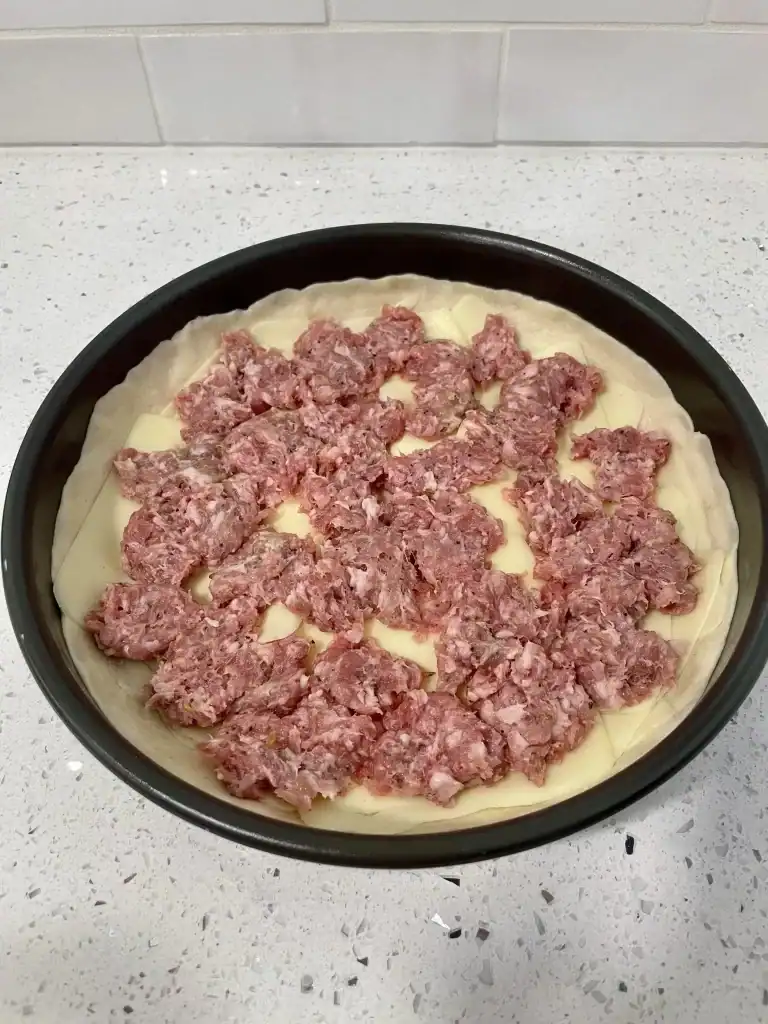
- For a sausage pizza, place little chunks of uncooked Italian sausage all over the top of the cheese and press down on the sausage to form a web. This will basically be a solid layer of sausage, but it’s best if there are some sausage-free spots here and there where the cheese can bubble up through the sausage and come into contact with the tomato sauce. This will improve the flavor of the pizza overall, in my opinion.
- For a pepperoni pizza, add the suggested number of pepperoni on top of the cheese layer, overlapping each pepperoni slightly. This should evenly cover the cheese in one thin layer.
- Now that the sausage layer is finished, add the crushed tomato sauce on top of the sausage layer. Ladle the chunky tomato sauce into the center of the pizza and then spread it out to the edge of the pizza with your fingertips in true Chicago-pizzeria-fashion (or just spread the sauce out to the edges with a ladle if that bothers you, no one will know the difference). You want to spread the sauce out in an even layer from the center to the edge, and the sauce should just barely meet the crust. This will ideally allow a little bit of cheese to bubble up to the surface while the pizza is baking and caramelize along the interior of the crust.
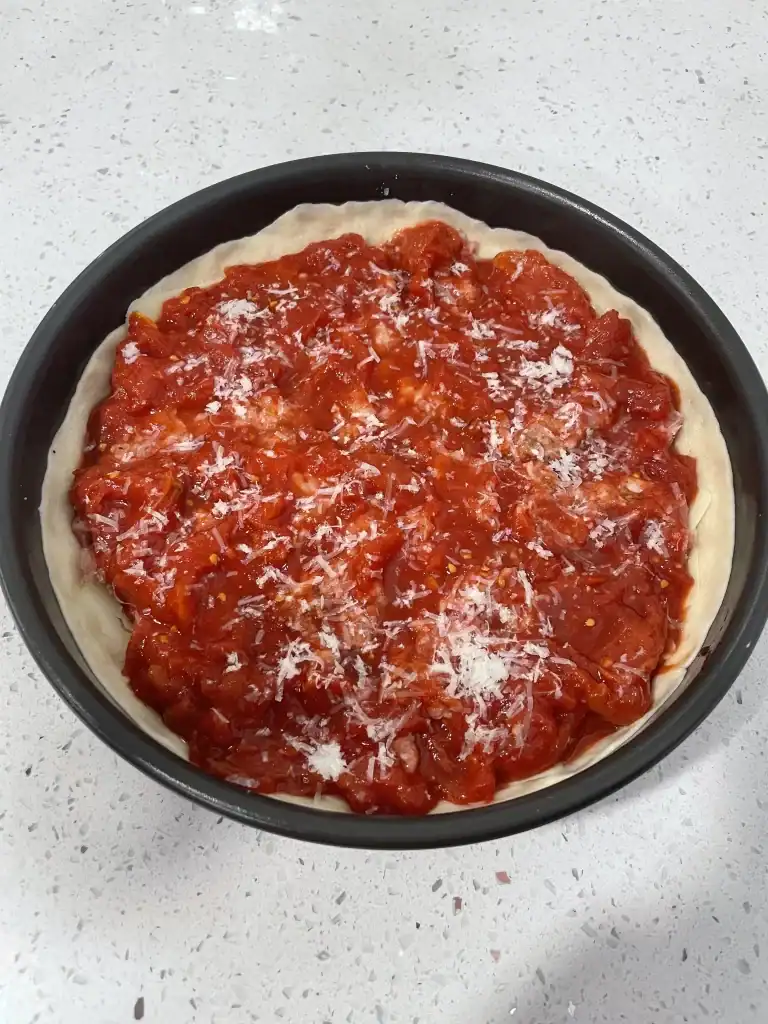
- For the finishing touch, sprinkle half of the total amount of grated parmesan cheese on top of the tomato sauce. You’ll add the remaining parmesan to the top of the pizza when the pizza is done baking.
Baking
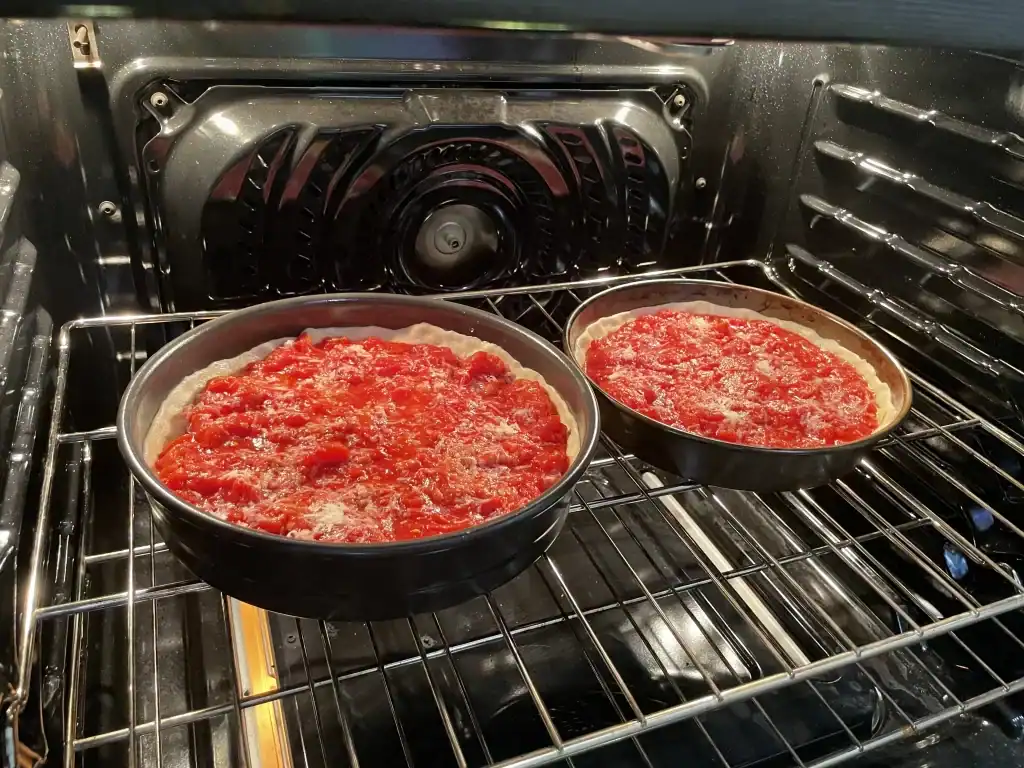
- Once the pizza is assembled, transfer the pizza pan onto the middle rack of the preheated oven and bake the pizza at 450°F for 30-35 minutes. Keep an eye on the pizza during the last 10-15 minutes of baking. If it looks like the crust is turning too brown or like anything is burning, place a sheet of aluminum foil loosely over the top of the pizza for the rest of the baking time and remove it at the end.
Note on the Long Baking Time: The heavy nature of this pizza requires a much longer-than-typical baking time compared to other styles of pizza. The extra long baking time allows the raw sausage and/or other toppings to cook thoroughly, and it allow the flavor of the cheese and toppings to meld together with the sweet and acidic crushed tomatoes. This comes together in the oven to create a deliciously flavored tomato sauce that is unique to Chicago-style deep-dish pizza. Practically speaking, the sauce-on-top assembly of this pizza also prevents the toppings underneath from burning during the long bake time. Everything has a purpose!
Serving Sourdough Chicago-Style Deep-Dish Pizza
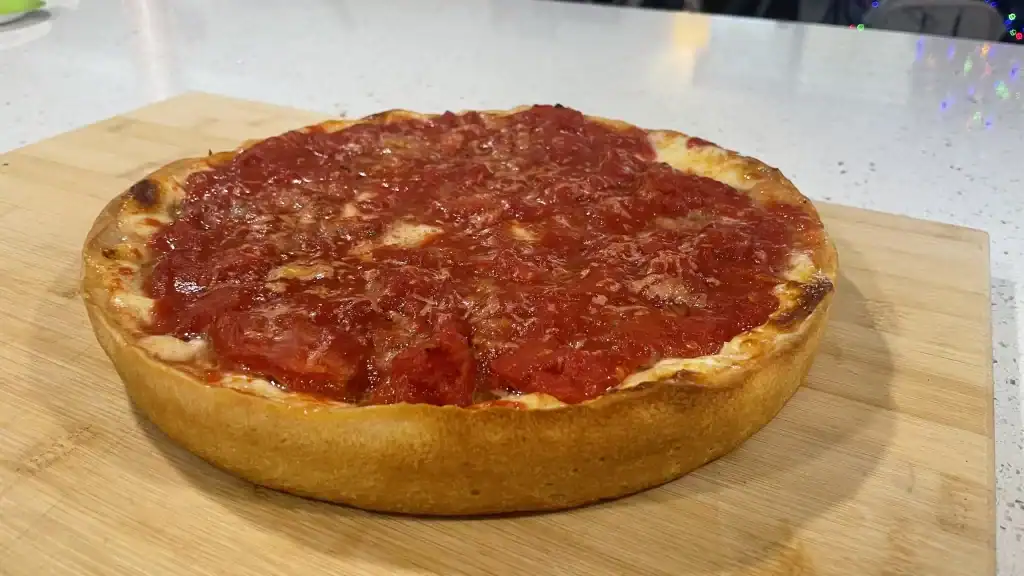
- After 30-35 minutes of baking, take the sourdough deep-dish pizza out of the oven and allow it to cool in the pan for about 5 minutes. This will allow the cheese to harden a little bit and the pizza will be easier to remove from the pan.
- After the five minute rest, carefully remove the pizza from the pan, lifting it from the edges with one or two spatulas. Transfer the pizza onto a wooden cutting board to serve and sprinkle the top of the pizza with the remaining grated parmesan cheese.
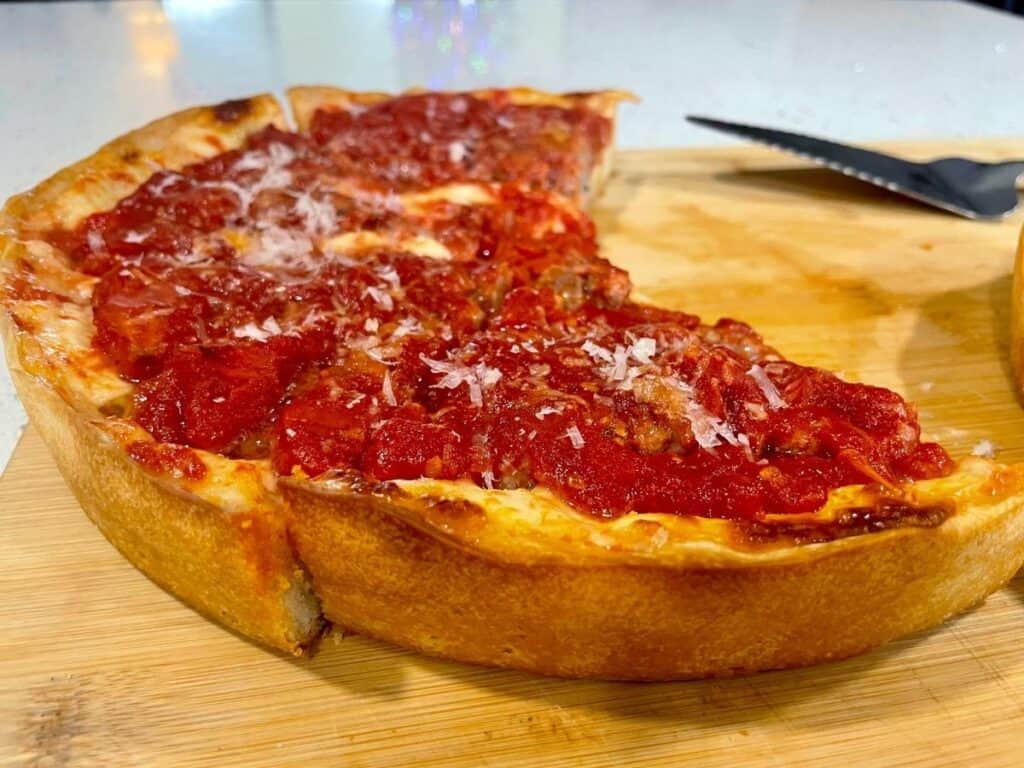
- Cut the pizza into 6-8 slices with a pizza cutter, depending on how big you want the slices to be. I usually cut the pizza into six equal slices for a 9” or 10” pan, and into eight equal slices for a 12” pan.
- Enjoy a wonderful slice of this sourdough deep-dish pizza as is, with a dash of red pepper flakes, or with my favorite condiment: a spoonful of Chicago-style giardiniera. Enjoy!
Substitutions and Additions
- For a cheese-only pizza, leave out the meat and keep the cheese and remaining ingredients the same. You can also add a few extra slices of cheese if you’d like. It’s already a lot of cheese so I think it’s fine keeping the cheese how it is.
- For a veggie pizza, sauté vegetables like mushrooms, peppers, and onions first in oil and season them with a little bit of salt. Once the vegetables are soft and the mushrooms have released their liquid, pat the veggies dry before adding them on top of the cheese layer when assembling the pizza. If you add raw vegetables to the pizza they can release water while they bake, creating a soggy and messy pizza. So, I recommend sautéing mushrooms and aromatic vegetables first before assembling the pizza.
Sourdough Chicago-Style Deep-Dish Pizza
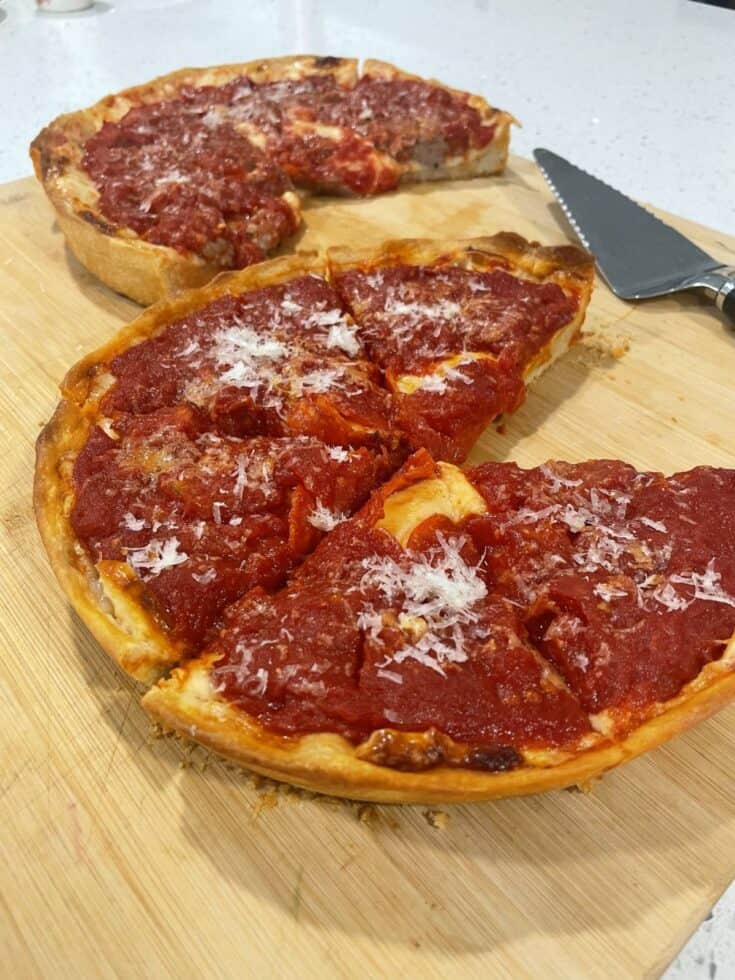
This recipe for traditional Chicago-style deep dish pizza features a long-fermented sourdough crust; the pizza is so good and so easy to make that you might open up your own pizza shop after you make it.
Ingredients
Sourdough Starter Feeding
- Leftover Sourdough Starter - 25 grams
- All-Purpose Flour - 50 grams
- Water - 50 grams
Dough for 9" Pizza Pan
- All-Purpose Flour - 156 grams
- Water - 70 grams
- Sourdough Starter - 40 grams
- Vegetable Oil - 30 grams
- Salt - 1 gram
- Sugar - 1 gram
Dough for 10" Pizza Pan
- All-Purpose Flour - 192 grams
- Water - 86 grams
- Sourdough Starter - 50 grams
- Vegetable Oil - 37 grams
- Salt - 1 gram
- Sugar - 1 gram
Dough for 12" Pizza Pan
- All-Purpose Flour - 279 grams
- Water - 126 grams
- Sourdough Starter - 66 grams
- Vegetable Oil - 54 grams
- Salt - 2 grams
- Sugar - 1 gram
Tomato Sauce
- Whole Peeled Tomatoes - 28 oz. can (794 grams)
- Salt - 1 tsp (5 grams)
Toppings for a 9" Pizza
- Mozzarella Cheese, sliced - 9 oz. (255 grams)
- Mild Italian Sausage, ground (optional) - 9 oz. (255 grams)
- Pepperoni (optional) - 21-24 pieces
- Prepared Tomato Sauce - 9 oz. (255 grams)
- Parmesan or Romano Cheese, grated - 1 1/2 Tbsp
Toppings for a 10" Pizza
- Mozzarella Cheese, sliced - 11 oz. (312 grams)
- Mild Italian Sausage, ground (optional) -11 oz. (312 grams)
- Pepperoni (optional) - 26-29 pieces
- Prepared Tomato Sauce - 11 oz. (312 grams)
- Parmesan or Romano Cheese, grated - 2 Tbsp
Toppings for a 12" Pizza
- Mozzarella Cheese, sliced - 16 oz. (453 grams)
- Mild Italian Sausage, ground (optional) -16 oz. (453 grams)
- Pepperoni (optional) - 37-39 pieces
- Prepared Tomato Sauce - 16 oz. (453 grams)
- Parmesan or Romano Cheese, grated - 3 Tbsp
Instructions
Feeding the Sourdough Starter
- In the morning, or around noon, take 25 grams of sourdough starter out of the fridge, add to the jar 50 grams of water and 50 grams of all-purpose flour. Stir the starter, water, and flour together until thoroughly combined and the mixture resembles something close to a thick pancake batter.
- Cover the sourdough starter jar loosely with a lid and mark the top of the starter with a rubber band so you can see how much the starter rises.
- Let the starter rise at room temperature for 6-12 hours or until roughly doubled in size. If the starter goes past double-in-size and begins to fall back down again, stick the starter in the refrigerator and let it rest there until you’re ready to mix your dough in the evening.
Mixing the Dough
- In the evening, when your sourdough starter has doubled in size, begin mixing your deep dish pizza dough. To a mixing bowl, add the water and sourdough starter (check the recipe card below for the correct ingredient amounts for the size of pan you’ll be using). Stir the starter and water thoroughly to combine. You want to dissolve the starter into the water as much as possible during this step because you will not be kneading this dough for very long.
- After the starter is dissolved into the water, add the oil, salt, and sugar. Stir briefly to combine.
- Next, add the all-purpose flour to the wet ingredients and stir with a wooden spoon until the dough just barely comes together. Then, keeping the dough in the mixing bowl, knead it with one hand for about 30-60 seconds. When the dry bits of flour disappear and the dough becomes slightly smooth, stop kneading!
Note on Short Kneading Time: Unlike most other types of pizza dough, Chicago-style deep dish pizza dough is not kneaded for very long. It also has a relatively high oil content. These two factors make the final pizza crust tender, flaky, and even buttery (although true Chicago-style deep dish pizza crust contains no butter in the dough).
The Overnight Rise
- Transfer the kneaded dough into an oiled glass bowl and cover it with a lid or sheet of plastic wrap. Let the dough rise at room temperature overnight, roughly 6-10 hours, or until it is doubled in size.
Storing the Dough in the Fridge
- The next morning, your dough should be doubled in size and ready to use. Transfer the bowl of dough into the fridge to rest until you’re ready to make your pizza.
Preparing the Pizza Pans
- Pre-heat your oven to 450°F (232°C) for 30 minutes. This will be just enough time to make the tomato sauce and other toppings for the pizza.
- While the oven is preheating, take out the pizza pan that you will be using and grease the bottom of the pan with either a half tablespoon of oil or a half tablespoon of butter. I usually rub a half tablespoon of butter on the bottom of the pan to try to closely approximate the “Buttercrust” flavor of Lou Malnati’s pizza in Chicago.
Note on Greasing the Pan: While you need to lightly grease the bottom of the pan with oil/butter, be careful not to grease the sides of the pan. The pizza dough needs to stick to the sides of the pan and leaving the sides un-greased will help the dough to stick.
- Take the bowl of chilled pizza dough out of the fridge. Remove the dough from the glass bowl and place it directly onto the surface of the greased deep dish pizza pan. Cover up the dough with a kitchen towel or a sheet of plastic wrap and allow the dough to rest while the oven preheats.
Making the Tomato Sauce
- While the oven is preheating and the dough is resting, prepare the tomato sauce. Open a 28 oz can of the best-tasting whole peeled tomatoes you can find (I always use the San Marzano tomatoes from Cento). Transfer the tomatoes with the juice and all into a medium sized mixing bowl.
- Add 1 tsp of salt to the mixing bowl and crush the tomatoes by hand for 30-60 seconds until the sauce is relatively smooth but with some tomato chunks still present. These hand-crushed tomatoes will taste far better than pre-crushed tomatoes from a can.
Note on High-Quality Tomatoes: The sauce for this pizza is essentially just hand-crushed whole peeled tomatoes with a little bit of salt, and the sauce is arguably the ingredient that you will taste the most in Chicago-style deep dish pizza. So if you use low-quality canned tomatoes, you will notice the difference. I can’t have you do that! Please splurge for good tomatoes. You won’t regret it. Two tasty tomato brands that I have used before are Cento canned whole peeled San Marzano tomatoes, and Bianco di Napoli whole peeled tomatoes. Both brands of canned tomatoes make an excellent sauce, so use whichever one you can find.
- After crushing the tomato sauce, take out the mozzarella cheese slices, Italian sausage (or pepperoni, if using instead), and grated parmesan cheese. Set these ingredients aside along with the tomato sauce.
- Once your oven has preheated for at least 30 minutes, it’s time to assemble the pizza.
Assembling the Pizza
- Uncover the pizza dough and press it down into the pizza pan making it as flat and as even as possible. When the pizza dough reaches the sides of the pan, press it up to form a lip along the inside of the pan. When the pizza crust reaches about 1-1 ½ inches high along the sides of the pan, press with your thumbs or fingertips to seal the pizza crust to the sides of the pan. Now the dough should stick to the pan and you can add the rest of the ingredients.
- After the dough comes the cheese. Lay slices of cheese directly on top of the pizza dough in 2-3 layers. It may seem like too much cheese at first, but Chicago-style deep dish pizza is nothing if not heavy on the mozzarella. Once the cheese slices are layered on, add the sausage or pepperoni.
- For a sausage pizza, place little chunks of uncooked Italian sausage all over the top of the cheese and press down on the sausage to form a web. This will basically be a solid layer of sausage, but it’s best if there are some sausage-free spots here and there where the cheese can bubble up through the sausage and come into contact with the tomato sauce. This will improve the flavor of the pizza overall, in my opinion.
- For a pepperoni pizza, add the suggested number of pepperoni on top of the cheese layer, overlapping each pepperoni slightly. This should evenly cover the cheese in one thin layer.
- Now that the sausage layer is finished, add the crushed tomato sauce on top of the sausage layer. Ladle the chunky tomato sauce into the center of the pizza and then spread it out to the edge of the pizza with your fingertips in true Chicago-pizzeria-fashion (or just spread the sauce out to the edges with a ladle if that bothers you, no one will know the difference). You want to spread the sauce out in an even layer from the center to the edge, and the sauce should just barely meet the crust. This will ideally allow a little bit of cheese to bubble up to the surface while the pizza is baking and caramelize along the interior of the crust.
- For the finishing touch, sprinkle half of the total amount of grated parmesan cheese on top of the tomato sauce. You’ll add the remaining parmesan to the top of the pizza when the pizza is done baking.
Baking
- Once the pizza is assembled, transfer the pizza pan onto the middle rack of the preheated oven and bake the pizza at 450°F for 30-35 minutes. Keep an eye on the pizza during the last 10-15 minutes of baking. If it looks like the crust is turning too brown or like anything is burning, place a sheet of aluminum foil loosely over the top of the pizza for the rest of the baking time and remove it at the end.
Note on the Long Baking Time: The heavy nature of this pizza requires a much longer-than-typical baking time compared to other styles of pizza. The extra long baking time allows the raw sausage and/or other toppings to cook thoroughly, and it allow the flavor of the cheese and toppings to meld together with the sweet and acidic crushed tomatoes. This comes together in the oven to create a deliciously flavored tomato sauce that is unique to Chicago-style deep dish pizza. Practically speaking, the sauce-on-top assembly of this pizza also prevents the toppings underneath from burning during the long bake time. Everything has a purpose!
Serving Sourdough Chicago-Style Deep Dish Pizza
- After 30-35 minutes of baking, take the sourdough deep dish pizza out of the oven and allow it to cool in the pan for about 5 minutes. This will allow the cheese to harden a little bit and the pizza will be easier to remove from the pan.
- After the five minute rest, carefully remove the pizza from the pan, lifting it from the edges with one or two spatulas. Transfer the pizza onto a wooden cutting board to serve and sprinkle the top of the pizza with the remaining grated parmesan cheese.
- Cut the pizza into 6-8 slices with a pizza cutter, depending on how big you want the slices to be. I usually cut the pizza into six equal slices for a 9” or 10” pan, and into eight equal slices for a 12” pan.
- Enjoy a wonderful slice of this sourdough deep dish pizza as is, with a dash of red pepper flakes, or with my favorite condiment: a spoonful of Chicago-style giardiniera.
Notes
Note on Short Kneading Time: Unlike most other types of pizza dough, Chicago-style deep dish pizza dough is not kneaded for very long. It also has a relatively high oil content. These two factors make the final pizza crust tender, flaky, and even buttery (although true Chicago-style deep dish pizza crust contains no butter in the dough).
Note on Greasing the Pan: While you need to lightly grease the bottom of the pan with oil/butter, be careful not to grease the sides of the pan. The pizza dough needs to stick to the sides of the pan and leaving the sides un-greased will help the dough to stick.
Note on High-Quality Tomatoes: The sauce for this pizza is essentially just hand-crushed whole peeled tomatoes with a little bit of salt, and the sauce is arguably the ingredient that you will taste the most in Chicago-style deep dish pizza. So if you use low-quality canned tomatoes, you will notice the difference. I can’t have you do that! Please splurge for good tomatoes. You won’t regret it. Two tasty tomato brands that I have used before are Cento canned whole peeled San Marzano tomatoes, and Bianco di Napoli whole peeled tomatoes. Both brands of canned tomatoes make an excellent sauce, so use whichever one you can find.
Note on the Long Baking Time: The heavy nature of this pizza requires a much longer-than-typical baking time compared to other styles of pizza. The extra long baking time allows the raw sausage and/or other toppings to cook thoroughly, and it allow the flavor of the cheese and toppings to meld together with the sweet and acidic crushed tomatoes. This comes together in the oven to create a deliciously flavored tomato sauce that is unique to Chicago-style deep dish pizza. Practically speaking, the sauce-on-top assembly of this pizza also prevents the toppings underneath from burning during the long bake time. Everything has a purpose!