

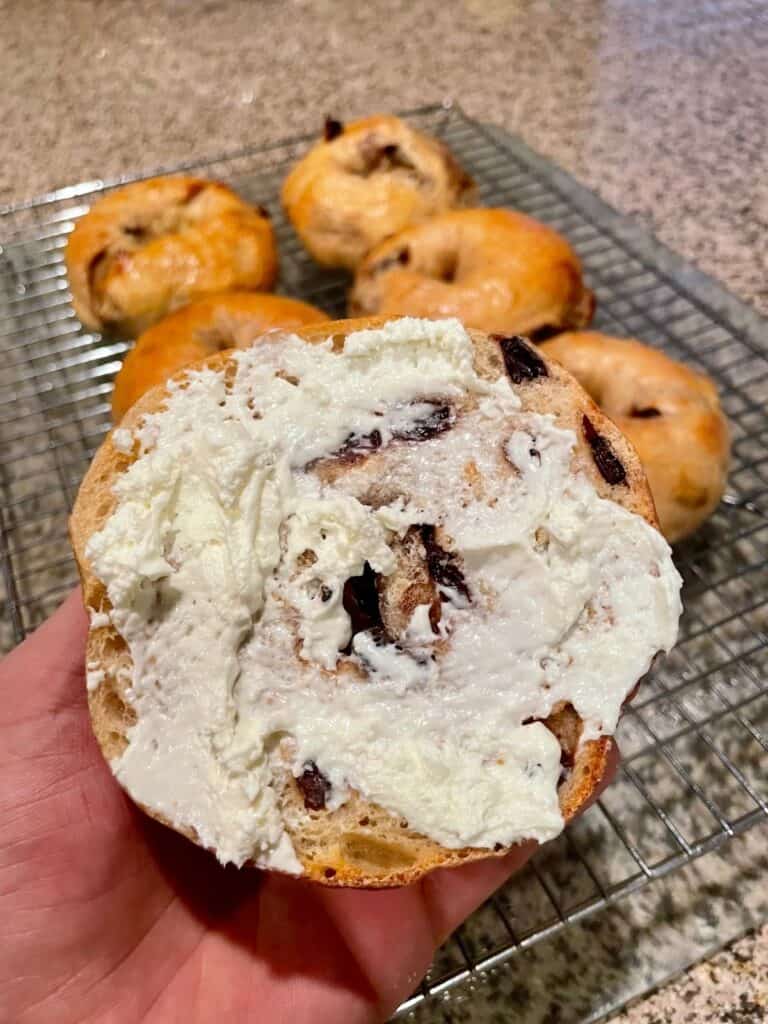
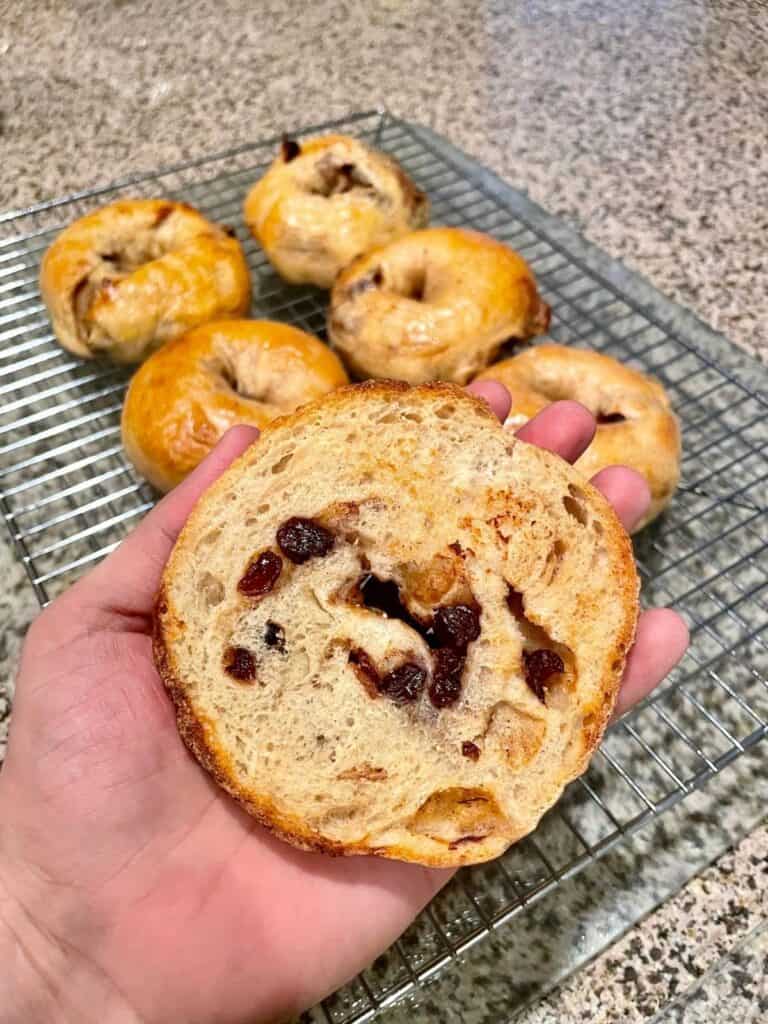
Cinnamon raisin bagels are delicious (they’re one of America’s favorite bagel varieties for a reason). This recipe for cinnamon raisin sourdough bagels is easy to make, uses a simple shaping technique, and the bagels are just as warm and delicious as any that you could get from a professional bagel shop.
Why This Recipe Works
- Long Sourdough Fermentation: Most good bagel recipes call for a long fermentation period (or “rise”) to build complex flavor in the dough. Sourdough bagels naturally rise slower and develop a complex sourdough flavor over time. So these cinnamon raisin sourdough bagels are arguably even more delicious than their yeast-fermented cousins.
- Easy Shaping Technique: Many bagel recipes call for rolling out bagel dough into strips and then sealing the ends together to create a perfect ring. This is a difficult method to get right, especially on your first try, so I prefer an easier bagel shaping technique where you pierce a hole into a ball of dough and gently form the ring shape from there. That’s the technique I use in this recipe, which is similar to my regular sourdough bagel recipe.
Ingredients You’ll Need for Cinnamon Raisin Sourdough Bagels
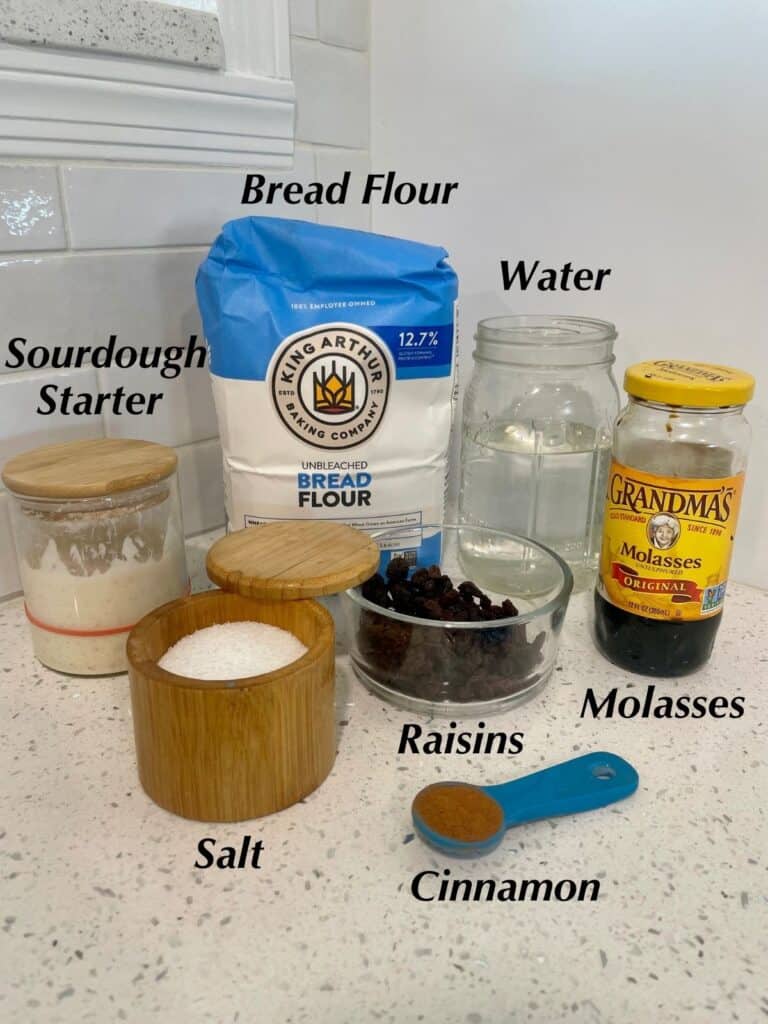
- Bread Flour: The higher protein content in bread flour gives bagels a chewier texture than all-purpose flour. Any type of white bread flour should work if it has around 13% protein content. For this particular recipe, I used the King Arthur brand of bread flour in the blue bag.
- Water: Plain, unchlorinater tap water is best. Use filtered water or bottled spring water if your city’s tap water contains harsh ingredients or has a bad taste. Don’t worry about using any special water from New York. Bagels are bagels no matter what water you use!
- Sourdough Starter: I used my regular sourdough starter for this recipe that I fed with bread flour. You can use almost any type of sourdough starter as long as it is 100% hydration (equal parts flour and water by weight).
- Molasses: These bagels call for a small amount of molasses to be used as a sweetener in the dough. You’ll also put a little bit of molasses in the boiling water before boiling the bagels. The molasses will help create the shiny, golden-brown exterior of the bagels. Check the substitutions section below for molasses alternatives you can use if you don’t have any on hand.
- Salt: I used Kosher salt in this recipe. You can use any sea salt, plain table salt, or kosher salt and it will work just fine.
- Raisins: Standard raisins from the grocery store work well, and you won’t need to soak them for this recipe. I also like to use golden raisins from time to time to switch things up. They work great too.
- Ground Cinnamon: I used ground “Ceylon” cinnamon for this recipe. Use whatever type of ground cinnamon you have available, as long as you like the taste.
- Egg (optional): If you want to brush your bagels with an egg wash to give them an extra shiny appearance, you’ll need one beaten egg.
Note: See recipe card below for full ingredient amounts and quantities.
Substitutions and Additions
- Instead of molasses, you can use almost any other sweetener (preferably a liquid sweetener). Barley malt syrup is traditional in New York bagels and honey is typically used in Montreal’s traditional bagels. But ultimately you can use honey, barley malt syrup, white sugar, or brown sugar as a 1:1 substitute for molasses in this recipe. The amount of sweetener is so small, relatively speaking, that any sweetener will do the trick.
Ingredient Amounts
Starter Feeding
- Sourdough Starter, leftover – 25 grams
- Water – 50 grams
- Bread Flour – 50 grams
Main Dough
- Bread Flour – 450 grams
- Water – 225 grams
- Sourdough Starter, active – 100 grams
- Molasses – 10 grams
- Salt – 10 grams
Inclusions
- Raisins – 100 grams
- Cinnamon, ground – 1 tsp (~2.6 grams)
- Egg, whisked – 1 egg (optional, for egg wash)
Suggested Timeline
| Time | Step |
|---|---|
| 10:00 PM (Day 1) | Feeding the Sourdough Starter |
| 6:30 AM (Day 2) | Mixing the Dough |
| 7:00 AM | Stretch and Folds (and Adding the Inclusions) |
| 8:00 AM | The First Rise (Bulk Fermentation) |
| 4:00 PM | Shaping the Cinnamon Raisin Sourdough Bagels |
| 4:30 PM | Final Proof |
| 6:30 PM | Transfer to Cold Proofing in the Fridge |
| 7:00 AM (Day 3) | Boiling and Topping |
| 7:30 AM | Baking |
How to Make Cinnamon Raisin Sourdough Bagels
Step-by-Step Instructions
Feeding the Starter
- Take 25 grams of leftover sourdough starter out of the fridge. To the jar, add 50 grams of water and 50 grams of bread flour. Stir the mixture thoroughly until there aren’t any dry clumps of flour left and the starter has a pancake-batter consistency.
- Mark the top of the starter with a rubber band, cover it loosely with a lid, and let the starter rise at room temperature overnight (around 7-10 hours), or until it doubles in size. The next morning your starter should have doubled in size and it will be ready to use to make your bagel dough.
Mixing the Dough
- Into a mixing bowl add the water, molasses, and active sourdough starter. Mix the ingredients together thoroughly so that the starter dissolves into the water.
- Next, add the bread flour and the salt into the liquid ingredients. Stir everything together until a dry, shaggy dough is formed.
- Knead the dough by hand in the bowl for 1-2 minutes, or until the dough holds together in one solid mass. At this point, cover the mixing bowl with a kitchen towel and let the dough rest for 30 minutes.
Stretch and Folds (and Adding the Inclusions)
1st Set of Stretch and Folds
- Uncover the dough, transfer the dough to the kitchen counter, and perform the first set of stretch and folds: grab an edge of the dough and stretch it up and fold it over the top of the dough. Grab the opposite edge of dough and stretch it up and fold it over the top of the dough. Then, stretch and fold the remaining two edges of dough for a total of four stretch and folds.
- Cover the dough with a kitchen towel and let it rest for 30 minutes.
2nd Set of Stretch and Folds
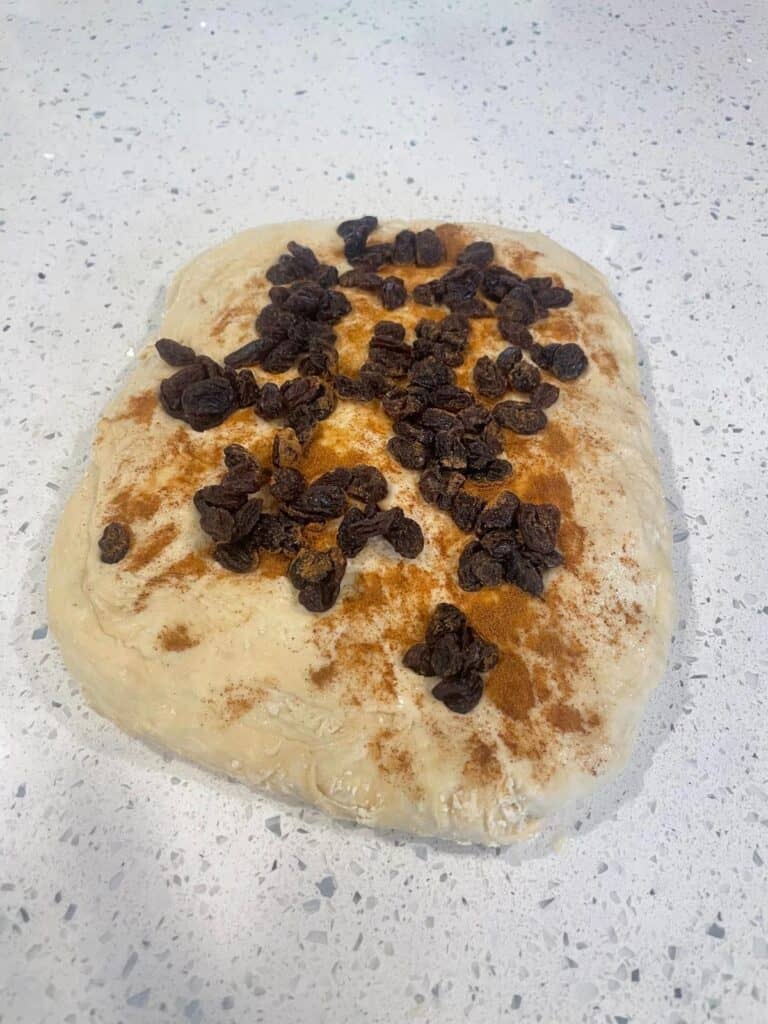
- After 30 minutes, uncover the dough and remove it from the mixing bowl. Press the dough down with your fingertips to flatten it.
- Sprinkle half of the total amount of cinnamon and half of the total amount of raisins on top of the dough. Wet your fingertips and press the cinnamon and raisins against the dough until they stick.
- Give the dough four stretch and folds, just like last time. This will gently incorporate the cinnamon and raisins into the dough in a few layers.
- Place the dough back into the mixing bowl, cover it, and let it rest for 30 minutes.
3rd Set of Stretch and Folds
- After 30 minutes, uncover the dough and remove it from the mixing bowl. Press the dough down with your fingertips to flatten it.
- Sprinkle the remaining half of the cinnamon and the remaining half of the raisins on top of the flattened dough. Wet your fingertips and press the cinnamon and raisins into the dough until they stick.
- Perform four more stretch and folds to incorporate the cinnamon and raisins. The dough should now be layered with the complete amount of cinnamon and raisins on the inside of the dough.
The First Rise (Bulk Fermentation)
- Roll the dough into a smooth ball and transfer the dough ball to an oiled glass container.
- Cover the dough with an air-tight lid or a sheet of plastic wrap and let the dough rise at room temperature for 6-8 hours, or until it doubles in size.

Shaping Cinnamon Raisin Sourdough Bagels
- Once the dough has doubled in size, remove it from the bowl and press it down on your kitchen counter to knock out the excess air.
- Diving the dough into six equal pieces with a bench scraper or a chef’s knife. The dough pieces should each be around 149 grams each if you are weighing them on a scale, but just make sure they’re as equal in weight as possible.
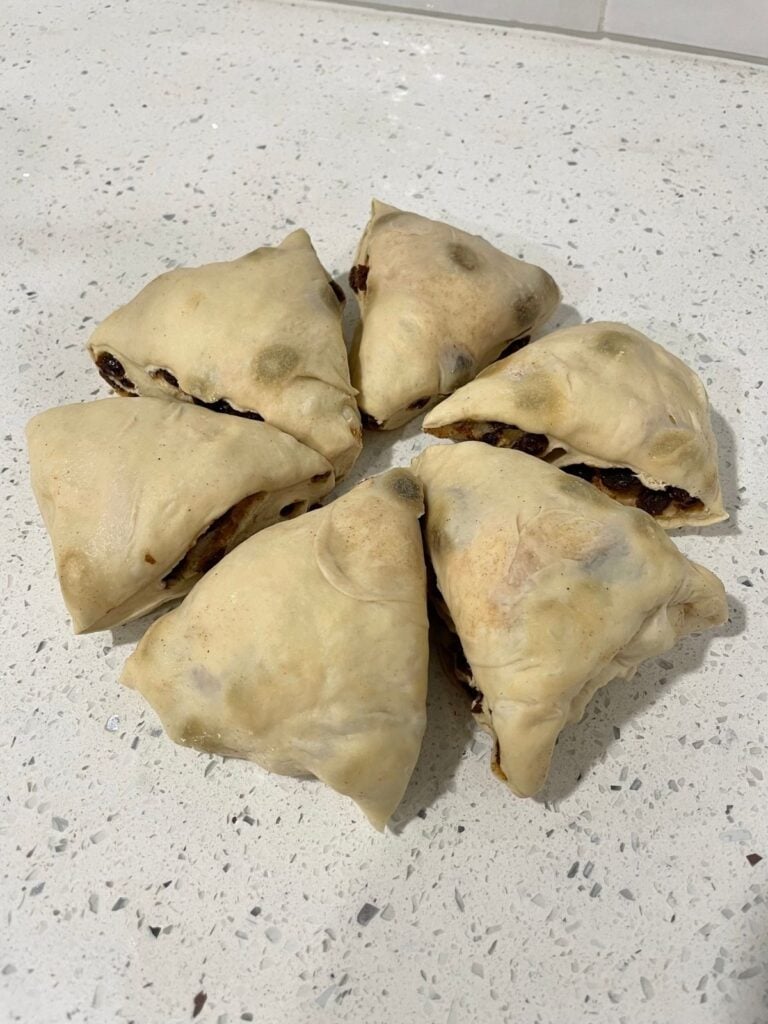
- Preshape each of the pieces of dough into a ball by stretching and folding the dough, keeping a smooth top on one side of the dough and the seam on the other side. Roll each dough ball by hand to smooth out the edges, and then cover up the dough balls and let them rest for about 15 minutes on the kitchen counter.
- After the short rest, it’s time to shape the balls into the classic ring shape of a bagel. Press your finger into the center of one of the dough balls and press all of the way through to the bottom of the dough.
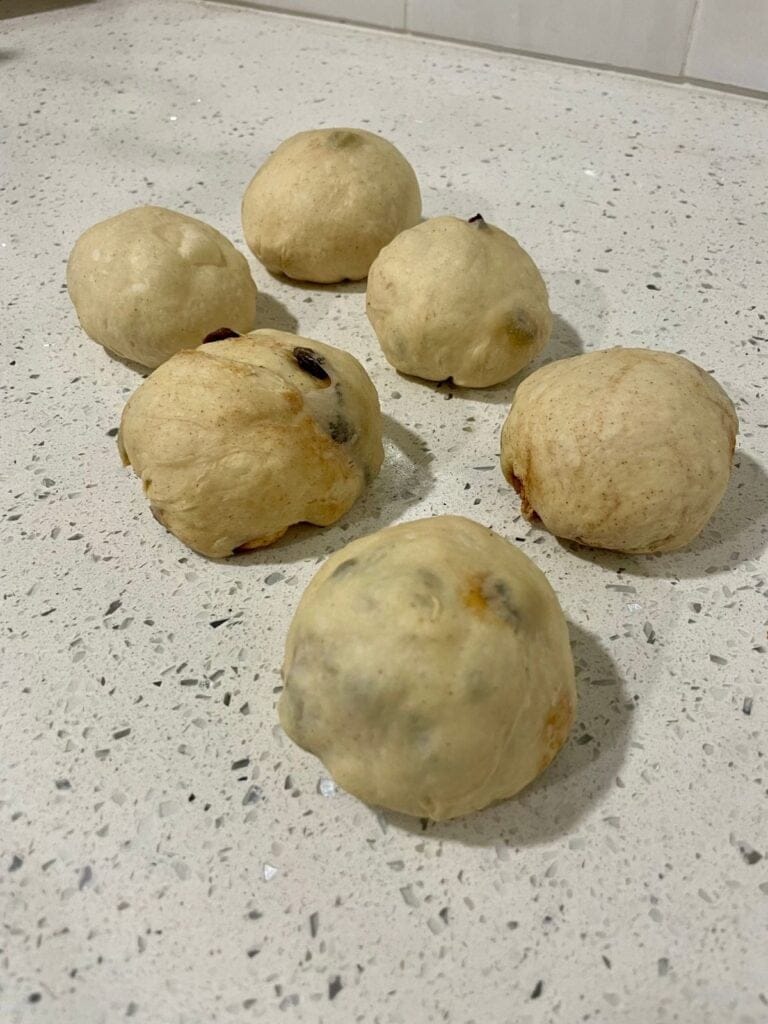
- Then, carefully lift the dough ball up and gently widen the hole with your fingers by turning the ring over and over again like a steering wheel. Keep widening the hole until it’s a little bit bigger than you want it to be in the final bagel. (As the bagels rise during proofing and baking, the hole will eventually shrink in size). Repeat this shaping process with each piece of dough.
Final Proof
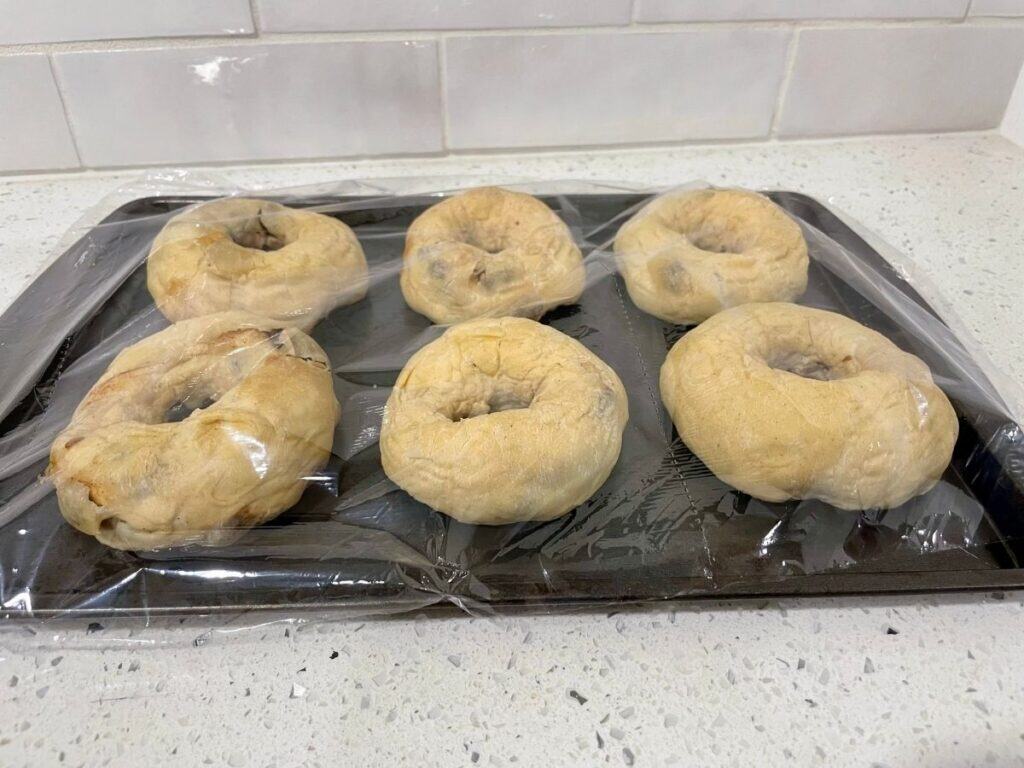
- Place the shaped bagels onto a baking sheet sprinkled with a little bit of flour. Technically, you don’t need to sprinkle any flour on the baking sheet since the chilled bagels can be removed easily from the metal tray once they’re cold.
- Cover the bagels with a sheet of plastic wrap and let them rise for 1-2 hours at room temperature, or until they have doubled in size.
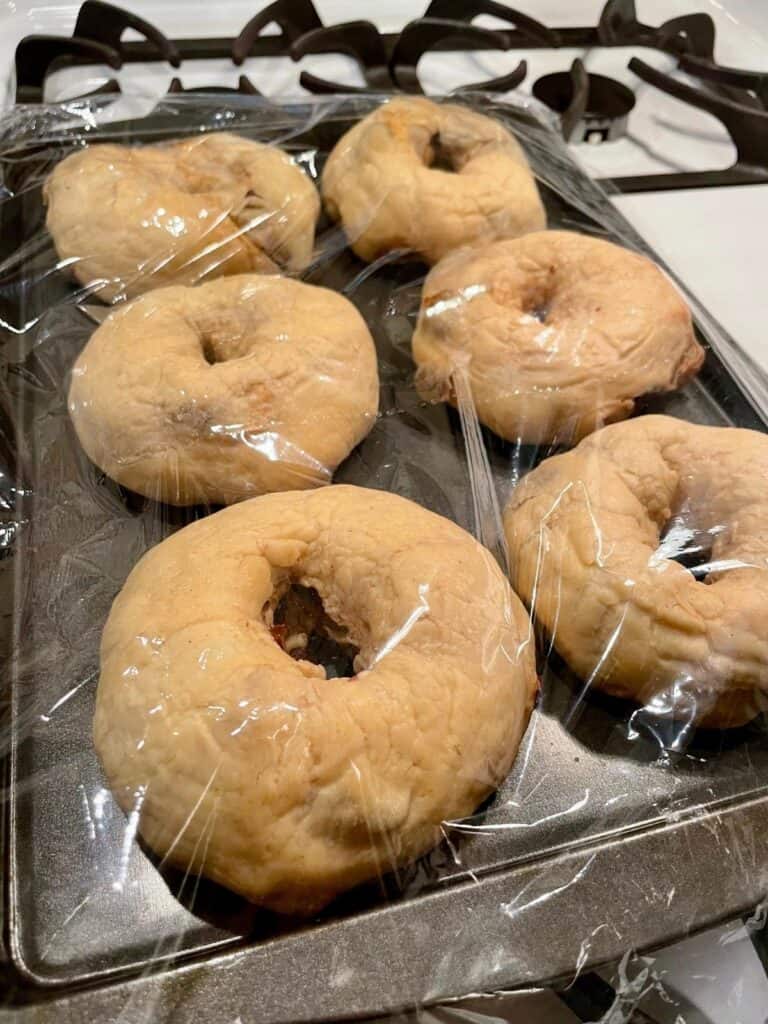
- Once doubled, you can boil and bake the bagels right away, or you can move the baking sheet into the fridge to let the bagels slowly proof for another 8-24 hours in the cold environment. This cold proof step will give the bagels extra flavor and it will make them easier to handle the next day when it’s time to boil them.
Boiling and Topping the Cinnamon Raisin Sourdough Bagels
- The next day, 30 minutes before you’re ready to bake the sourdough bagels, preheat your oven to 450°F (232°C). If you’ve got a pizza stone or a baking steel, put it on the middle rack.
- Place a heavy-bottomed pot or Dutch oven onto the stove and boil 2-3 quarts/liters of water. You need enough water in the pot so that the bagels will be able to float without touching the bottom.
- Add 1 Tbsp (about 20 grams) of molasses to the boiling water and stir it to dissolve. The molasses, or other sweetener, will give the bagels a sheen on the outside after they’re done baking.
- Take the cold bagels out of the fridge and put 2-3 of them into the pot to boil at the same time (you don’t want to overcrowd the pot with too many bagels). Boil them for one minute on the first side, flip them over with a slotted spoon, then boil them for another minute on the other side.
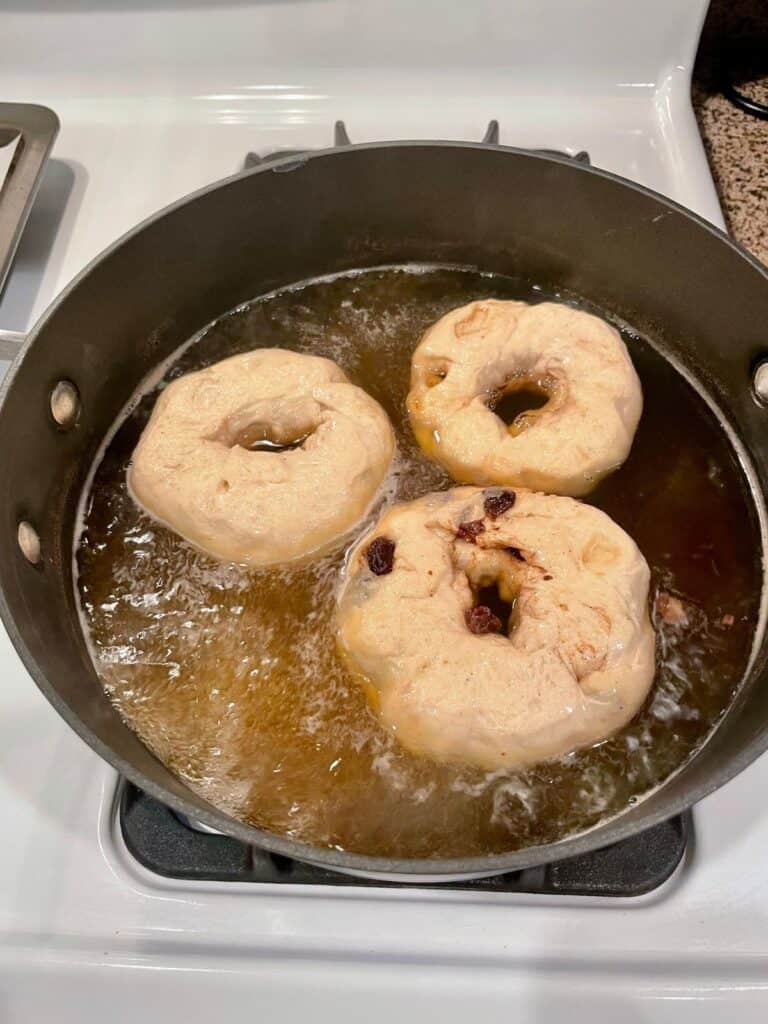
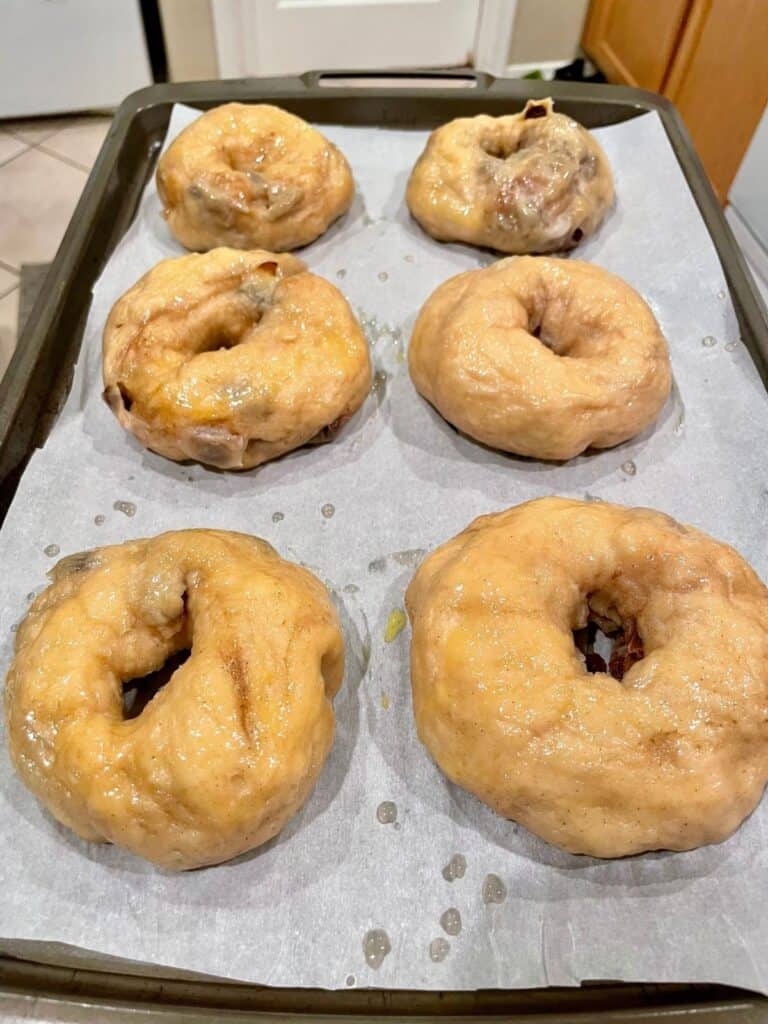
- Remove the boiled sourdough bagels from the water, drain them, and transfer them onto a metal baking sheet lined with parchment paper. Repeat the boiling process with the three remaining sourdough bagels.
- Once all bagels are done boiling and resting on the baking sheet, prepare the optional egg wash. Whisk one small egg in a bowl, and brush the top of each bagel with the egg mixture using a pastry brush. The egg wash, while not necessary, will give the bagels an extra shiny golden-brown glow when they’re done baking.
Baking
- Slide the baking sheet full of bagels onto the middle rack of your oven and bake for 20 minutes at 450°F (232°C). You can place the baking sheet onto of a pizza stone/steel or directly on the oven rack. Either method will work well.
- After 20 minutes, remove the golden-brown cinnamon raisin sourdough bagels from the oven. Let them cool on a wire rack for about 15 minutes if desired, but these bagels are fine to eat while they are still warm.
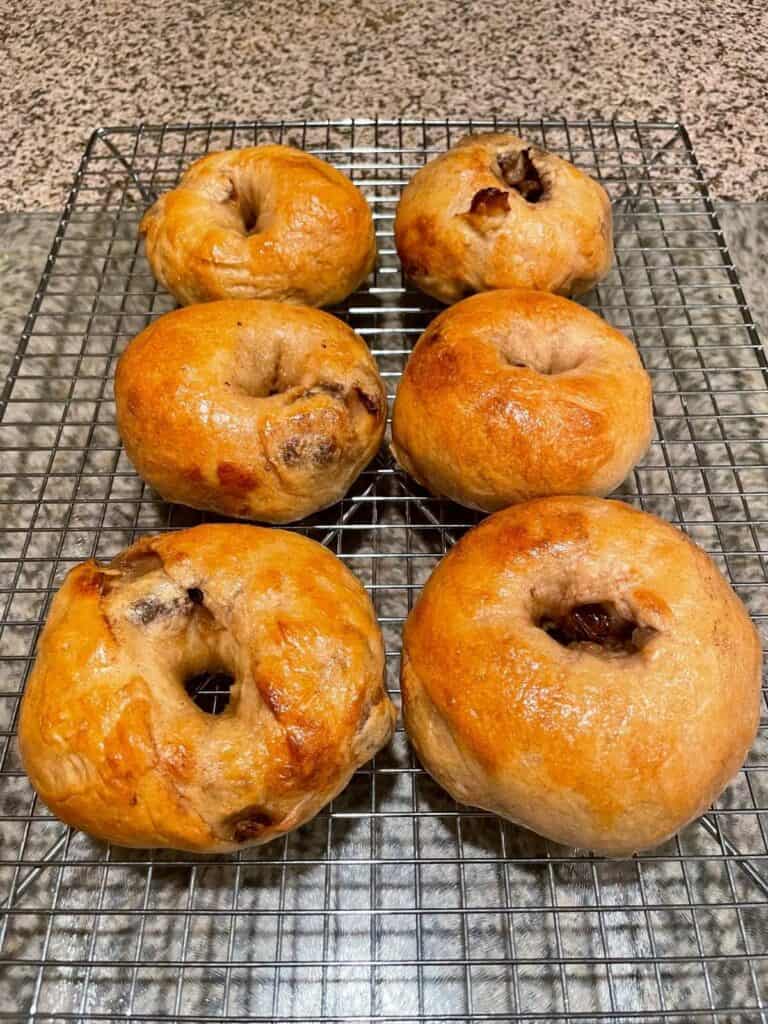
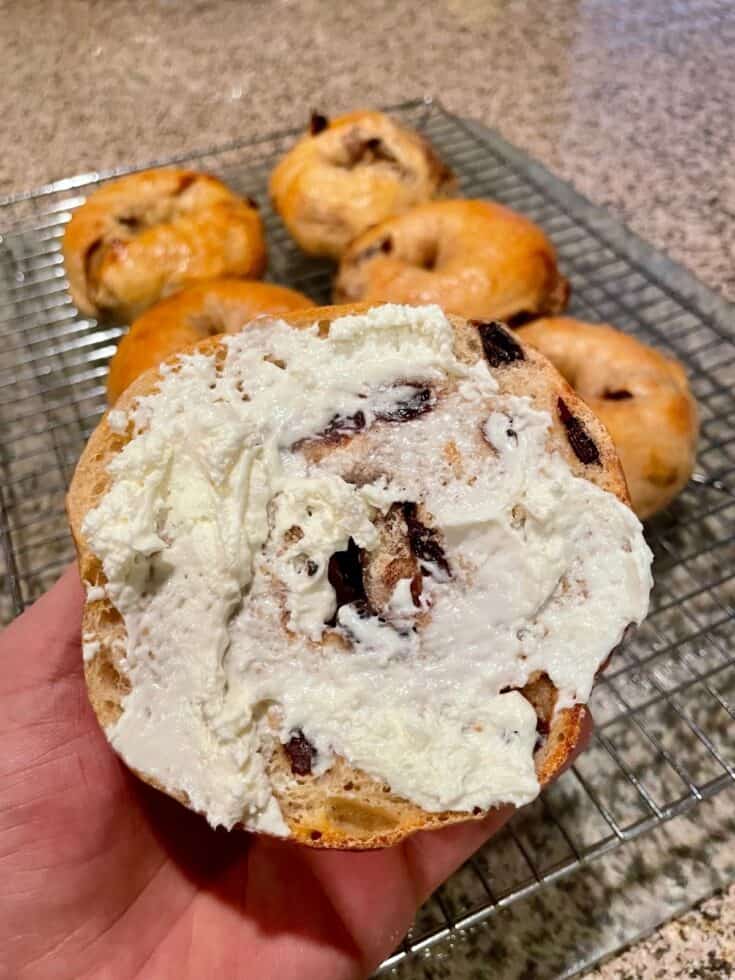
- Slice these delicious cinnamon raisin sourdough bagels down the center and enjoy toasted with butter or cream cheese.
Yield: 6 bagels
Cinnamon Raisin Sourdough Bagels
5.0 Stars (2 Reviews)
These cinnamon raisin sourdough bagels are easy to make, they use a simple shaping technique, and the bagels are just as warm and delicious as any that you could get from a professional bagel shop.
Prep Time
10 minutes
Cook Time
20 minutes
Additional Time
1 day
Total Time
1 day 30 minutes
Ingredients
Starter Feeding
- Sourdough Starter, leftover - 25 grams
- Water - 50 grams
- Bread Flour - 50 grams
Main Dough
- Bread Flour - 450 grams
- Water - 225 grams
- Sourdough Starter, active - 100 grams
- Molasses - 10 grams
- Salt - 10 grams
Inclusions
- Raisins - 100 grams
- Cinnamon, ground - 1 tsp (~2.6 grams)
- Egg, optional - 1 Egg (for egg wash)
Instructions
Feeding the Sourdough Starter
- Take 25 grams of leftover sourdough starter out of the fridge. To the jar, add 50 grams of water and 50 grams of bread flour. Stir the mixture thoroughly until there aren’t any dry clumps of flour left and the starter has a pancake-batter consistency.
- Mark the top of the starter with a rubber band, cover it loosely with a lid, and let the starter rise at room temperature overnight (around 7-10 hours), or until it doubles in size. The next morning your starter should have doubled in size and it will be ready to use to make your bagel dough.
Mixing the Dough
- Into a mixing bowl add the water, molasses, and active sourdough starter. Mix the ingredients together thoroughly so that the starter dissolves into the water.
- Next, add the bread flour and the salt into the liquid ingredients. Stir everything together until a dry, shaggy dough is formed.
- Knead the dough by hand in the bowl for 1-2 minutes, or until the dough holds together in one solid mass. At this point, cover the mixing bowl with a kitchen towel and let the dough rest for 30 minutes.
1st Set of Stretch and Folds
- Uncover the dough, transfer the dough to the kitchen counter, and perform the first set of stretch and folds: grab an edge of the dough and stretch it up and fold it over the top of the dough. Grab the opposite edge of dough and stretch it up and fold it over the top of the dough. Then, stretch and fold the remaining two edges of dough for a total of four stretch and folds.
- Cover the dough with a kitchen towel and let it rest for 30 minutes.
2nd Set of Stretch and Folds
- After 30 minutes, uncover the dough and remove it from the mixing bowl. Press the dough down with your fingertips to flatten it.
- Sprinkle half of the total amount of cinnamon and half of the total amount of raisins on top of the dough. Wet your fingertips and press the cinnamon and raisins against the dough until they stick.
- Give the dough four stretch and folds, just like last time. This will gently incorporate the cinnamon and raisins into the dough in a few layers.
- Place the dough back into the mixing bowl, cover it, and let it rest for 30 minutes.
3rd Set of Stretch and Folds
- After 30 minutes, uncover the dough and remove it from the mixing bowl. Press the dough down with your fingertips to flatten it.
- Sprinkle the remaining half of the cinnamon and the remaining half of the raisins on top of the flattened dough. Wet your fingertips and press the cinnamon and raisins into the dough until they stick.
- Perform four more stretch and folds to incorporate the cinnamon and raisins. The dough should now be layered with the complete amount of cinnamon and raisins on the inside of the dough.
The First Rise (Bulk Fermentation)
- Roll the dough into a smooth ball and transfer the dough ball to an oiled glass container.
- Cover the dough with an air-tight lid or a sheet of plastic wrap and let the dough rise at room temperature for 6-8 hours, or until it doubles in size.
Shaping Cinnamon Raisin Sourdough Bagels
- Once the dough has doubled in size, remove it from the bowl and press it down on your kitchen counter to knock out the excess air.
- Diving the dough into six equal pieces with a bench scraper or a chef’s knife. The dough pieces should each be around 149 grams each if you are weighing them on a scale, but just make sure they’re as equal in weight as possible.
- Preshape each of the pieces of dough into a ball by stretching and folding the dough, keeping a smooth top on one side of the dough and the seam on the other side. Roll each dough ball by hand to smooth out the edges, and then cover up the dough balls and let them rest for about 15 minutes on the kitchen counter.
- After the short rest, it’s time to shape the balls into the classic ring shape of a bagel. Press your finger into the center of one of the dough balls and press all of the way through to the bottom of the dough.
- Then, carefully lift the dough ball up and gently widen the hole with your fingers by turning the ring over and over again like a steering wheel. Keep widening the hole until it’s a little bit bigger than you want it to be in the final bagel. (As the bagels rise during proofing and baking, the hole will eventually shrink in size). Repeat this shaping process with each piece of dough.
Final Proof
- Place the shaped bagels onto a baking sheet sprinkled with a little bit of flour. Technically, you don’t need to sprinkle any flour on the baking sheet since the chilled bagels can be removed easily from the metal tray once they’re cold.
- Cover the bagels with a sheet of plastic wrap and let them rise for 1-2 hours at room temperature, or until they have doubled in size.
- Once doubled, you can boil and bake the bagels right away, or you can move the baking sheet into the fridge to let the bagels slowly proof for another 8-24 hours in the cold environment. This cold proof step will give the bagels extra flavor and it will make them easier to handle the next day when it’s time to boil them.
Boiling and Topping
- The next day, 30 minutes before you’re ready to bake the sourdough bagels, preheat your oven to 450°F (232°C). If you’ve got a pizza stone or a baking steel, put it on the middle rack.
- Place a heavy-bottomed pot or Dutch oven onto the stove and boil 2-3 quarts/liters of water. You need enough water in the pot so that the bagels will be able to float without touching the bottom.
- Add 1 Tbsp (about 20 grams) of molasses to the boiling water and stir it to dissolve. The molasses, or other sweetener, will give the bagels a sheen on the outside after they’re done baking.
- Take the cold bagels out of the fridge and put 2-3 of them into the pot to boil at the same time (you don’t want to overcrowd the pot with too many bagels). Boil them for one minute on the first side, flip them over with a slotted spoon, then boil them for another minute on the other side.
- Remove the boiled sourdough bagels from the water, drain them, and transfer them onto a metal baking sheet lined with parchment paper. Repeat the boiling process with the three remaining sourdough bagels.
- Once all bagels are done boiling and resting on the baking sheet, prepare the optional egg wash. Whisk one small egg in a bowl, and brush the top of each bagel with the egg mixture using a pastry brush. The egg wash, while not necessary, will give the bagels an extra shiny golden-brown glow when they’re done baking.
Baking
- Slide the baking sheet full of bagels onto the middle rack of your oven and bake for 20 minutes at 450°F (232°C). You can place the baking sheet onto of a pizza stone/steel or directly on the oven rack. Either method will work well.
- After 20 minutes, remove the golden-brown cinnamon raisin sourdough bagels from the oven. Let them cool on a wire rack for about 15 minutes if desired, but these bagels are fine to eat while they are still warm.
- Slice these delicious cinnamon raisin sourdough bagels down the center and enjoy toasted with butter or cream cheese.