

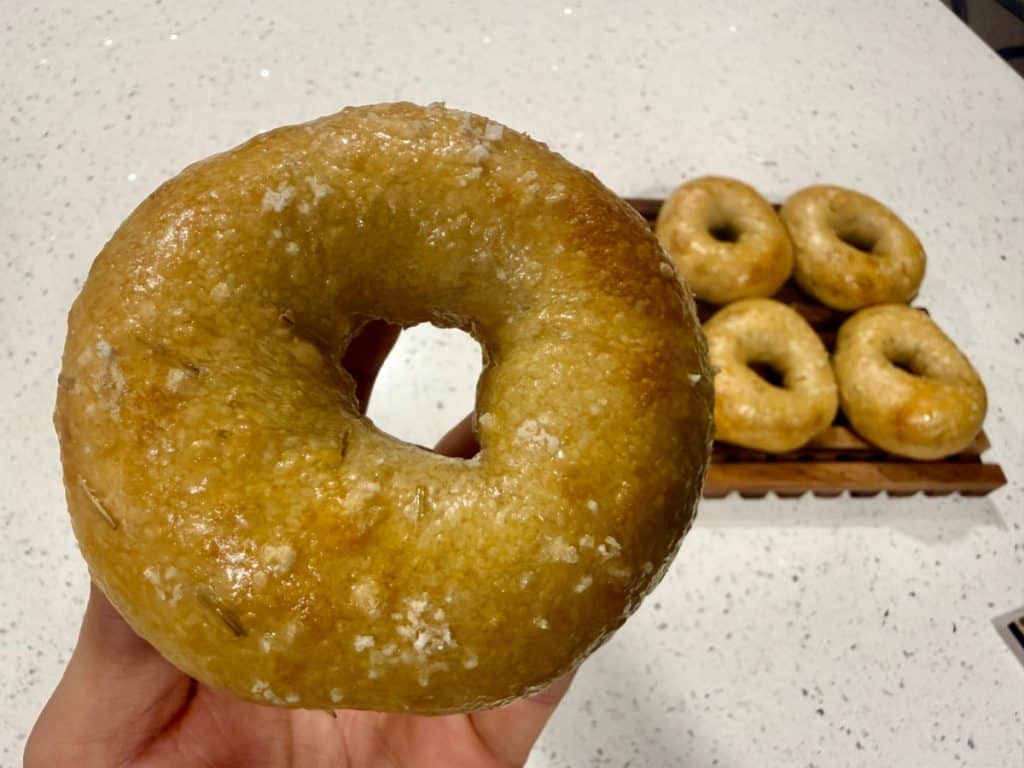
These sourdough bagels with rosemary and sea salt are bursting with rosemary flavor. The secret is that the dried rosemary is folded into the dough instead of sprinkled on top of the bagels before baking. You’ll love these rosemary and sea salt sourdough bagels.
Why This Recipe Works
Rosemary and sea salt is a classic flavor combination for savory baked goods. I’ve used it in my sourdough focaccia recipe for years. The rosemary brings a light, herby, and aromatic flavor, while the flakes of sea salt make the natural flavor of the other ingredients stand out.
The problem with rosemary bagels is that if you sprinkle dried or fresh rosemary on top of the bagels, it tends to dry out, burn, or become unpleasant to eat. (This doesn’t happen on focaccia since the high quantity of olive oil preserves the rosemary).
To fix this problem, this recipe calls for folding the dried rosemary inside of the sourdough bagel dough. As the rosemary is kneaded into the dough, the natural flavorful oils are released and the whole dough becomes lightly scented with rosemary. Even when the bagels are toasted and topped with cream cheese, the rosemary flavor isn’t hidden, but it’s perfectly complemented. I’m confident you’ll want to have a second bagel after trying your first.
Ingredients You’ll Need
Main Dough Ingredients
- Bread Flour: I used the blue bag of King Arthur bread flour for this recipe. You can use any plain white bread flour that contains around 11-13% protein.
- Water: Use filtered tap water or un-chlorinated bottled water.
- Sourdough Starter: You’ll need a 100% hydration sourdough starter for this recipe (fed with equal parts water and bread flour).
- Molasses: Molasses is used in this recipe both in the dough, to add sweetness, and in the boiling water, to give the bagels a golden brown sheen.
- Salt: I used Kosher salt for this recipe, but sea salt or plain table salt will also work well.
- Dried Rosemary: I use dried rosemary for this recipe because it’s easy to find in stores and it breaks up easily as it’s kneaded into the bagel dough.
- Flaky Sea Salt: Topping the bagels with a sprinkle of flaky sea salt brings out the savory flavor of these bagels.
- Egg (Optional): Brushing the bagels with one beaten egg (egg wash) before baking them gives the bagels a golden-brown sheen.
Note: See recipe card below for full ingredient amounts and quantities.
Substitutions and Additions
- You can omit the egg wash if desired, but you’ll need to quickly sprinkle the bagels with sea salt soon after taking them out of the boiling water. If you wait too long, the bagels will dry out and the salt won’t stick to the bagels as well.
- You can substitute honey or barley malt syrup for the molasses at a 1:1 ratio in this recipe.
Ingredient Amounts
Starter Feeding
- Sourdough Starter, leftover – 25 grams
- Water – 50 grams
- Bread Flour – 50 grams
Main Dough
- Bread Flour – 450 grams
- Water – 225 grams
- Sourdough Starter, active – 100 grams
- Salt – 10 grams
- Molasses – 10 grams
- Dried Rosemary – 3 grams (1 Tbsp)
- Flaky Sea Salt – A sprinkle per bagel
Suggested Timeline
| Time | Step |
|---|---|
| 10:00 PM (Day 1) | Feeding the Sourdough Starter |
| 6:00 AM (Day 2) | Mixing the Dough |
| 6:30 AM | Adding the Rosemary |
| 7:30 AM | The First Rise (Bulk Fermentation) |
| 1:30 PM | Shaping |
| 2:10 PM | The Second Rise (Final Proof) |
| 3:10 PM | Cold Proofing in the Fridge |
| 8:00 AM (Day 3) | Baking |
How to Make Rosemary and Sea Salt Sourdough Bagels
Step-by-Step Instructions
Feeding the Sourdough Starter
Take 25 grams of leftover sourdough starter out of the fridge. Feed your starter 50 grams of water and 50 grams of bread flour. Mix the flour, water, and starter around in the jar until it has a pancake batter-like consistency. Mark the top of the starter with a rubber band and cover the top of the jar loosely with a lid. Let the starter rise at room temperature overnight, for around 6-8 hours, or until it doubles in size.
Mixing the Dough
To a mixing bowl, add the water, molasses, salt, and sourdough starter. Stir together to combine. Then, add the bread flour. Mix the ingredients together with a spoon until a rough dough forms. Knead the dough by hand for two minutes, or until the dough starts to hold together. You can knead the dough inside of the mixing bowl. Cover the dough and let it rest for 30 minutes.
Adding the Rosemary
30 minutes later, uncover the dough and sprinkle one tablespoon of dried rosemary on top of the dough. Wet your fingertips in water and then dimple the rosemary into the dough with your fingertips. This will help the rosemary stick to the dough and it will release some of the natural rosemary oil, perfuming the entire dough. Give the dough four folds (see video) to incorporate the rosemary throughout the dough in layers. Cover the dough and let it rest for 30 minutes.
After 30 minutes, knead the dough for another two minutes by hand. This will further develop the gluten in the dough and also fully distribute the dried rosemary.
The First Rise (Bulk Fermentation)
Cover the dough with plastic wrap or an air tight lid and let the dough rise at room temperature for 4-8 hours, or until it has fully doubled in size. Once the dough has doubled, you can move on to shaping the bagels.
Shaping
Divide the risen dough into six equally sized pieces with a bench scraper or a chef’s knife. The pieces should weigh roughly 133 grams each if weighing them on a digital scale. Stretch and fold each piece of dough into a ball and roll the dough balls on the counter to smooth out the seams. Cover the dough balls with plastic wrap (to prevent them from drying out) and let them rest on the counter for 30 minutes.
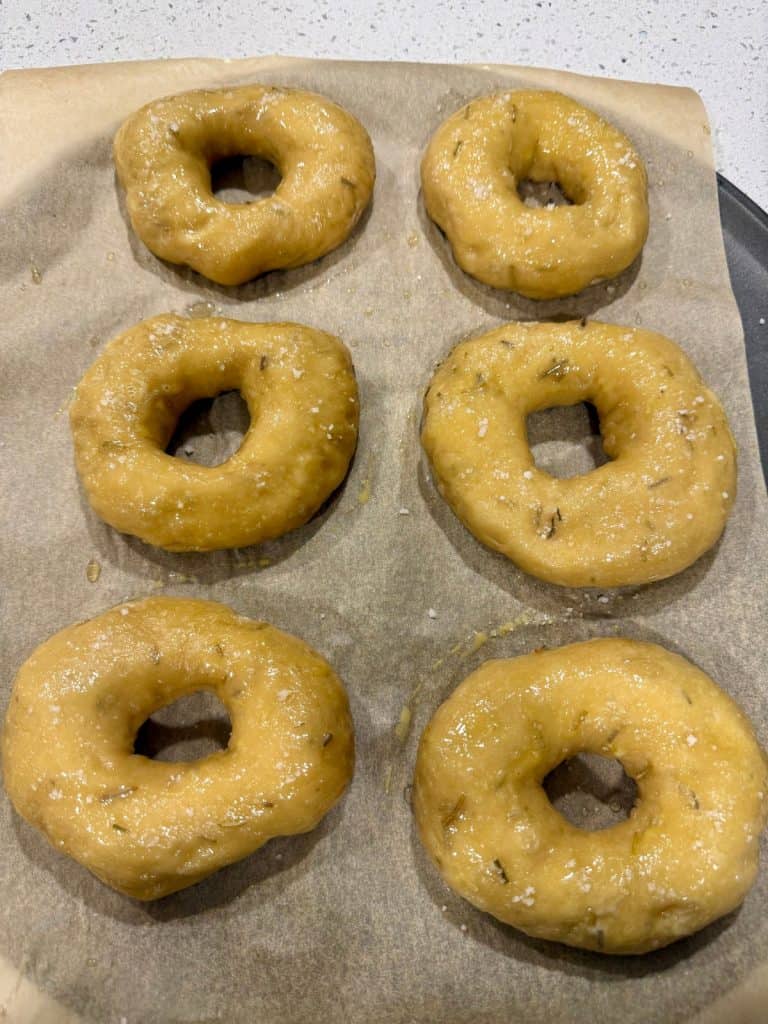
30 minutes later, shape the dough balls into rings using the “cheater method” of bagel shaping. Piece a hole in the middle of a dough ball and then widen the hole with your fingers by stretching the dough in a steering-wheel motion. Since the bagel hole will get smaller during rising and baking, stretch the bagel ring until the hole is larger than you would want in your final baked bagel. Transfer the shaped bagels onto a metal baking sheet lined with parchment paper.
Note: The traditional method of bagel shaping involves rolling a strip of dough into a ring, but the “cheater method” involves piercing a hole in a dough ball and then widening out the hole to form a ring.
The Second Rise (Final Proof)
Cover the shaped bagels with a sheet of plastic wrap (to prevent drying) and let them rise at room temperature for 1-2 hours. This will give them a head start on proofing and allow them to puff up with air before going into the fridge.
Cold Proofing in the Fridge
After 1-2 hours of room temperature proofing, the bagels should feel slightly puffy but not completely doubled in size. Move the tray of bagels into the refrigerator and let the bagels proof in the cold environment for 8-24 hours. Take them out the next day whenever you are ready to bake them.
Note: You can skip the cold proofing step by allowing the bagels to fully double in size at room temperature during the previous step. Once the bagels have completely doubled in size, you can move on to the “Boiling the Bagels” step.
Boiling the Bagels
30 minutes before baking the bagels, preheat your oven to 450°F (232°C).
Bring 2-3 quarts/liters of water to a boil in a large pot. You’ll need enough water so the bagels can float without touching the bottom of the pot. Once the water is boiling, add 1 Tbsp (20 grams) of molasses to the water and stir it in to dissolve.
Take the bagels out of the fridge and place 2-3 bagels at a time into the pot of boiling water. (If the bagels are properly proofed, and filled with air, they should float.) Boil the bagels for one minute on each side and then transfer them to a metal baking sheet lined with parchment paper.
Brush the bagels with an egg wash (one beaten egg) using a pastry brush. Then, sprinkle the top of each bagel with a pinch of flaky sea salt.
Baking the Rosemary and Sea Salt Sourdough Bagels
Bake the bagels in the center rack of the oven for 20 minutes at 450°F (232°C). Transfer the cooked bagels to a cooling rack and let them cool for about 20 minutes before enjoying.
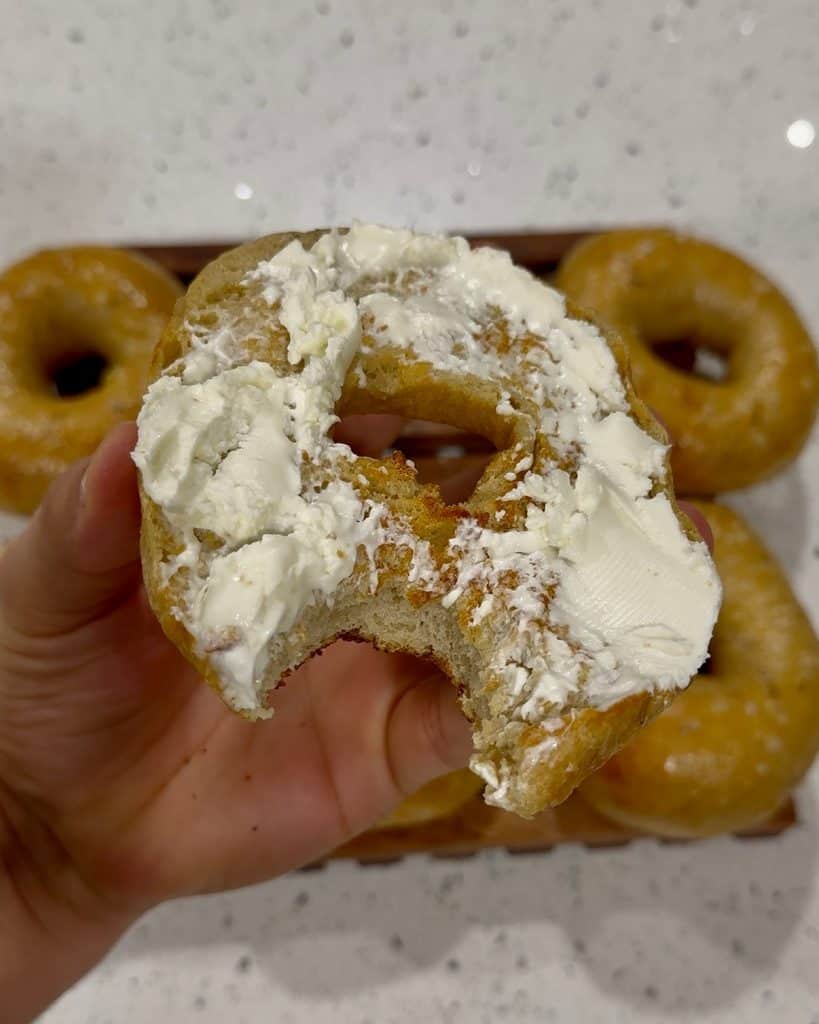
These sourdough bagels with rosemary and sea salt are absolutely delicious when toasted and topped with plain cream cheese. The rosemary in the dough gives the entire bagel a wonderful flavor and aroma, and cold cream cheese on a hot toasted bagel is the perfect complement.
Rosemary and Sea Salt Sourdough Bagels
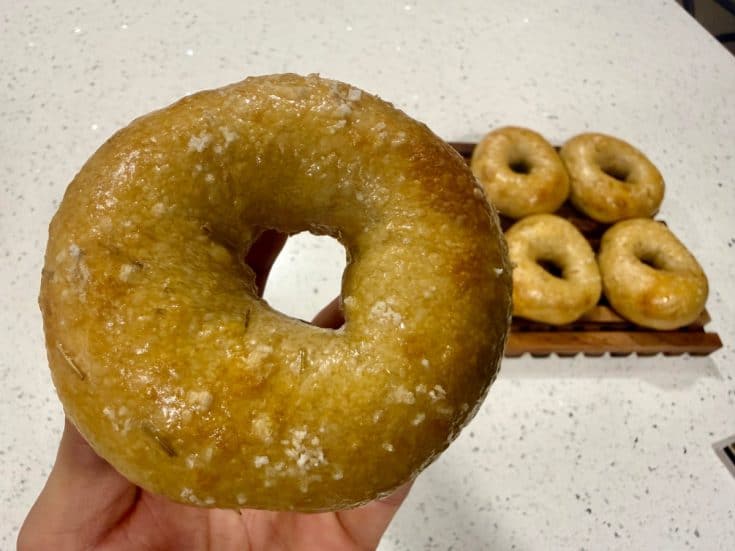
These sourdough bagels with rosemary and sea salt are bursting with rosemary flavor. The secret is that the dried rosemary is folded into the dough instead of sprinkled on top of the bagels before baking. You’ll love these rosemary and sea salt sourdough bagels.
Ingredients
Starter Feeding
- Sourdough Starter, leftover – 25 grams
- Water – 50 grams
- Bread Flour – 50 grams
Main Dough
- Bread Flour – 450 grams
- Water – 225 grams
- Sourdough Starter, active – 100 grams
- Salt – 10 grams
- Molasses – 10 grams
- Dried Rosemary – 3 grams (1 Tbsp)
- Flaky Sea Salt – A sprinkle per bagel
Instructions
Feeding the Sourdough Starter
Take 25 grams of leftover sourdough starter out of the fridge. Feed your starter 50 grams of water and 50 grams of bread flour. Mix the flour, water, and starter around in the jar until it has a pancake batter-like consistency. Mark the top of the starter with a rubber band and cover the top of the jar loosely with a lid. Let the starter rise at room temperature overnight, for around 6-8 hours, or until it doubles in size.
Mixing the Dough
To a mixing bowl, add the water, molasses, salt, and sourdough starter. Stir together to combine. Then, add the bread flour. Mix the ingredients together with a spoon until a rough dough forms. Knead the dough by hand for two minutes, or until the dough starts to hold together. You can knead the dough inside of the mixing bowl. Cover the dough and let it rest for 30 minutes.
Adding the Rosemary
30 minutes later, uncover the dough and sprinkle one tablespoon of dried rosemary on top of the dough. Wet your fingertips in water and then dimple the rosemary into the dough with your fingertips. This will help the rosemary stick to the dough and it will release some of the natural rosemary oil, perfuming the entire dough. Give the dough four folds (see video) to incorporate the rosemary throughout the dough in layers. Cover the dough and let it rest for 30 minutes.
After 30 minutes, knead the dough for another two minutes by hand. This will further develop the gluten in the dough and also fully distribute the dried rosemary.
The First Rise (Bulk Fermentation)
Cover the dough with plastic wrap or an air tight lid and let the dough rise at room temperature for 4-8 hours, or until it has fully doubled in size. Once the dough has doubled, you can move on to shaping the bagels.
Shaping
Divide the risen dough into six equally sized pieces with a bench scraper or a chef’s knife. The pieces should weigh roughly 133 grams each if weighing them on a digital scale. Stretch and fold each piece of dough into a ball and roll the dough balls on the counter to smooth out the seams. Cover the dough balls with plastic wrap (to prevent them from drying out) and let them rest on the counter for 30 minutes.
30 minutes later, shape the dough balls into rings using the “cheater method” of bagel shaping. Piece a hole in the middle of a dough ball and then widen the hole with your fingers by stretching the dough in a steering-wheel motion. Since the bagel hole will get smaller during rising and baking, stretch the bagel ring until the hole is larger than you would want in your final baked bagel. Transfer the shaped bagels onto a metal baking sheet lined with parchment paper.
Note: The traditional method of bagel shaping involves rolling a strip of dough into a ring, but the “cheater method” involves piercing a hole in a dough ball and then widening out the hole to form a ring.
The Second Rise (Final Proof)
Cover the shaped bagels with a sheet of plastic wrap (to prevent drying) and let them rise at room temperature for 1-2 hours. This will give them a head start on proofing and allow them to puff up with air before going into the fridge.
Cold Proofing in the Fridge
After 1-2 hours of room temperature proofing, the bagels should feel slightly puffy but not completely doubled in size. Move the tray of bagels into the refrigerator and let the bagels proof in the cold environment for 8-24 hours. Take them out the next day whenever you are ready to bake them.
Note: You can skip the cold proofing step by allowing the bagels to fully double in size at room temperature during the previous step. Once the bagels have completely doubled in size, you can move on to the “Boiling the Bagels” step.
Boiling the Bagels
30 minutes before baking the bagels, preheat your oven to 450°F (232°C).
Bring 2-3 quarts/liters of water to a boil in a large pot. You’ll need enough water so the bagels can float without touching the bottom of the pot. Once the water is boiling, add 1 Tbsp (20 grams) of molasses to the water and stir it in to dissolve.
Take the bagels out of the fridge and place 2-3 bagels at a time into the pot of boiling water. (If the bagels are properly proofed, and filled with air, they should float.) Boil the bagels for one minute on each side and then transfer them to a metal baking sheet lined with parchment paper.
Brush the bagels with an egg wash (one beaten egg) using a pastry brush. Then, sprinkle the top of each bagel with a pinch of flaky sea salt.
Baking the Rosemary and Sea Salt Sourdough Bagels
Bake the bagels in the center rack of the oven for 20 minutes at 450°F (232°C). Transfer the cooked bagels to a cooling rack and let them cool for about 20 minutes before enjoying.
These sourdough bagels with rosemary and sea salt are absolutely delicious when toasted and topped with plain cream cheese. The rosemary in the dough gives the entire bagel a wonderful flavor and aroma, and cold cream cheese on a hot toasted bagel is the perfect complement.