

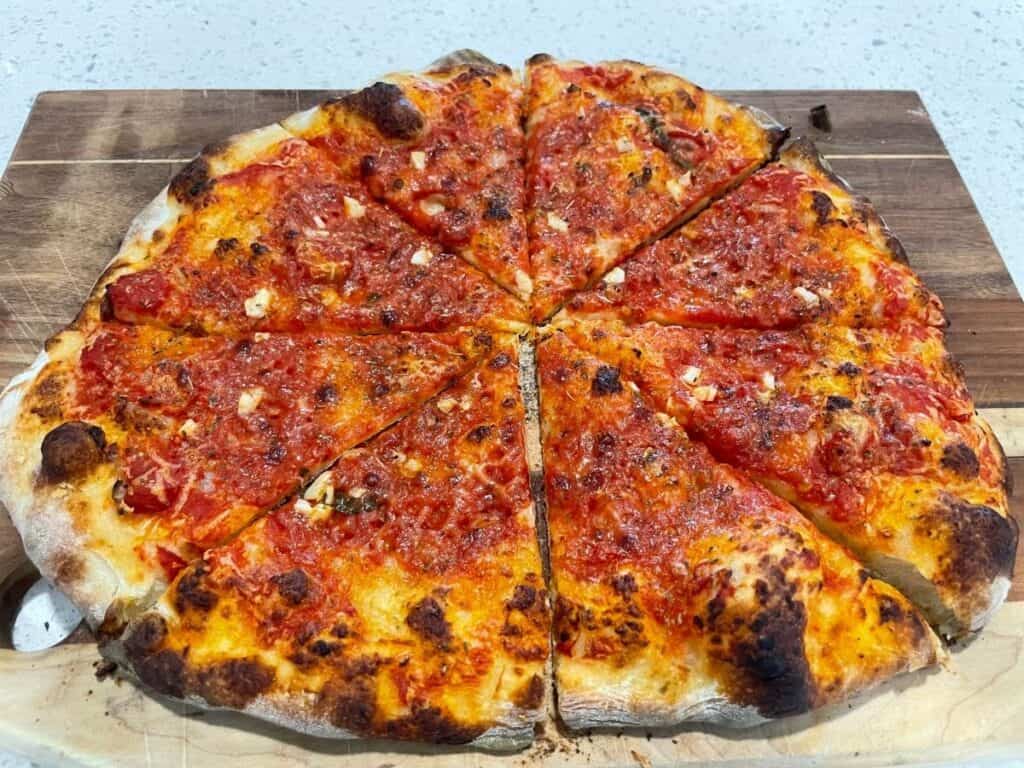
With this recipe, you can make sourdough New Haven-style pizza in your home oven. Thin and crispy pizza, lightly topped with high-quality tomato sauce, garlic, herbs, and cheeses – after you make your own sourdough version of this popular pizza style, you’ll have no need for take out. Enjoy!

Why This Recipe Works
New Haven-style pizza is a popular American style of pizza from New Haven, Connecticut. Since it is usually baked in a traditional coal-fired bread oven, most people assume that you can’t make this style of pizza at home. But, because coal-fired ovens actually don’t reach ridiculously high temperatures like Neapolitan pizza ovens, you can closely approximate a thin and crispy coal-fired New Haven-style pizza by turning your home oven up to the highest temperature and baking your pizza on a pre-heated baking steel.
New Haven-style pizzas are traditionally made with a basic bread dough that is fermented for a long period of time in a cold environment – no crazy ingredients required. We can easily replicate the New Haven-style pizza dough process by making a basic sourdough bread dough (at 68% hydration), and by letting the dough balls rise for an extended period of time in the fridge.
By following these two key steps, we can make an amazing sourdough New Haven-style pizza at home.
Special Tools You’ll Need
- 12″ Baking Steel: Baking your pizza on a pre-heated baking steel will help you achieve the thin and crispy, slightly charred crust that is common in New Haven-style pizzas. If you have a 12″ pizza stone, this will also work, but a baking steel gives much better results in my experience.
- Pizza Peel: Use a pizza peel that is 12″ or larger to help you launch your pizzas onto the hot pre-heated baking steel.
- Digital scale: I highly recommend using a digital scale to weigh your ingredients instead of trying to measure with cups and tablespoons. A scale will allow you to weigh your ingredients accurately.
Ingredients You’ll Need
For the Dough
- Bread Flour: Any brand bread flour will work fine. I used Bob’s Red Mill artisan bread flour for this recipe.
- Water: It’s best to use filtered tap water or bottled spring water for this bread dough.
- Sourdough Starter: You’ll need a 100% hydration sourdough starter for this recipe (a starter fed with equal parts water and bread flour by weight).
- Salt: I use Kosher salt for this recipe, but sea salt or plain table salt will work just as well.
For the Sauce and Toppings
- Whole Peeled Tomatoes: You’ll need one 28 oz. can of whole peeled tomatoes. Get the best-tasting tomatoes you can find! Brands that I recommend are the Cento brand of San Marzano tomatoes (conventional or organic), and the Bianco di Napoli brand of whole peeled tomatoes.
- Salt: I used Morton Kosher salt for this recipe. Any Kosher salt, sea salt, or plain table salt will work fine.
- Garlic, minced or finely diced: You’ll need one clove of finely diced garlic per 12″ pizza. Use fresh, not dried garlic or garlic powder.
- Oregano, dried: You’ll need about a quarter teaspoon of dried oregano per 12″ pizza. In this case, you do want to use dried oregano, not fresh. Fresh certainly wouldn’t be bad, but dried oregano seems to be more standard.
- Pecorino Romano Cheese, grated: New Haven-style pizza gets its signature flavor from using lots of grated Pecorino Romano cheese. Get a block of this delicious Italian-imported cheese from the store and grate it yourself with a grater or microplane. You can also sometimes find this cheese pre-grated in containers, which will work fine as well.
- Low-Moisture Whole Milk Mozzarella Cheese, sliced: This style of pizza uses slices of low-moisture, whole milk mozzarella cheese (not shredded mozzarella cheese, like for New York-style pizza). It’s best to get slices of low-moisture mozzarella from behind the deli counter if you can find it, but I can sometimes find whole milk mozzarella slices from certain cheese brands, like Tillamook and Great Value brand.
- Extra Virgin Olive Oil: You’ll finish each pizza with a drizzle of quality olive oil right before you slice the pizza into the oven. Use “extra virgin” olive oil for the best flavor.
Note: Check recipe card below for full ingredient amounts and quantities.
How to Make Sourdough New Haven-Style Pizza
Ingredient Amounts
Sourdough Starter Feeding
- Sourdough Starter, leftover – 25 grams
- Bread Flour – 50 grams
- Water – 50 grams
Main Dough
Yields three 12″ pizzas
- Bread Flour – 450 grams
- Water – 290 grams
- Sourdough Starter – 100 grams
- Salt – 12 grams
Tomato Sauce
- Whole Peeled Tomatoes (San Marzano) – 28 oz. can (794 grams)
- Salt – 1/2 tsp (3 grams)
Toppings
For a Tomato Pie
- Prepared Tomato Sauce – 4-5 heaping spoonfuls
- Pecorino Romano, grated – 1-2 Tbsp (as much as desired)
- Garlic, finely diced – 1 clove
- Oregano, dried – 1/4 tsp
- Extra Virgin Olive Oil – 1 tsp (5 ml)
For a Plain Cheese Pizza
- Prepared Tomato Sauce – 4-5 heaping spoonfuls
- Pecorino Romano, grated – 1-2 Tbsp (as much as desired)
- Garlic, finely diced – 1 clove
- Oregano, dried – 1/4 tsp
- Low-Moisture, Whole Milk Mozzarella Cheese – 2-3 slices (torn into pieces)
- Extra Virgin Olive Oil – 1 tsp (5 ml)
Suggested Timeline
| Time | Step |
|---|---|
| 10:00 PM (Day 1) | Feeding the Sourdough Starter |
| 6:00 AM (Day 2) | Mixing and Kneading the Dough |
| 6:30 AM | The First Rise (Bulk Fermentation) |
| 9:30 AM | Dividing and Balling Up the Dough |
| 9:45 AM | The Second Rise (Final Proof at Room Temperature) |
| 11:45 AM | Cold Proof (Final Proof in the Fridge) |
| 5:00 PM (Day 3) | Making the Tomato Sauce |
| 5:15 PM | Preparing the Toppings |
| 5:30 PM | Assembling the Pizzas |
| 5:35 PM | Baking the Pizzas |
Step-by-Step Instructions for Sourdough New Haven-Style Pizza
Feeding the Sourdough Starter
In the evening, take 25 grams of leftover sourdough starter out of the fridge and feed the starter 50 grams of water and 50 grams of bread flour. Stir the starter together until it reaches a pancake batter-like consistency. Cover the starter loosely with a lid and mark the top of the starter with a rubber band. Let the starter rise overnight at room temperature for 6-8 hours, or until it reaches about double in size. The next morning it should be doubled in size and the starter can be used to make your sourdough New Haven-style pizza dough.
Mixing and Kneading the Dough
To a mixing bowl, add the water, sourdough starter, bread flour, and salt. Mix everything together to combine into a rough dough. Dump the dough out onto a un-floured surface and knead the dough by hand for five minutes. The dough should come together but still be rather sticky and loose. At this point, leave the dough to rest on the counter, uncovered, for five minutes. After the five minute rest, the dough should hold together nicely and be much less sticky. Knead the dough by hand for another three minutes, or until the dough feels smooth and elastic.
The First Rise (Bulk Fermentation)
Form the dough into a smooth ball and move the kneaded dough into an oiled glass bowl with a lid. Allow the dough to rise on the counter at room temperature for 3-5 hours, or until it is roughly doubled in size. Your dough may take more or less time to rise depending on the temperature of your kitchen.
Dividing and Balling Up the Dough
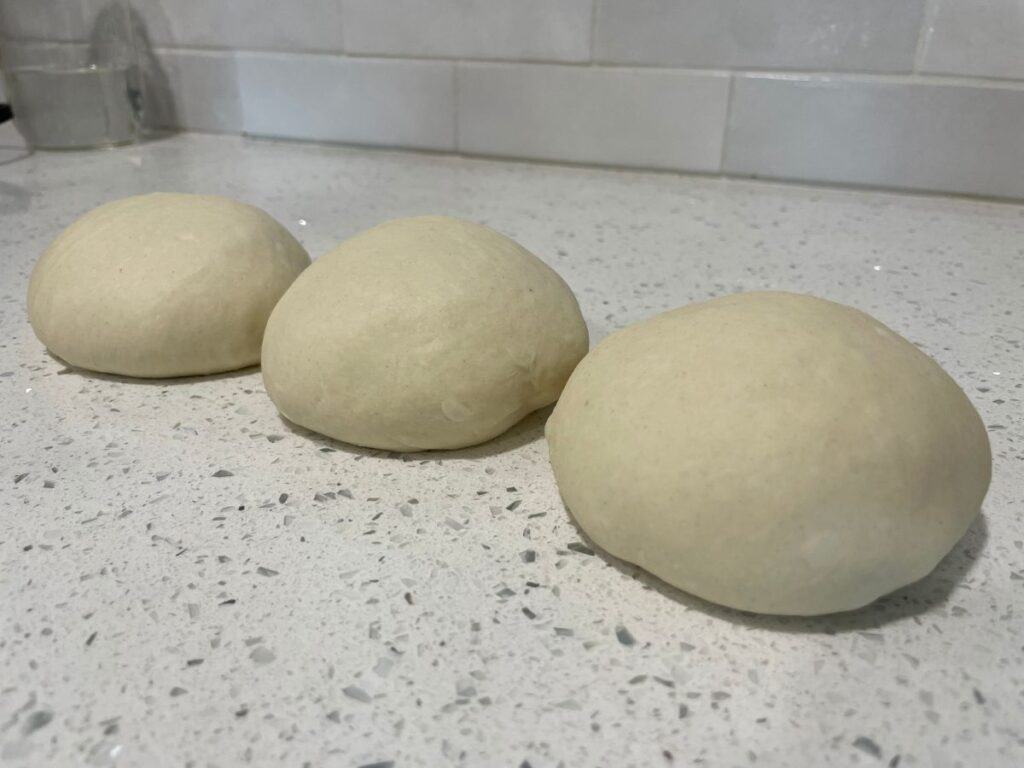
After your dough has doubled in size, use a bench scraper to divide the dough into three equal portions. If desired, you can scale out each portion of dough with a digital scale to make each piece of dough weigh about 284 grams. Stretch and fold each piece of dough into a ball and roll the balls on the counter to form smooth, tight balls of dough.
The Second Rise (Final Proof at Room Temperature)
Prepare a 9×13″ metal cake pan by dusting the bottom with a sprinkle of bread flour. Arrange the three dough balls in the cake pan so that they are as far apart from each other as possible. Cover up the cake pan with a lid or a sheet of plastic wrap and let the dough balls rise at room temperature for 2-3 hours, or until roughly doubled in size.
Cold Proof (Final Proof in the Fridge)
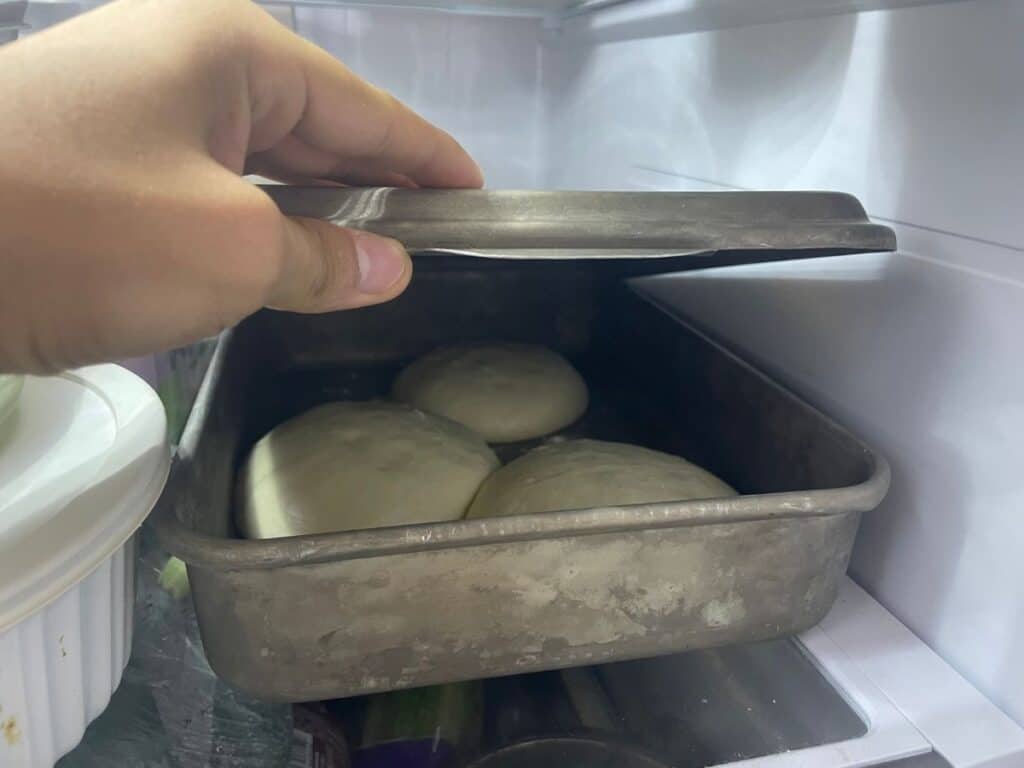
After the dough balls have risen to double in size, move the covered pan of dough to the refrigerator. Let the dough balls “cold proof” in the fridge for 12-24 hours. This will allow the pizza doughs to develop a complex sourdough flavor with a long, slow fermentation. It also lets you bake the pizzas whenever you want to the next day – you have a large window of opportunity and you don’t really need to worry about the sourdough pizza doughs overproofing in the fridge.
Making the Tomato Sauce
The next day, take the pan of dough out of the fridge 1-2 hours before you’re ready to bake your pizzas. This will give the dough time to warm up.
Then, 30 minutes before you are ready to bake your pizzas, preheat your oven to 500°F (260°C), or as hot as your oven will go. Place a baking steel or pizza stone on the bottom rack of your oven, or the rack closest to the heating element.
While the oven is preheating, prepare the tomato sauce by combining a 28 oz. can of whole peeled tomatoes (San Marzano tomatoes, ideally) with a 1/2 tsp. of salt. Crush the tomatoes with your hands to break up the tomatoes and to mix the salt into the sauce. Once you’ve crushed down the tomatoes into a smooth but slightly chunky sauce, you can begin prepping the other toppings.
Preparing the Toppings
Finely dice one clove of garlic per pizza that you will be making and make sure to have the following other topping ingredients on hand: a shaker bottle of dried oregano, a block of Pecorino Romano cheese and a fine cheese grater or microplane, a bottle of extra virgin olive oil, and 2-3 slices of mozzarella cheese per pizza that you will be making.
Assembling the Pizzas
When your oven is preheated, it’s time to start baking pizzas! Place your pizza peel on your kitchen counter, dust it with a small amount of bread flour, and then make a small pile of bread flour right next to the pizza peel on the kitchen counter (1/2 cup of bread flour or so).
Remove your first dough ball from the pan and place the dough into the pile of bread flour. Press down around the edges of the pizza dough to remove the air from the crust. Then press through the center of the pizza lightly removing the air from the entire dough ball. Flip the dough over and repeat this process again. Stretch the dough out to a diameter of 12 inches by lifting the dough in the air and turning it, allowing gravity to stretch out the pizza dough. You can stretch it out on the counter as well. When your dough ball reaches 12 inches in diameter, move the dough onto the dusted pizza peel.
For a tomato pie, top the pizza dough with 4-5 heaping spoonfuls of tomato sauce and spread the sauce almost to the edge of the crust. Add the grated pecorino Romano cheese, the finely diced garlic clove, the dried oregano, and a drizzle of extra virgin olive oil. Drizzle the olive oil in a spiral around the entire pizza. Shake the pizza on the peel to make sure that it’s not sticking to the peel. Now, it’s ready to bake.
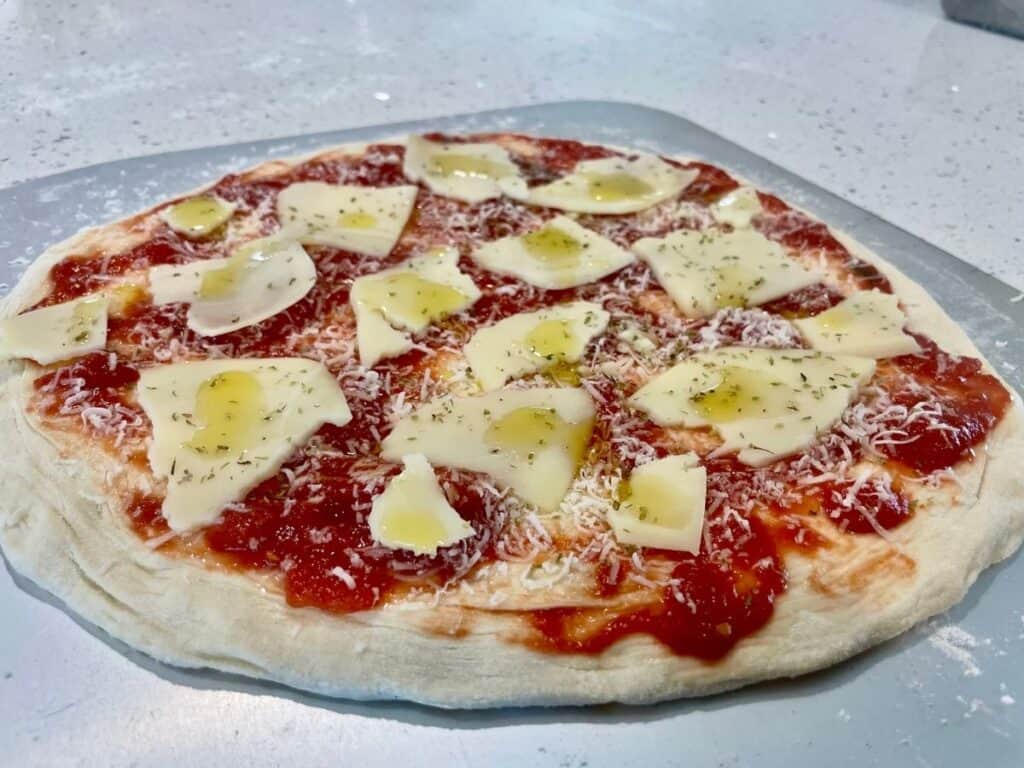
For a plain cheese pizza, top the pizza dough with 4-5 heaping spoonfuls of tomato sauce and spread the sauce almost to the edge of the crust. Add the grated pecorino Romano cheese, the finely diced garlic clove, and then add 2-3 slices of whole milk mozzarella cheese torn into smaller pieces. Arrange the pieces of cheese around the pizza so that each slice will get some mozzarella. After the mozzarella slices, add the dried oregano and a drizzle of extra virgin olive oil. Drizzle the olive oil in a spiral around the entire pizza. Shake the pizza on the peel to make sure that it’s not sticking to the peel. Now, it’s ready to bake.
Baking the Pizzas
Slide the pizza off of the pizza peel and onto the preheated baking steel. Bake for 8-10 minutes at 500°F (260°C). Keep an eye on your pizza around the 7-8 minute mark. If your pizza is getting too dark on the edges or if the cheese is bubbling quite a bit (for the cheese pizza) remove the pizza from the oven after eight minutes. But, if the cheese isn’t burning and the crust isn’t too brown, keep baking for the full 10 minutes to achieve a crispy pizza that doesn’t flop.
Serving Sourdough New Haven-Style Pizza
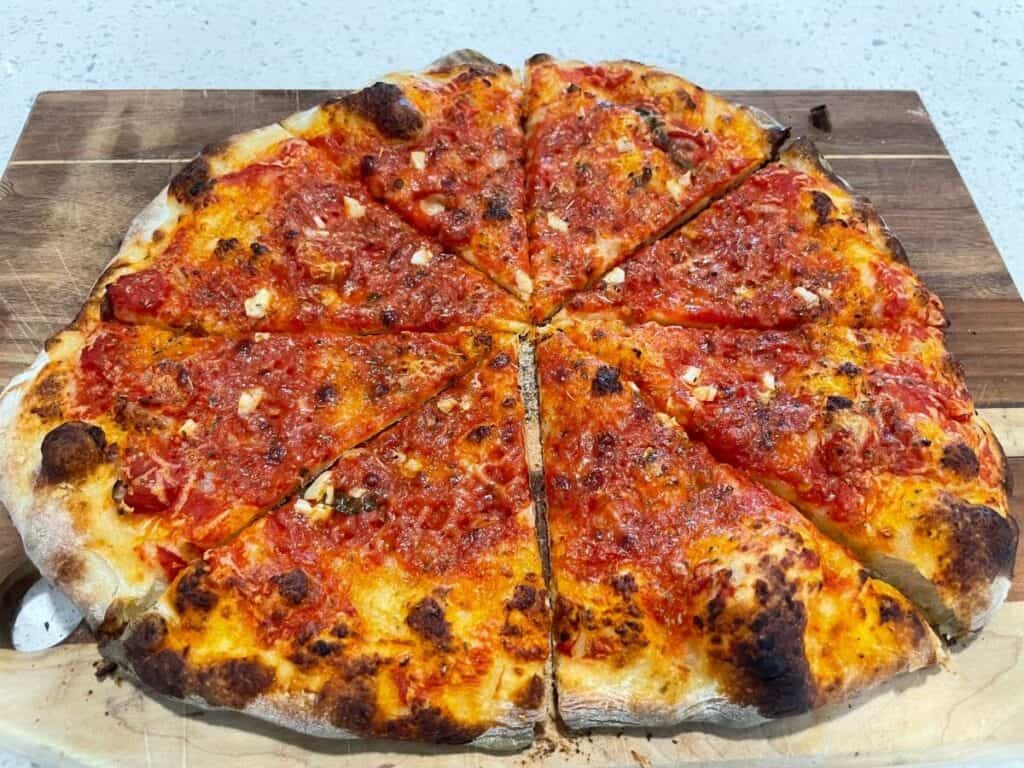
Allow the cooked pizza to rest for one minute on a cooling rack and then move it to a cutting board to slice the pizza. This will keep the bottom of the pizza crisp and stop it from getting soggy, which can sometimes happen if you place your pizza on a board or in a cardboard box straight from the oven.
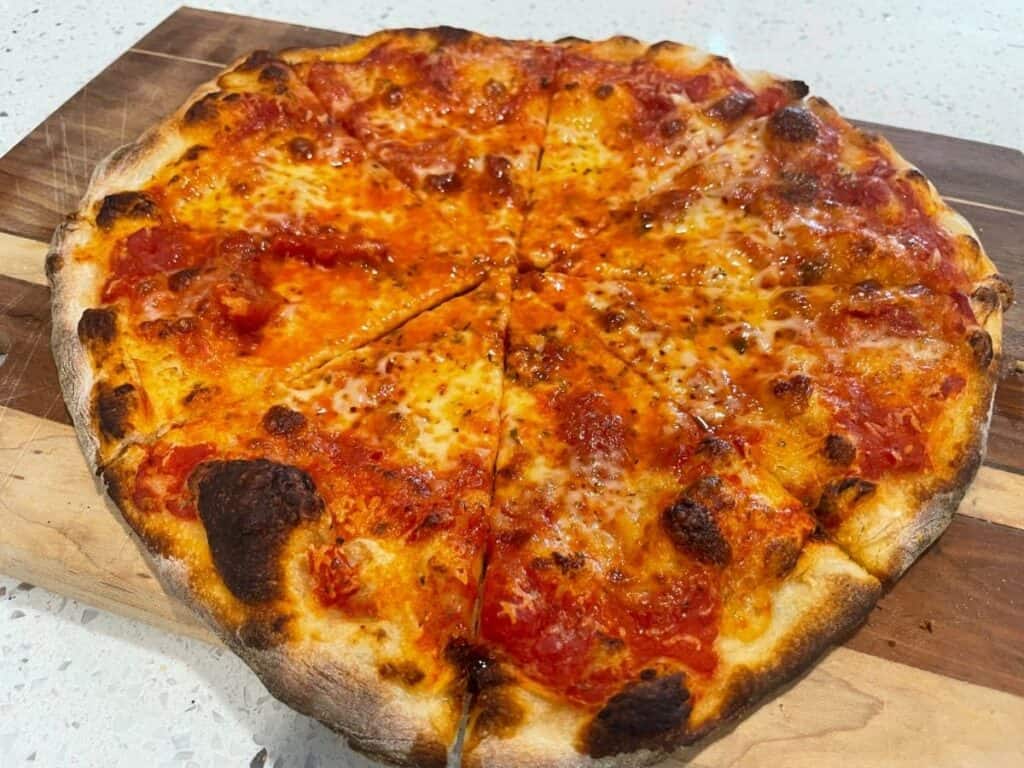
Slice your 12″ sourdough New Haven-style pizza into six or eight even slices, or slice it into smaller, irregular slices like they do at some traditional pizzas places in New Haven. Serve the slices plain and enjoy! The fresh garlic, pecorino cheese, and dried oregano combine beautifully with the quality tomato sauce to create a pizza experience that is unforgettable – a fantastic result for a home oven pizza.
Substitutions and Additions
- For a vegan pizza option, prepare the “tomato pie” as usual, but use a vegan alternative instead of the pecorino Romano cheese – try nutritional yeast, or a nut-based or dairy-free parmesan cheese alternative.
FAQs
To keep the mozzarella cheese from “breaking,” or releasing excess oil, try pulling the pizza out of the oven after around 8 minutes of baking instead of 10. You can also keep your mozzarella cheese in the fridge until just before you put it on the pizza. This will keep the cheese cooler for longer in the oven and helping to keep it from breaking.
If the cheese on your pizza ends up breaking, you can still salvage it. Let the pizza cool for a minute on a cooling rack so that the oil starts to settle. Then, sprinkle the top of the pizza with grated pecorino Romano cheese. The pecorino cheese will soak up some of the excess oil and it will make the oil less noticeable. It also tastes great.
Sourdough New Haven-Style Pizza
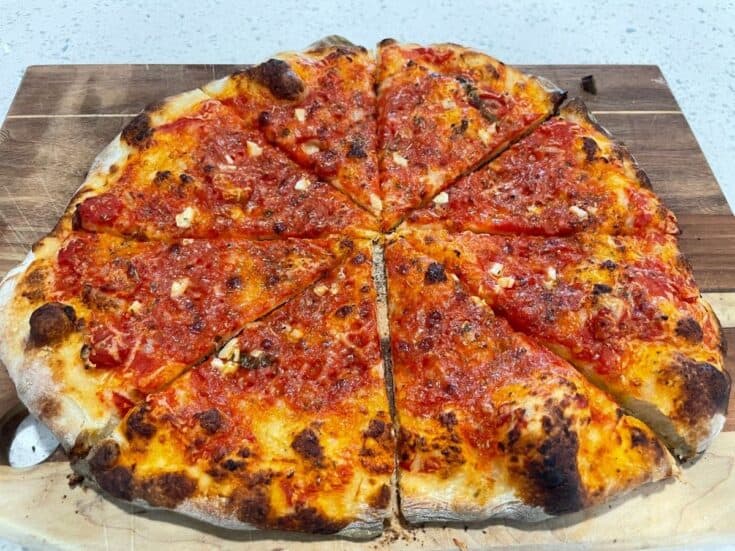
Skip the trip to Connecticut! You can make sourdough New Haven-style pizza in your home oven. Thin and crispy pizza, lightly topped with high-quality tomato sauce, garlic, oregano, and cheese - after you make your own sourdough version of this popular pizza style, you'll have no need for take out. Enjoy!
Ingredients
Sourdough Starter Feeding
- Sourdough Starter, leftover - 25 grams
- Water - 50 grams
- Bread Flout - 50 grams
Main Dough
- Bread Flour - 450 grams
- Water - 290 grams
- Sourdough Starter, active - 100 grams
- Salt - 12 grams
Tomato Sauce
- Whole Peeled Tomatoes (San Marzano) - 28 oz.
- Salt - 1/2 tsp. (3 grams)
Toppings for a "Tomato Pie"
- Prepared Tomato Sauce - 4-5 heaping spoonfuls
- Pecorino Romano, grated - 1-2 Tbsp (as much as desired)
- Garlic, finely diced - 1 clove
- Oregano, dried - 1/4 tsp
- Extra Virgin Olive Oil - 1 tsp (5 ml)
Toppings for a Plain Cheese Pizza
- Prepared Tomato Sauce - 4-5 heaping spoonfuls
- Pecorino Romano, grated - 1-2 Tbsp (as much as desired)
- Garlic, finely diced - 1 clove
- Oregano, dried - 1/4 tsp
- Low Moisture, Whole-Milk Mozzarella Cheese - 2-3 slices (torn into pieces)
- Extra Virgin Olive Oil - 1 tsp (5 ml)
Instructions
Feeding the Sourdough Starter
In the evening, take 25 grams of leftover sourdough starter out of the fridge and feed the starter 50 grams of water and 50 grams of bread flour. Stir the starter together until it reaches a pancake batter-like consistency. Cover the starter loosely with a lid and mark the top of the starter with a rubber band. Let the starter rise overnight at room temperature for 6-8 hours, or until it reaches about double in size. The next morning it should be doubled in size and the starter can be used to make your sourdough New Haven-style pizza dough.
Mixing and Kneading the Dough
To a mixing bowl, add the water, sourdough starter, bread flour, and salt. Mix everything together to combine into a rough dough. Dump the dough out onto a un-floured surface and knead the dough by hand for five minutes. The dough should come together but still be rather sticky and loose. At this point, leave the dough to rest on the counter, uncovered, for five minutes. After the five minute rest, the dough should hold together nicely and be much less sticky. Knead the dough by hand for another three minutes, or until the dough feels smooth and elastic.
The First Rise (Bulk Fermentation)
Form the dough into a smooth ball and move the kneaded dough into an oiled glass bowl with a lid. Allow the dough to rise on the counter at room temperature for 3-5 hours, or until it is roughly doubled in size. Your dough may take more or less time to rise depending on the temperature of your kitchen.
Dividing and Balling Up the Dough
After your dough has doubled in size, use a bench scraper to divide the dough into three equal portions. If desired, you can scale out each portion of dough with a digital scale to make each piece of dough weigh about 284 grams. Stretch and fold each piece of dough into a ball and roll the balls on the counter to form smooth, tight balls of dough.
The Second Rise (Final Proof at Room Temperature)
Prepare a 9×13″ metal cake pan by dusting the bottom with a sprinkle of bread flour. Arrange the three dough balls in the cake pan so that they are as far apart from each other as possible. Cover up the cake pan with a lid or a sheet of plastic wrap and let the dough balls rise at room temperature for 2-3 hours, or until roughly doubled in size.
Cold Proof (Final Proof in the Fridge)
After the dough balls have risen to double in size, move the covered pan of dough to the refrigerator. Let the dough balls “cold proof” in the fridge for 12-24 hours. This will allow the pizza doughs to develop a complex sourdough flavor with a long, slow fermentation. It also lets you bake the pizzas whenever you want to the next day – you have a large window of opportunity and you don’t really need to worry about the sourdough pizza doughs overproofing in the fridge.
Making the Tomato Sauce
The next day, take the pan of dough out of the fridge 1-2 hours before you’re ready to bake your pizzas. This will give the dough time to warm up.
Then, 30 minutes before you are ready to bake your pizzas, preheat your oven to 500°F (260°C), or as hot as your oven will go. Place a baking steel or pizza stone on the bottom rack of your oven, or the rack closest to the heating element.
While the oven is preheating, prepare the tomato sauce by combining a 28 oz. can of whole peeled tomatoes (San Marzano tomatoes, ideally) with a 1/2 tsp. of salt. Crush the tomatoes with your hands to break up the tomatoes and to mix the salt into the sauce. Once you’ve crushed down the tomatoes into a smooth but slightly chunky sauce, you can begin prepping the other toppings.
Preparing the Toppings
Finely dice one clove of garlic per pizza that you will be making and make sure to have the following other topping ingredients on hand: a shaker bottle of dried oregano, a block of Pecorino Romano cheese and a fine cheese grater or microplane, a bottle of extra virgin olive oil, and 2-3 slices of mozzarella cheese per pizza that you will be making.
Assembling the Pizzas
When your oven is preheated, it’s time to start baking pizzas! Place your pizza peel on your kitchen counter, dust it with a small amount of bread flour, and then make a small pile of bread flour right next to the pizza peel on the kitchen counter (1/2 cup of bread flour or so).
Remove your first dough ball from the pan and place the dough into the pile of bread flour. Press down around the edges of the pizza dough to remove the air from the crust. Then press through the center of the pizza lightly removing the air from the entire dough ball. Flip the dough over and repeat this process again. Stretch the dough out to a diameter of 12 inches by lifting the dough in the air and turning it, allowing gravity to stretch out the pizza dough. You can stretch it out on the counter as well. When your dough ball reaches 12 inches in diameter, move the dough onto the dusted pizza peel.
For a tomato pie, top the pizza dough with 4-5 heaping spoonfuls of tomato sauce and spread the sauce almost to the edge of the crust. Add the grated pecorino Romano cheese, the finely diced garlic clove, the dried oregano, and a drizzle of extra virgin olive oil. Drizzle the olive oil in a spiral around the entire pizza. Shake the pizza on the peel to make sure that it’s not sticking to the peel. Now, it’s ready to bake.
For a plain cheese pizza, top the pizza dough with 4-5 heaping spoonfuls of tomato sauce and spread the sauce almost to the edge of the crust. Add the grated pecorino Romano cheese, the finely diced garlic clove, and then add 2-3 slices of whole milk mozzarella cheese torn into smaller pieces. Arrange the pieces of cheese around the pizza so that each slice will get some mozzarella. After the mozzarella slices, add the dried oregano and a drizzle of extra virgin olive oil. Drizzle the olive oil in a spiral around the entire pizza. Shake the pizza on the peel to make sure that it’s not sticking to the peel. Now, it’s ready to bake.
Baking
Slide the pizza off of the pizza peel and onto the preheated baking steel. Bake for 8-10 minutes at 500°F (260°C). Keep an eye on your pizza around the 7-8 minute mark. If your pizza is getting too dark on the edges or if the cheese is bubbling quite a bit (for the cheese pizza) remove the pizza from the oven after eight minutes. But, if the cheese isn’t burning and the crust isn’t too brown, keep baking for the full 10 minutes to achieve a crispy pizza that doesn’t flop.
Serving Sourdough New Haven-Style Pizza
Allow the cooked pizza to rest for one minute on a cooling rack and then move it to a cutting board to slice the pizza. This will keep the bottom of the pizza crisp and stop it from getting soggy, which can sometimes happen if you place your pizza on a board or in a cardboard box straight from the oven.
Slice your 12″ sourdough New Haven-style pizza into six or eight even slices, or slice it into smaller, irregular slices like they do at some traditional pizzas places in New Haven. Serve the slices plain and enjoy! The fresh garlic, pecorino cheese, and dried oregano combine beautifully with the quality tomato sauce to create a pizza experience that is unforgettable – a fantastic result for a home oven pizza.