

When I was a beginning bread baker, I didn’t own a bread lame. That seemed like a purchase for a more experienced baker. So, I scored my bread with a standard kitchen paring knife (with disasters results). If only I had known then what I know now about effective scoring, I would have avoided plenty of ugly loaves. Luckily, there are actually a handful of common household tools that you can use to score your bread! In this article, I want to share with you three easy ways to score bread without a lame.
For the purposes of this article, I will be focusing on artisan-style hearth loaves. These loaves are the ones that usually require scoring. This is the kind of bread, usually shaped in a ball or an oval, that you bake directly on the oven surface. In a professional oven, these breads are baked on the oven “hearth,” but in a domestic oven, they’re baked on a baking stone or in some kind of Dutch oven.
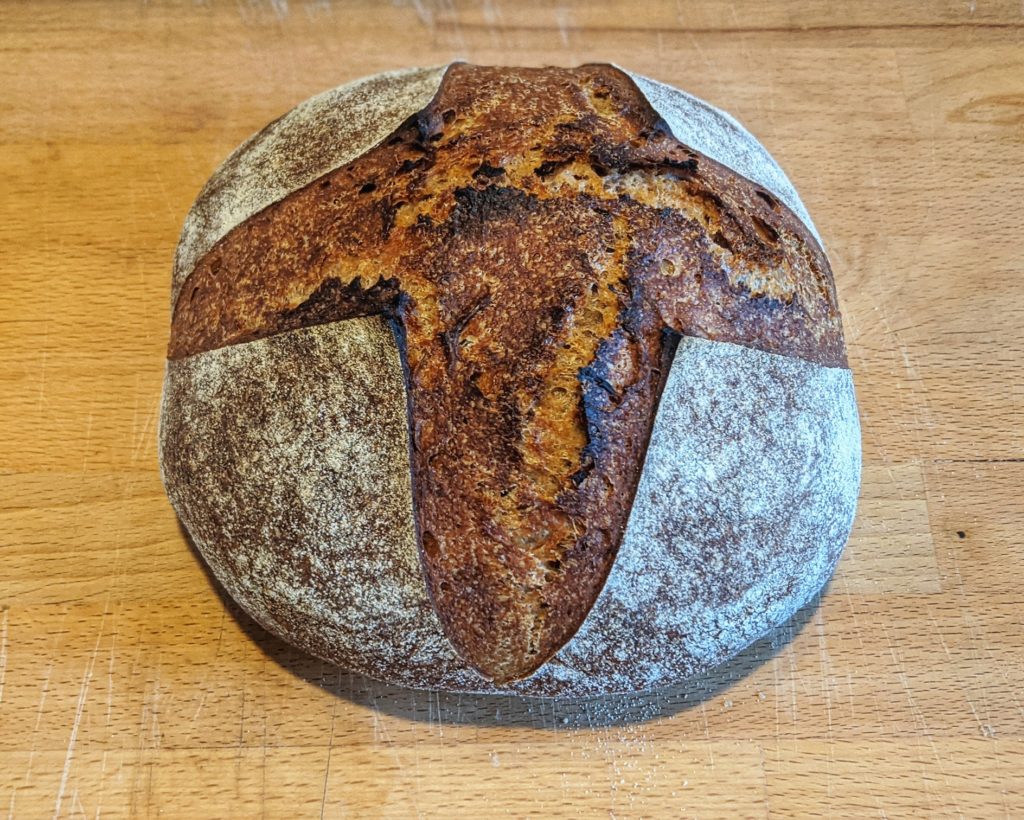
This is the kind of bread I’m talking about. If you’re making this type of bread, here’s how to score it without a lame.
1. Use A Serrated Knife
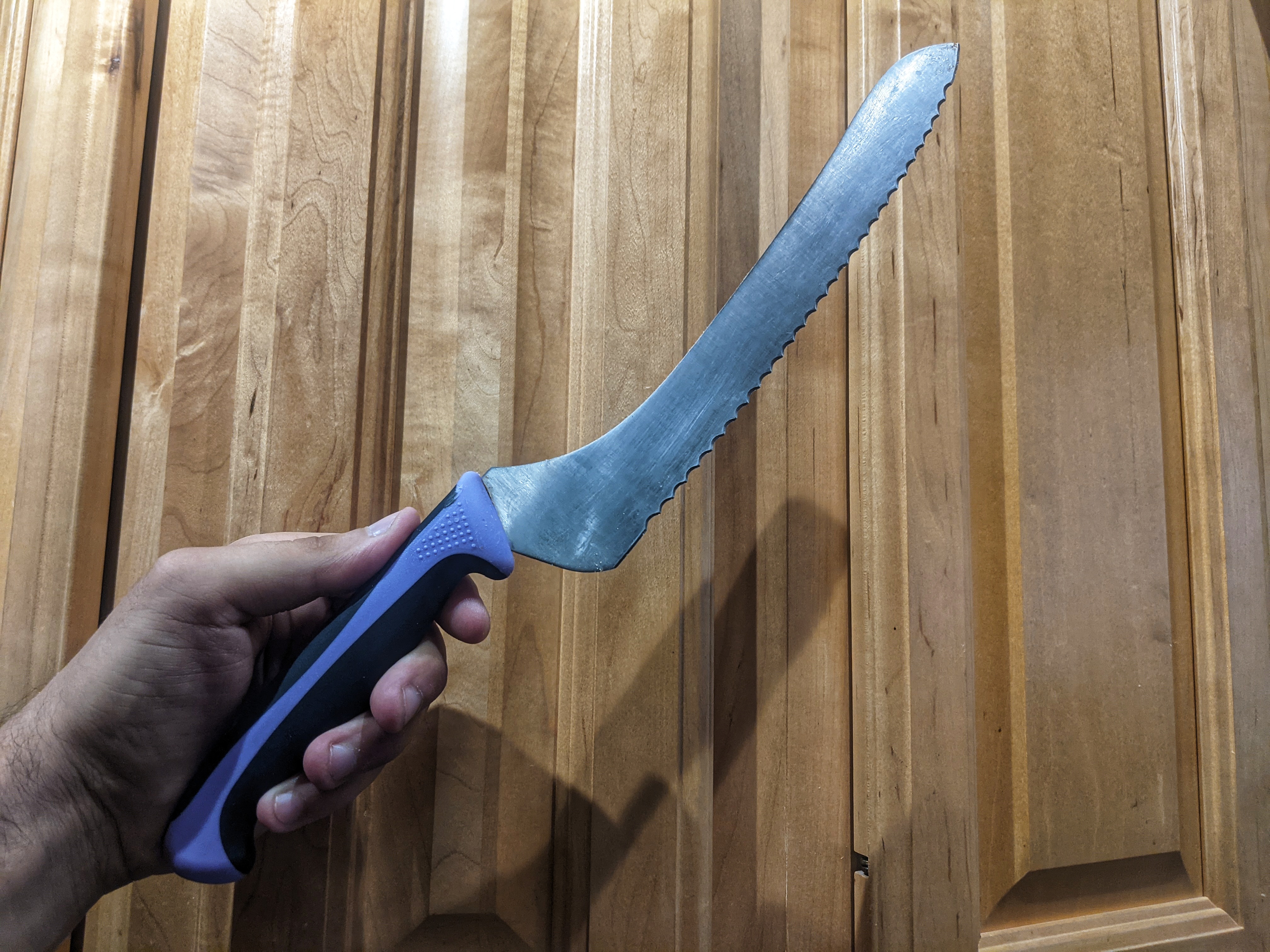
A serrated knife is an excellent tool for scoring bread, as long as you are careful not to cut too deeply. Longer bread knives usually work best for this technique. Steak knives, even though they are serrated, are usually too short to be used for scoring bread.
How to Score Bread With A Serrated Knife
To score bread with a serrated knife, use quick pulling motions to score straight slashes along the dough, about 1/4 inch deep. For a round, boule-shaped loaf, hold the knife’s blade at a 90° angle and score a cross pattern on top of the dough. For an oval, batard-shaped loaf, hold the blade at a 45° angle and score one long slash. If you feel the blade dragging against the dough, pull the blade out and start over again with another quick pulling motion.
Some of My Favorite Baking Tools (Affiliate Links):
Baker of Seville Bread Lame
Oval Banneton Basket
Non-Stick Bread Pan
Non-Stick Focaccia Pan
2. Use A Utility Knife
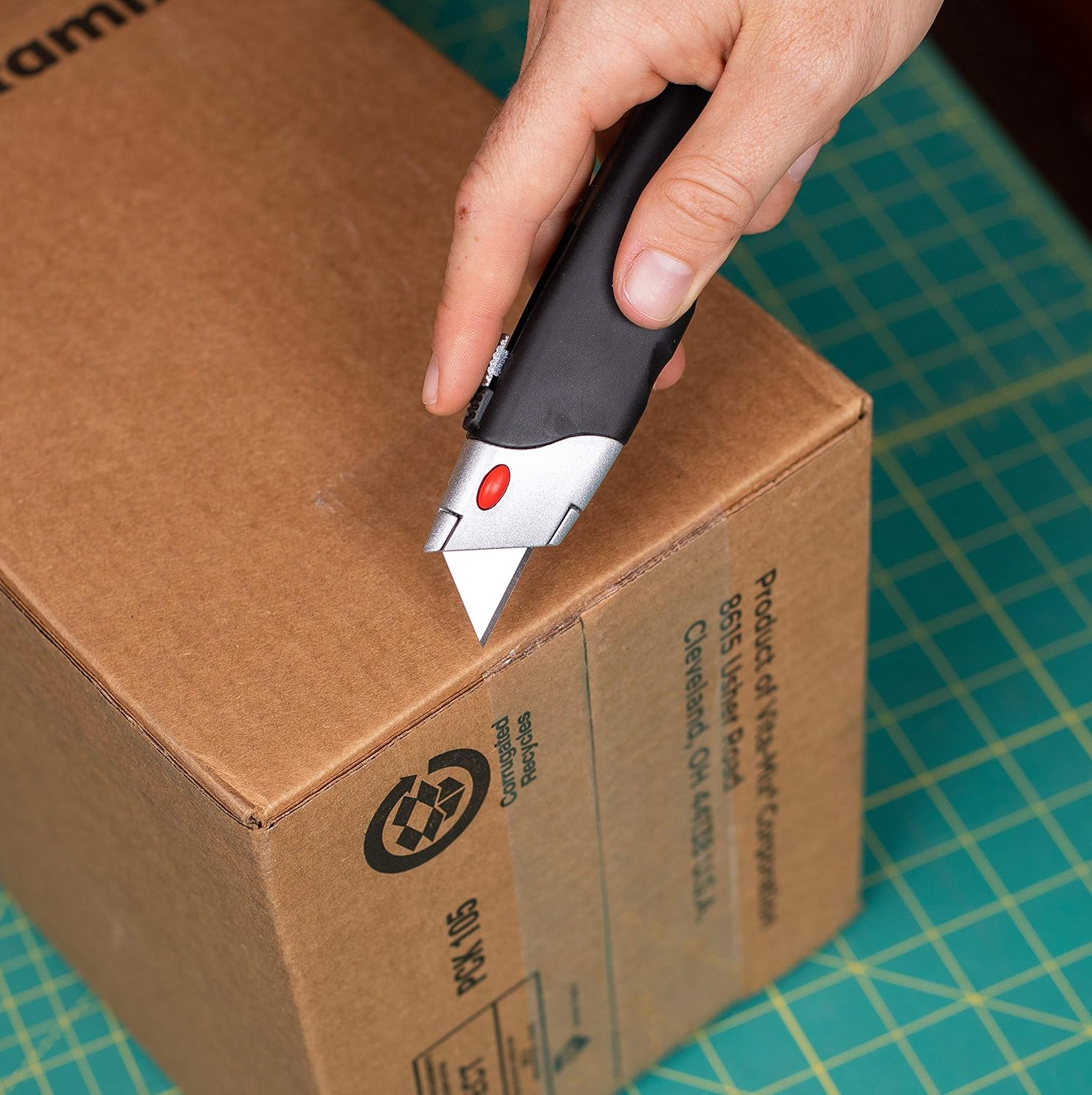
The main benefit of scoring bread with a lame is that the razor blade is extremely thin. A razor blade can slide through the dough easily. The blade of a utility knife also happens to be extremely thin! According to Fine Homebuilding, utility knife blades are usually 0.018 inches thick (source). Although that’s twice as thick as a razor blade, it’s much thinner than any knife in your kitchen.
If you have a utility knife lying around your house, consider cleaning it, changing it out for a new blade, and using it to score your bread.
How to Score Bread With A Utility Knife
To score bread with a utility knife, release the blade to its full extent and hold the knife firmly by the handle. For a round loaf, cut two long confident slashes on top of the dough in a cross pattern, going about 1/4 inch deep, and holding the knife at a 90° angle. For an oval-shaped loaf, hold the knife at a 45° angle and score one long slash from the far end of the loaf to the near end.
3. Use A Pair of Scissors or Kitchen Shears
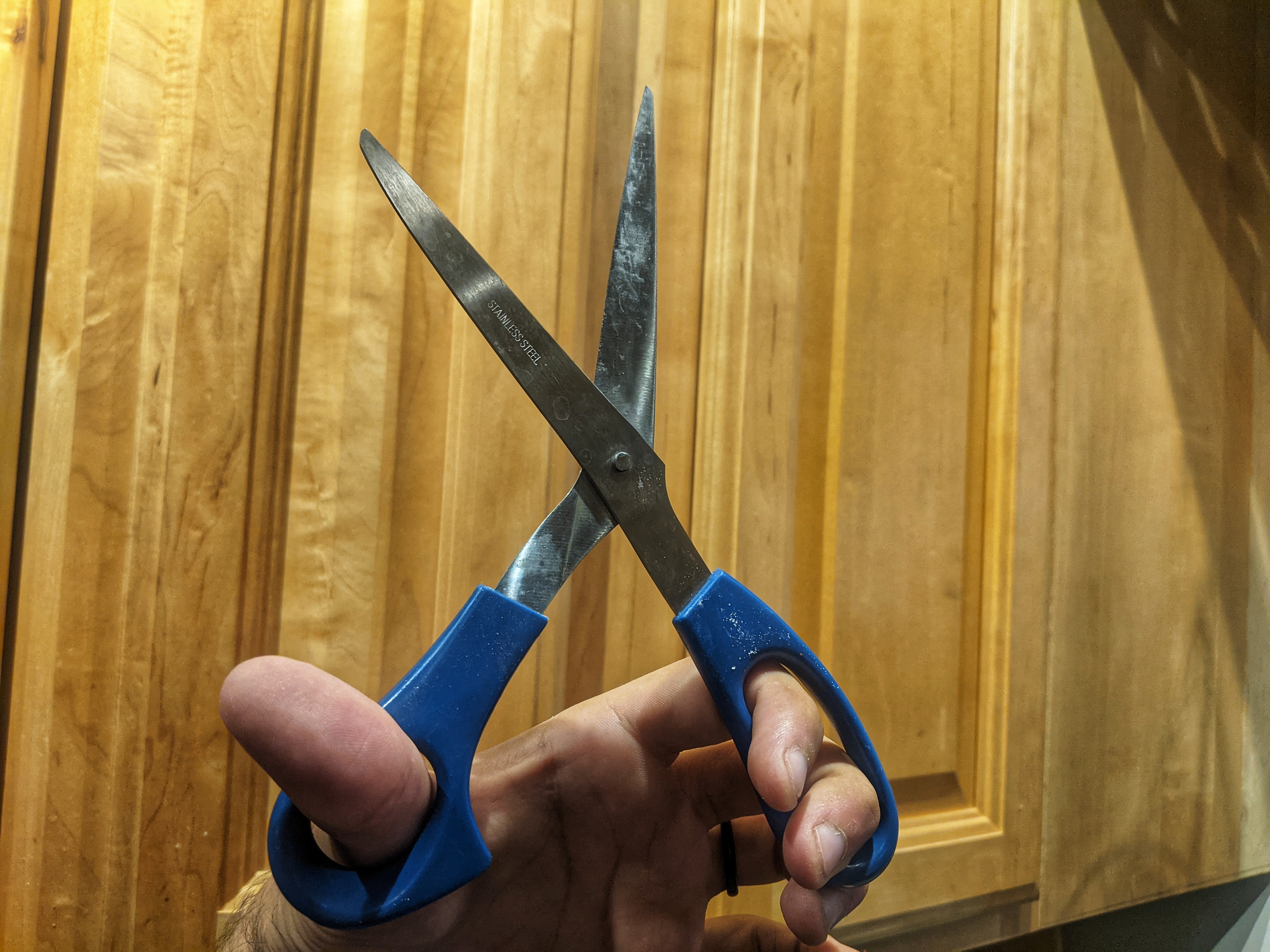
If you want to score bread without a lame, another option is to use a pair or scissors or kitchen shears. Since kitchen shears are most likely to be food-safe, they’re definitely the better option, but standard household scissors will also work to score bread, as long as they are clean. So, once your dough is fully proofed and ready to bake, get some scissors or kitchen shears and wash them well with soap and water.
How to Score Bread With Scissors
To score bread with scissors, hold the scissors at a very shallow angle, between 15-20° to the dough. Cut the dough in a series or quick snips from the top of the dough to the bottom. An imaginary straight line should run relatively straight across the top of the dough through the middle of the scissor cuts. When it bakes, your bread will burst open naturally along these weak points.
Related Questions
What happens if you don’t score bread before baking it?
As a general rule, if you don’t score bread before baking it, the bread will burst open at its weakest point inside the oven as it expands. This usually happens along the sides or near the bottom of the loaf. However, if the dough has been proofed to 80-90% of its capacity before baking, it will likely not burst open in the oven at all. This is typical of sandwich loaves baked in pans or tins.
Do you have to score bread before baking?
You do not have to score bread before baking it. If you are baking an artisan-style loaf of bread, bake it seam-side-up on a baking stone or in a Dutch oven. When you do this, the bread will burst open along its natural seams, so you won’t need to score the dough. If you are baking bread in a pan, let it proof fully so that it is light and delicate to the touch. While baking, the dough will puff up slightly in the oven, but not enough to require any score marks.
When should you not score bread?
As a general rule, you should not score bread if you are baking it in a pan and want the loaf to have a “domed” top. In this case, you should leave the dough unscored and allow it to fully proof before baking so that it is delicate to the touch. Also, if your hearth loaf is over proofed, almost to its maximum extent, you should leave it unscored to keep the dough from deflating and losing its shape in the oven.
Conclusion
If you don’t have a lame, there are plenty of household tools that you can use to score your bread. Try scoring with a serrated knife, utility knife, or a pair of kitchen shears or scissors. Bread doesn’t need to be complicated. You can use the tools you already have!
Once you’ve mastered these lame-less scoring techniques, if you’re ready to get yourself a quality bread lame, check out the lames that I use on my Recommended Tools page here.